Turkey in diplomatic row with Iceland over treatment of national football team

Turkey on Monday (10 June) sent a diplomatic protest note to Iceland, condemning the "disrespectful" treatment of the Turkish national football team at Keflavik International Airport.

The note sent through Turkey's Embassy in Oslo condemned the "disrespectful" and "violent" behavior against Turkish footballers during the passport check and demanded extra security measures be taken for the players.

Turkey and Iceland do not have resident diplomatic missions in each other's capitals.

The Turkish team traveled to Iceland after a shock 2-0 victory over world champions France in the UEFA Euro 2020 qualification on Saturday. They arrived late Sunday for their Group H match against Iceland to be played on Tuesday.

According to Turkish forward Burak Yılmaz, the Icelandic authorities made the team wait more than three hours at passport control and subjected them to strict security checks, repeatedly searching the players' belongings thoroughly.

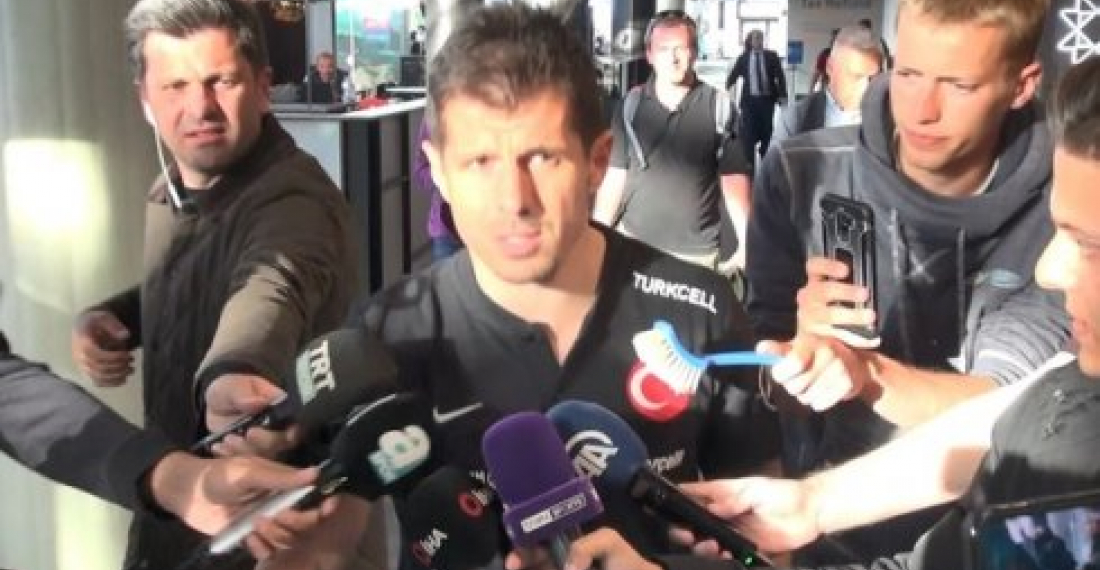
Meanwhile, an unidentified man held up what appeared to be a toilet brush to Turkey's midfielder Emre Belözoğlu, imitating reporters talking to players.

Turkish social media users joined in the criticism and demanded Iceland identify the man, responding with indignation, and graphics showing the Icelandic flag with a brush taking the place of the vertical bar of its red cross. The hashtag #TurksAreComingForIceland trended on Twitter in Turkey. Famous Turkish artists also rallied on social media to support the national team.Turkish media reported that on Monday, Turkish President Recep Tayyip Erdogan held a phone call with Nihat Özdemir, the head of Turkish Football Federation (TFF), regarding the incident and said that necessary precautions are being taken by the state. Erdogan also reassured Özdemir that the Turkish people stand by the national team and the team manager, Şenol Gunes.

"The treatment our national football team was subjected to at Iceland's airport is unacceptable both in terms of diplomatic practices and [in a] humanitarian sense. Our nation should have no doubt that what is necessary will be done," Turkish Foreign Minister Mevlut Cavusoglu wrote in a tweet.

A representative from Isavia, the company that owns and manages the Keflavík airport, told Icelandic media that per international regulations, airport employees were obliged to conduct a security check on the team and that it was more intensive because the flight on which the team arrived departed from an airport that is not part of the One Stop Security area whose security protocols apply to all airports in the EEA. Isavia maintains that as such, all of the passengers on the flight were subjected to the same security checks-including Icelanders. Isavia also says that the security checks took an unusually long time on Sunday night because passengers were traveling with a high number of electronic devices and liquids in their luggage, all of which needed to be individually screened.

Isavia contests Turkey's claims that players were held for three hours, however: they say that the security wait was 80 minutes from the time that the aircraft arrived. The flight arrived at 7:40 pm, representatives say, and the last passenger went through customs at roughly 9:00 pm.

source: commonspace.eu with agencies

Photo: An unidentified man held up what appeared to be a toilet brush to Turkey's midfielder Emre Belözoğlu, imitating reporters talking to the player, following the arrival of the Turkish National Football Team in iceland on Sunday evening (9 June). (Picture courtesy of Daily Sabah, Ankara)


Related articles

Editor's choice
News
Council of Europe launches new International Claims Commission for Ukraine

Council of Europe launches new International Claims Commission for Ukraine

Thirty-four countries and the European Union have signed a new convention establishing an International Claims Commission for Ukraine at a diplomatic conference co-hosted by the 46-nation Council of Europe and the Netherlands in the Hague. The diplomatic conference was attended by leaders and high-level representatives from over 50 states, including the President of Ukraine, Volodymyr Zelenskyy, the President of the Republic of Moldova, Maia Sandu, and the Prime Minister of the Netherlands, Dick Schoof.  “Today marks a major step forward in ensuring accountability for Ukraine. The International Claims Commission represents justice and hope for tens of thousands of victims—our determination that those who have suffered will not be forgotten. I call for quick ratifications so we can get the commission rapidly up and running for the people of Ukraine,” said Council of Europe Secretary General Alain Berset. Ukrainian President Volodymyr Zelenskyy said: “We expect that every mechanism for compensation from the Register of Damage and Claims Commission to the actual payments – will start working and receive strong and sufficient international support, so that people can truly feel that any kind of damage caused by the war can be compensated. This war, and Russia’s responsibility for it, MUST become a clear example – so that others learn not to choose aggression.” “Accountability is about creating the conditions for peace that endures. And therefore, accountability is a condition of security – today and for the future. But accountability is not only about Ukraine. And it is not only about one aggressor and one victim. Accountability is about Europe. About every country in Europe. It is about whether Europe, as a whole, is willing to defend its peace,” said Maia Sandu, President of the Republic of Moldova, which currently holds the Presidency of the Council of Europe’s Committee of Ministers. The Prime Minister of the Netherlands, Dick Schoof, said: “Every day Russia is deliberately bombarding homes, destroying businesses and damaging infrastructure in Ukraine. Russia must compensate Ukraine for the damage caused. That is why we have launched the International Claims Commission for Ukraine and we are honoured to host it.” The International Claims Commission will be the second part of a comprehensive compensation mechanism related to Russia’s war of aggression, building on the existing Register of Damage for Ukraine. The claims commission will be established within the framework of the Council of Europe and will also be open to other countries. The Register of Damage for Ukraine, created in 2023, collects and records compensation claims submitted by individuals, organisations and public bodies in Ukraine. Forty-four states and the European Union have so far joined the Register, which has already received 86,000 claims. The International Claims Commission will review, assess and decide upon claims submitted to the Register of Damage for Ukraine and determine the amount of compensation, if any, which is due in each case. The convention establishing the commission will enter into force once it has been ratified by 25 signatories, as long as sufficient funds have been secured to support its initial work.

Popular

Editor's choice
News
Council of Europe launches new International Claims Commission for Ukraine

Council of Europe launches new International Claims Commission for Ukraine

Thirty-four countries and the European Union have signed a new convention establishing an International Claims Commission for Ukraine at a diplomatic conference co-hosted by the 46-nation Council of Europe and the Netherlands in the Hague. The diplomatic conference was attended by leaders and high-level representatives from over 50 states, including the President of Ukraine, Volodymyr Zelenskyy, the President of the Republic of Moldova, Maia Sandu, and the Prime Minister of the Netherlands, Dick Schoof.  “Today marks a major step forward in ensuring accountability for Ukraine. The International Claims Commission represents justice and hope for tens of thousands of victims—our determination that those who have suffered will not be forgotten. I call for quick ratifications so we can get the commission rapidly up and running for the people of Ukraine,” said Council of Europe Secretary General Alain Berset. Ukrainian President Volodymyr Zelenskyy said: “We expect that every mechanism for compensation from the Register of Damage and Claims Commission to the actual payments – will start working and receive strong and sufficient international support, so that people can truly feel that any kind of damage caused by the war can be compensated. This war, and Russia’s responsibility for it, MUST become a clear example – so that others learn not to choose aggression.” “Accountability is about creating the conditions for peace that endures. And therefore, accountability is a condition of security – today and for the future. But accountability is not only about Ukraine. And it is not only about one aggressor and one victim. Accountability is about Europe. About every country in Europe. It is about whether Europe, as a whole, is willing to defend its peace,” said Maia Sandu, President of the Republic of Moldova, which currently holds the Presidency of the Council of Europe’s Committee of Ministers. The Prime Minister of the Netherlands, Dick Schoof, said: “Every day Russia is deliberately bombarding homes, destroying businesses and damaging infrastructure in Ukraine. Russia must compensate Ukraine for the damage caused. That is why we have launched the International Claims Commission for Ukraine and we are honoured to host it.” The International Claims Commission will be the second part of a comprehensive compensation mechanism related to Russia’s war of aggression, building on the existing Register of Damage for Ukraine. The claims commission will be established within the framework of the Council of Europe and will also be open to other countries. The Register of Damage for Ukraine, created in 2023, collects and records compensation claims submitted by individuals, organisations and public bodies in Ukraine. Forty-four states and the European Union have so far joined the Register, which has already received 86,000 claims. The International Claims Commission will review, assess and decide upon claims submitted to the Register of Damage for Ukraine and determine the amount of compensation, if any, which is due in each case. The convention establishing the commission will enter into force once it has been ratified by 25 signatories, as long as sufficient funds have been secured to support its initial work.