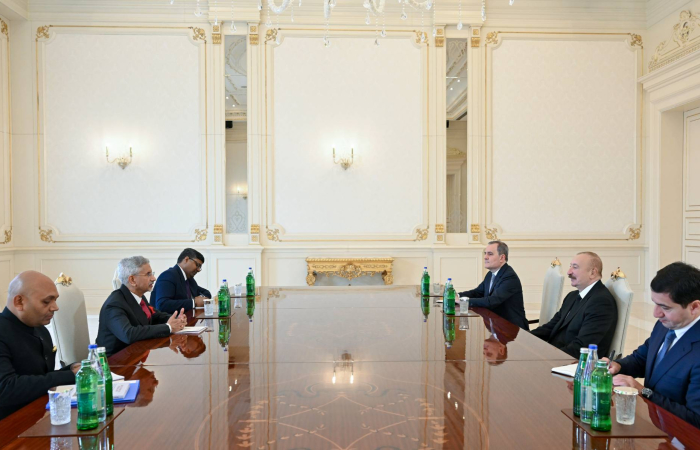
Over the last few weeks, the president of Azerbaijan, and the prime ministers of Armenia and Georgia, have made separate calls for regional co-operation among the three South Caucasus countries, highlighting the benefits that can come out from such co-operation. This is a big shift in positions, especially for Azerbaijan.
The last South Caucasus leader to have pushed for South Caucasus regional co-operation was Georgia’s President Shevardnadze in the 1990s. The Karabakh conflict made any prospect of such co-operation impossible, because Azerbaijan insisted it will not co-operate with Armenia whilst it occupies its territory, and Armenia, whilst nominally in favour of regional co-operation, found excuses not to engage with any. Under President Saakashvili even Georgia felt that regional co-operation was not in its interest since it felt it distracted its main mission of Euro-Atlantic integration. For the last decade, the Georgian Dream government has toyed with the idea of regional co-operation, but largely in an abstract way. So for thirty years the three countries not only did not co-operate together but drifted increasingly apart. Armenia-Azerbaijan and Armenia-Georgia relations did develop positively, but the lack of a trilateral element left many opportunities untapped.
New Beginning
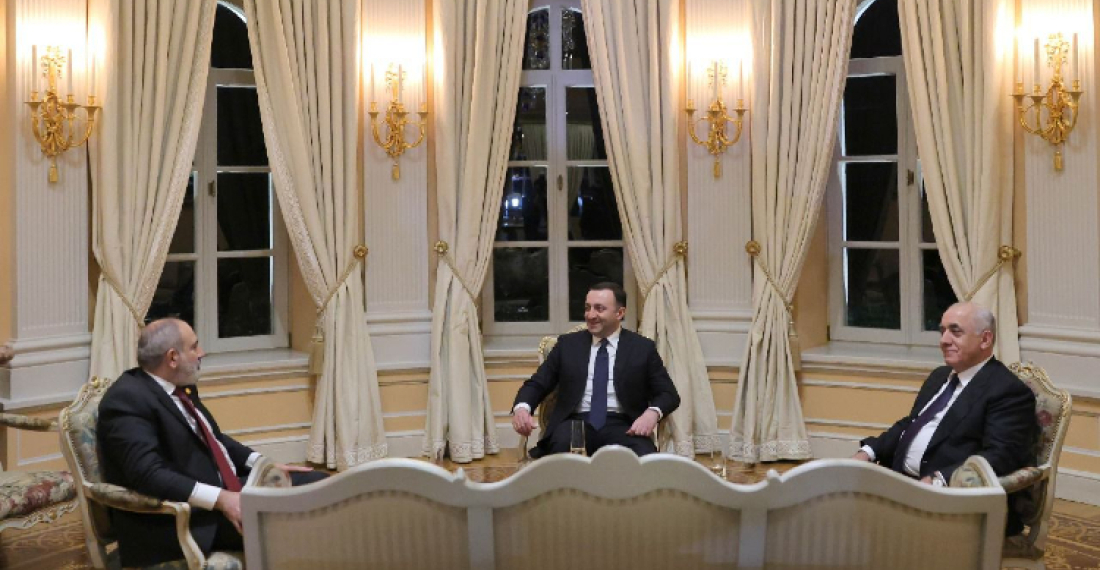
Last week Georgian Prime Minister Irakli Garibashvili hosted in Tbilisi his counterparts the prime ministers of Armenia and Azerbaijan on the margins of the Silk Road Forum. From the perspectives of the optics of the occasion it was a perfect photo opportunity. It is unlikely that much of substance was discussed, let alone agreed. For one thing, the Azerbaijani Prime Minister Ali Asadov is not a decision-maker. Also, it was clear that the homework for this meeting had not been done, so the meeting was largely symbolic. Even that, given the past vacuum, that was important enough.
What has changed, and what are the new opportunities?
The main factor that has changed, and which has enabled a new enthusiasm to develop for South Caucasus regional co-operation is the dynamic in Armenia-Azerbaijan relations following the 2020 “44-day Karabakh War”, and the subsequent Azerbaijan military operation in September 2023, which has secured its control over the territory of Nagorno-Karabakh – though not of its people who left en masse not wanting to live under Baku’s control. Armenia and Azerbaijan are now close to signing a peace agreement. Both now have an interest in regional co-operation.
Another thing that has changed is the geo-political context. After achieving independence in 1991 the three countries eventually developed different foreign policy trajectories: the Armenians aligned with the Russians, the Azerbaijanis declared themselves non-aligned, and the Georgians sought Euro-Atlantic integration. On paper, this remains the case. But various factors have now blurred these differences: Armenia, dissatisfied and disappointed with Russia is distancing itself from the CSTO military alliance, and is even questioning the presence of the Russian base on its territory; Georgia, whilst formally still seeking EU candidate status and NATO membership, has cooled down in its enthusiasm, and these days appears more comfortable acting in a similar fashion to Azerbaijan. On the other hand, Azerbaijan, which shortly will relinquish its long stint as Chair of the Non-aligned movement, has stretched the concept of non-alignment to its limits. All three countries see regional co-operation as a counterbalance to their declared foreign policy orientations, and possibly as a new way of dealing with bigger actors such as Russia and the EU.
Are they 3 or are they six?
There is an alternative vision to the trilateral regional co-operation, and this is the idea of adding to the core three South Caucasus countries, the three regional neighbours: Russia, Iran and Turkey. Meetings in this format, with the Georgians absent, have taken place in Moscow and Tehran. Those pushing for this format, whether consciously or unconsciously, are trying to destroy the idea of South Caucasus regional co-operation between the three core countries. Most things that can be done between the three (Armenia, Azerbaijan, Georgia), cannot be done between the six. The 3 + 3 – useful only once the Georgians join, can be a talking shop. No doubt someone will come up after with the idea of the 3 + 2 – providing a forum between the three South Caucasus countries and the EU and US that can be yet another talking shop. But realistically, neither can form the basis of regional co-operation. It is clear that in the South Caucasus three is a company but six is a crowd.
South Caucasus regional co-operation can bring great benefits to the three countries, and the wider region
There is no doubt that regional co-operation can bring great benefits to the three countries and the wider region. To mention but a few of the benefits one can list the following:
• Better connectivity will enable the region to play its full role as both a transit route and a hub for trade and services moving from Russia to the Gulf and the Indian Ocean, and vice versa, and similarly for trade moving from Europe to Central Asia and China, and vice versa;
• Better relations between the three governments will enable them to play a much bigger role on the international stage;
• Open borders, or at least in the beginning simplified travel arrangements, will increase economic activity and add prosperity to countries and people alike;
• Together as a trading group the region which will be able to secure better deals in dealings with international partners;
• A framework for regional co-operation can include arrangements for the three countries to develop a joint strategy for the problem of contamination from landmines and other remnants of war.
• And last but not least, regional co-operation is going to be essential to cement any peace deal in the region and make it sustainable, and most importantly irreversible.
There are many other benefits.
This requires hard work, consistency and political determination
Regional co-operation, beyond the symbolic photo opportunities that we saw in Tbilisi last week, requires a lot of work. Every tangible step will need good preparation; institutions that are able to prepare, implement and follow-up; resources; and often change of legislation. For the last three decades, regional co-operation was such a faraway prospect, even a taboo topic in Baku, that work has to start largely from scratch. Dozens of ideas need to be developed, articulated, discussed and eventually submitted for the agreement of the political leaders.
Public opinion, which in Armenia and Azerbaijan remains locked in enemy imagery of the other, needs to be “re-educated”.
Some things need to happen soon
The three leaders (with Aliyev present this time) need to get together and ideally sign some kind of joint declaration outlining their regional vision. Work on this should start at senior diplomat level as soon as possible.
The three governments should appoint a high-powered task force that can start outlining a roadmap for making regional co-operation tangible, doable and reachable within a reasonably short time
Think tanks from the three countries, working with partners from regions that have already experience of co-operation should develop intensive programs that can accompany government processes, feeding in ideas, providing a sounding board, and also be critical when necessary
Frameworks need to be developed for people-to-people contacts at many different levels and in different spheres.
It is clear the region will require assistance to achieve the objective of developing South Caucasus regional co-operation. All indications are that the political will is now there. That is already big progress. But now the hard work of turning this into a reality must start, and the region should make use of all the help it can get to achieve this.