


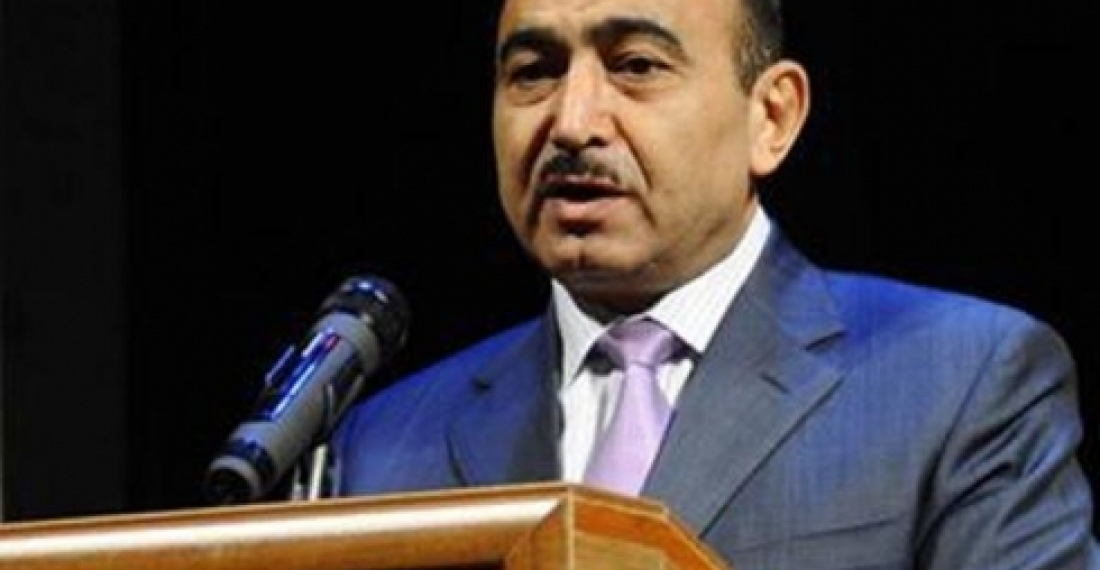
Azerbaijan dismisses Iranian accusations. Ali Hasanaov says country takes interests of neighbours into consideration while pursuing its foreign policy.

Azerbaijan has reacted sharply to Iranian accusations that it was involved in the killing of one of its nuclear scientists. On Sunday the Iranian Foreign Ministry summoned the Azerbaijani Ambassador and delivered to him a protest note complaining of this and other issues. In a comment yesterday, the Head of the Political Affairs department of the Azerbaijani Presidential Administration, Ali Hasanov, dismissed the accusations as groundless.

In a comment to APA, Hasanov said Azerbaijan was taking the interests of neighbour countries into consideration while pursuing its foreign policy and working together with different foreign organizations. "Azerbaijan has no links with any terrorist organization. This statement made by Iran has no grounds. It is not known why they accuse Azerbaijan. Azerbaijani borders with the foreign countries are working in normally. The citizens of all countries can travel to Azerbaijan and live here normally, as any other open and democratic country. Iran must be careful in its relations with its neighbouriong countries and act in accordance with the bilateral relations".

Hasanov noted that the regional processes have an impact on Azerbaijan too. "Tensions between Iran and Europe and the US will also affect Azerbaijan. The conflict in the region will have an impact on the relations of Azerbaijan with the neighbouring countries". Iran accuses Azerbaijan of providing Israeli intelligence service with conditions to work in its territory and terrorists suspected in the assassination of the Iranian nuclear scientists with the conditions to enter and leave this country.

source: commonspace.eu with APA and IRNA

photo: Head of the Azerbaijan Presidential Administration Department of Public Policy, Ali Hassanov (archive photo)

Related articles

Editor's choice
News
Situation in South Yemen strains relations between Saudi Arabia and UAE

Situation in South Yemen strains relations between Saudi Arabia and UAE

The relations between Saudi Arabia and the United Arab Emirates (UAE) are increasingly strained as a result of the different approach of the two countries towards Yemen. Whilst both countries were initially together in resisting the Houthi take over in Yemen, the UAE subsequently focused on the South of the country, backing the Southern Movement (STC), which seeks to restore the independence of South Yemen. South Yemen became an independent country in 1967, at the end of British rule, and only unified with the north in 1990. The Saudi-led “Coalition to Support Legitimacy in Yemen” on Tuesday, 30 December, said it conducted a “limited” airstrike targeting two ships “that smuggled weapons and other military hardware into Mukalla in southern Yemen”. The ships originated in the UAE port of Furjeirah. In a statement carried by the Saudi Press Agency (SPA), the Coalition Forces spokesman, Major General Turki Al-Maliki, said that two ships coming from the port of Fujairah in the United Arab Emirates entered the Port of Mukalla in Hadramaut without obtaining official permits from the Joint Forces Command of the Coalition. He stressed the Coalition's "continued commitment to de-escalation and enforcing calm in the governorates of Hadramawt and Al-Mahra, and to prevent any military support from any country to any Yemeni faction without coordination with the legitimate Yemeni government and the Coalition. The Southern Transitional Council (STC), launched a sweeping military campaign early in December, seizing the governorates of Hadramaut along the Saudi border and the eastern governorate of Al-Mahra in Yemen’s border with Oman. The UAE-backed STC forces captured the city of Seiyun, including its international airport and the presidential palace. They also took control of the strategic PetroMasila oilfields, which account for a massive portion of Yemen’s remaining oil wealth. (click the image to read the article in full).

Popular

