Armenian political expert:

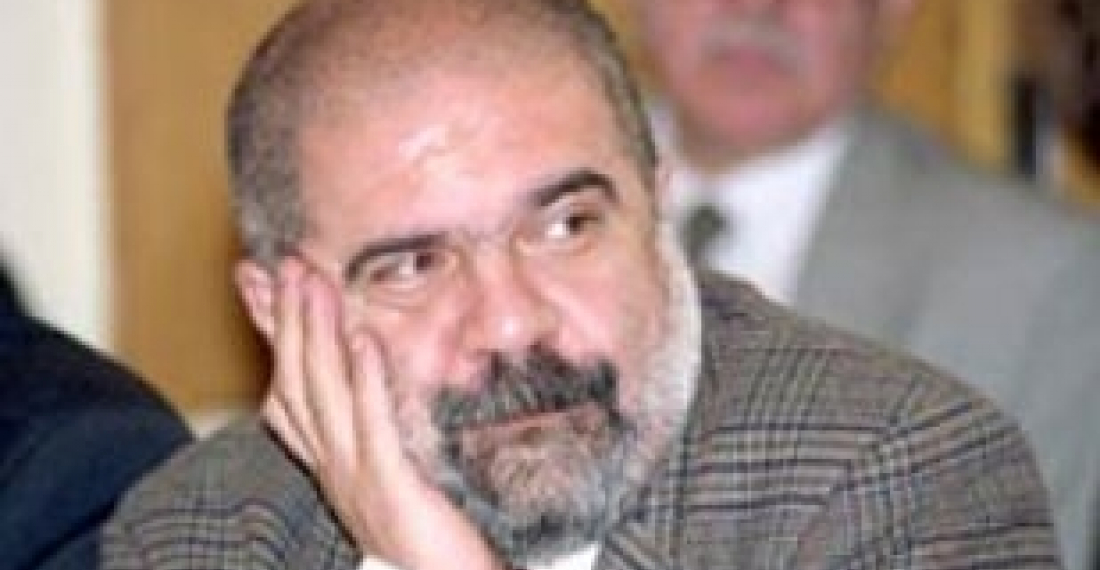
Washington will not unleash war against Iran on threshold of the presidential election, Alexander Iskandaryan, Director of the Caucasus Institute, told media, Tuesday. He thinks that the West's pressure on Tehran just aims to prevent implementation of the nuclear program of Iran and through political measures only.

Iskandaryan is sure that the USA and its European allies try to weaken Iran's impressive presence in Syria and break the developments there so favorable to Tehran.

The political expert said that the West's military rhetoric towards Iran should not surprise anyone, for it has always been observed since the Islamic Revolution in 1979. Iskandaryan said that Tehran quite steadily resists the West's pressure that will hardly grow into a war at least in the nearest future.

Related articles

Editor's choice
News
Leaders of Shanghai Cooperation Organisation gather in Bishkek

Leaders of Shanghai Cooperation Organisation gather in Bishkek

The 2026 Shanghai Cooperation Organisation Heads of State summit takes place from Tuesday, September 1, in Bishkek. It is being hosted by the president of Kyrgyzstan, Sadyr Japarov, who currently holds the SCO chair. High-level meetings will also be held in the SCO Plus format. The SCO summit will be attended by Belarusian President Alexander Lukashenko; Chinese President Xi Jinping; Indian Prime Minister Narendra Modi; Iranian President Masoud Pezeshkian; Kazakh President Kassym-Jomart Tokayev; Pakistani Prime Minister Shehbaz Sharif; Russian President Vladimir Putin; Tajik President Emomali Rahmon; Uzbek President Shavkat Mirziyoyev; as well as  Azerbaijani President Ilham Aliyev; Armenian Prime Minister Nikol Pashinyan; Mongolian President Ukhnaagiin Khürelsükh; Chairman of the Council of Ministers of Togo Faure Essozimna Gnassingbé; Turkish President Recep Tayyip Erdoğan; Laos President Thongloun Sisoulith; the Vice President of Vietnam Võ Thị Ánh Xuân; and the Deputy Prime Minister of Egypt Hussein Issa. Representatives of international organisations include UN Secretary-General António Guterres; CIS Secretary-General Sergei Lebedev; CSTO Secretary-General Taalatbek Masadykov; Chairman of the Board of the Eurasian Economic Commission Bakytzhan Sagintaev; and Secretary General of the Conference on Interaction and Confidence Building Measures in Asia Kairat Sarybay. The member-state session brings together Belarus, China, India, Iran, Kazakhstan, Kyrgyzstan, Pakistan, Russia, Tajikistan, and Uzbekistan. Combined, these ten SCO countries have a collective GDP (PPP) of about 36% of the global total (US$80 trillion) and a population of about 3.4 billion. They will discuss pressing issues on the international and regional agenda and priority areas for the SCO’s development, as well as prospects for deepening cooperation in the political, trade and economic, transport and logistics, digital, environmental, cultural and humanitarian spheres. Following the meeting, a ‘Bishkek Declaration’, marking the 25th anniversary of the SCO, as well as documents and decisions aimed at further strengthening multifaceted cooperation and improving the organisation’s activities, will be signed. A number of thematic statements by the heads of state will also be adopted. At the expanded SCO Plus format, participants will exchange views on strengthening the central coordinating role of the United Nations and international law, as well as promoting sustainable development and expanding mutually beneficial cooperation.

Popular

Editor's choice
Interview
Thursday Interview: Murad Muradov

Thursday Interview: Murad Muradov

Today, commonspace.eu starts a new regular weekly series. THURSDAY INTERVIEW, conducted by Lauri Nikulainen, will host  persons who are thinkers, opinion shapers, and implementors in their countries and spheres. We start the series with an interview with Murad Muradov, a leading person in Azerbaijan's think tank community. He is also the first co-chair of the Action Committee for a new Armenian-Azerbaijani Dialogue. Last September he made history by being the first Azerbaijani civil society activist to visit Armenia after the 44 day war, and the start of the peace process. Speaking about this visit Murad Muradov said: "My experience was largely positive. My negative expectations luckily didn’t play out. The discussions were respectful, the panel format bringing together experts from Armenia, Azerbaijan, and Turkey was particularly valuable during the NATO Rose-Roth Seminar in Yerevan, and media coverage, while varied in tone, remained largely constructive. Some media outlets though attempted to represent me as more of a government mouthpiece than an independent expert, which was totally misleading.  Overall, I see these initiatives as important steps in rebuilding trust and normalising professional engagement. The fact that soon a larger Azerbaijani civil society visits to Armenia followed, reinforces the sense that this process is moving in the right direction." (click the image to read the interview in full)