Lavrov: Russia is ready to act as guarantor of any Karabakh settlement

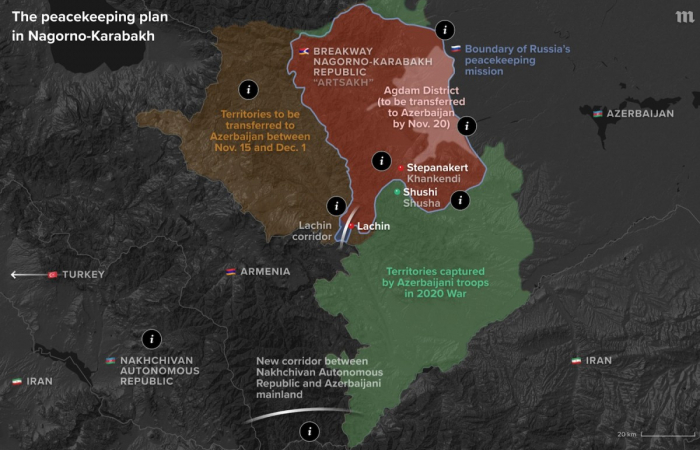
Armenia and Azerbaijan "should come to terms on their own, without external pressure, without any artificial deadlines or arbitration." This was stated by Russian Foreign Minister Sergei Lavrov, whilst speaking in Yerevan on the state of negotiations on the settlement of the Karabakh conflict."We will be prepared to support any solution that will suit all parties concerned. If an agreement is concluded, we shall be geared to act in concert with the other participants in the OSCE Minsk Group as a guarantor of the settlement," the Minister added.

The Russian Foreign Minister, speaking after a meeting with his Armenian counterpart Zohrab Mnatsakanyan said on Monday (11 November|) that the parties to the conflict should be ready for a compromise, which should reflect a real and fair balance of interests."The principles of territorial integrity, self-determination and exclusively peaceful settlement of disputes are enshrined in all documents that are discussed by the sides. In any case, a final solution should take into account all these principles, and neither Yerevan nor Baku argues against this. Any treaty, moreover on this challenging issue, is a compromise," Lavrov said.

"As co-chairs [of the Organization for Security and Cooperation in Europe Minsk Group on Nagorno-Karabakh], we try to make sure that this compromise is fair and reflects a real and fair balance of interests," the foreign minister said.

Moscow will continue active mediation efforts on various platforms in order to resolve the Nagorno-Karabakh issue, the Russian foreign minister stated. "Russia is ready to continue active mediation efforts as a member of the OSCE Minsk Group and a participant in talks with Armenia and Azerbaijan," he pointed out.

The Russian top diplomat highlighted "the importance of facilitating talks between the parties [to the conflict] and the need to take steps to ease tensions in the conflict zone based on the existing agreements, including those signed at the April meeting between the foreign ministers of Russia, Armenia and Azerbaijan and the three co-chairs of the Minsk Group," Lavrov added.

"We believe that it is important to continue implementing the measures agreed by the ministers, which were discussed at a meeting between the leaders of Armenia and Azerbaijan earlier in the year," the Russian foreign minister noted.

When asked about Russia's attitude towards the proposal to return Nagorno-Karabakh to the negotiating table as a full-fledged participant in the settlement process, the minister said it was up to the parties themselves "to coordinate and determine the composition of the participants in the negotiations." "At an early stage of consultations and subsequent negotiations on the Nagorno-Karabakh settlement, when hostilities stopped, Nagorno-Karabakh was a party to the relevant agreements and talks, which began after the cessation of hostilities. At some point, the Armenian leadership, one of the previous presidents, made the decision that Yerevan would represent the interests of Nagorno-Karabakh," he explained.

"As members of the group of co-chairs, while promoting that process, we can only seek to ensure that it proceeds in line with the general consent. It is clear to everyone that it will be impossible to finalize any agreements without the consent of the people of Nagorno-Karabakh. Armenia will just not support them," he stressed.

According to Lavrov at his meeting today with Armenian Prime Minister Nikol Pashinyan he was reminded of the prime minister's statement that "the final agreements should take into account the interests of Armenia, Nagorno-Karabakh and Azerbaijan." "It is hard to argue with that," the minister concluded.

source; commonspace.eu with Tass news agency

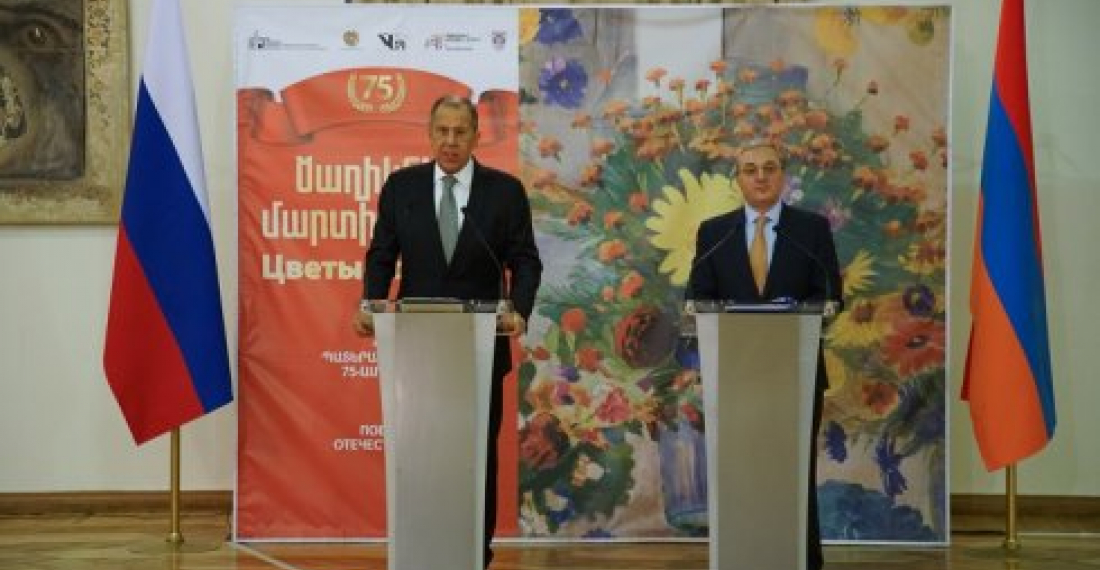
photo: Russian Foreign Minister Sergei Lavrov speaking in Yerevan on Monday, 11 November after a meeting with his Armenian counterpart Zohrab Mnatsakanyan (picture courtesy of the press service of the Ministry of Foreign Affairs of the Russian Federation
Related articles

Editor's choice
News
Aden under curfew, as problem in Yemen's south deepens

Aden under curfew, as problem in Yemen's south deepens

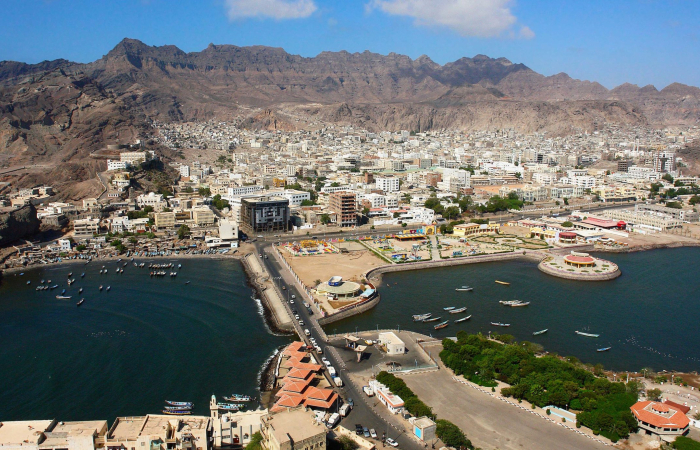
The port city of Aden, in Yemen's south, has been put under curfew, as the rift in the country between  the Saudi led coalition which  backs Yemen's presidential governing council, and the southern forces led by the Southern Transitional Council (STC), deepens. Abdul Rahman al-Mahrami, a member of the Yemeni Presidential Governing Council and commander of the al-Amalik brigades, has ordered a curfew in the temporary capital, Aden, "to maintain security". "A curfew has been imposed throughout Aden Governorate from 9:00 p.m. to 6:00 a.m., in accordance with the instructions of Commander Abdul Rahman al-Mahrami, a member of the Presidential Management Council," the statement said. It states that only security and military personnel, as well as medical and technical teams with approved permits, will be allowed to move in the area during these hours. Yemen's presidential council, which is backed by Saudi Arabia and which already is in a struggle with the Houthi Movement in the north of the country who also occupy the capital Sanaa, two days ago issued an order for the arrest of the head of the Southern Transitional Council (STC),, Aidarous al Zubaidi. The STC have wide support among people in the South, and advocate that South Yemen restores its independence. The coalition warned of further escalation in Aden, long regarded as an STC stronghold, as the Presidential Leadership Council (PLC) chief accused STC leader Aidarous Al Zubaidi of “high treason” and announced the revocation of his membership in the governing body. The moves mark a sharp escalation in tensions within the anti-Houthi camp, despite National Shield Forces, rivals of the STC and former allies, having recently retaken control of Hadhramaut and Mahra from southern fighters. The STC’s takeover of the two regions last month angered Saudi Arabia and contributed to igniting the current internal conflict. (click the picture to read more)

Popular

Editor's choice
News
Aden under curfew, as problem in Yemen's south deepens

Aden under curfew, as problem in Yemen's south deepens

The port city of Aden, in Yemen's south, has been put under curfew, as the rift in the country between  the Saudi led coalition which  backs Yemen's presidential governing council, and the southern forces led by the Southern Transitional Council (STC), deepens. Abdul Rahman al-Mahrami, a member of the Yemeni Presidential Governing Council and commander of the al-Amalik brigades, has ordered a curfew in the temporary capital, Aden, "to maintain security". "A curfew has been imposed throughout Aden Governorate from 9:00 p.m. to 6:00 a.m., in accordance with the instructions of Commander Abdul Rahman al-Mahrami, a member of the Presidential Management Council," the statement said. It states that only security and military personnel, as well as medical and technical teams with approved permits, will be allowed to move in the area during these hours. Yemen's presidential council, which is backed by Saudi Arabia and which already is in a struggle with the Houthi Movement in the north of the country who also occupy the capital Sanaa, two days ago issued an order for the arrest of the head of the Southern Transitional Council (STC),, Aidarous al Zubaidi. The STC have wide support among people in the South, and advocate that South Yemen restores its independence. The coalition warned of further escalation in Aden, long regarded as an STC stronghold, as the Presidential Leadership Council (PLC) chief accused STC leader Aidarous Al Zubaidi of “high treason” and announced the revocation of his membership in the governing body. The moves mark a sharp escalation in tensions within the anti-Houthi camp, despite National Shield Forces, rivals of the STC and former allies, having recently retaken control of Hadhramaut and Mahra from southern fighters. The STC’s takeover of the two regions last month angered Saudi Arabia and contributed to igniting the current internal conflict. (click the picture to read more)