Gordon Brown calls on the International Criminal Court to prosecute Taliban leaders for a crime against humanity for denying education and employment to Afghan girls and women

Former British Prime Minister, Gordon Brown, who is the UN Special Envoy for Global Education, has called on the International Criminal Court to prosecute Taliban leaders for a crime against humanity for denying education and employment to Afghan girls and women.  Brown told a virtual UN press conference on the second anniversary of the Taliban takeover of Afghanistan on Tuesday that its rulers are responsible for “the most egregious, vicious and indefensible violation of women’s rights and girls’ rights in the world today".

The International Criminal Court should prosecute Taliban leaders for a crime against humanity for denying education and employment to Afghan girls and women, the UN special envoy for global education said.
Gordon Brown told a virtual UN press conference on the second anniversary of the Taliban takeover of Afghanistan on Tuesday that its rulers are responsible for “the most egregious, vicious and indefensible violation of women’s rights and girls’ rights in the world today.”

The former British prime minister said he has sent a legal opinion to ICC prosecutor Karim Khan that shows the denial of education and employment is “gender discrimination, which should count as a crime against humanity, and it should be prosecuted by the International Criminal Court.”

The Taliban took power in August 2021, during the final weeks of the US and NATO forces’ pullout after 20 years of war. As they did during their previous rule of Afghanistan from 1996 to 2001, the Taliban gradually reimposed their harsh interpretation of Islamic law, or Sharia, barring girls from school beyond the sixth grade and women from most jobs, public spaces and gyms and recently closing beauty salons.

Brown urged major Muslim countries to send a delegation of clerics to Afghanistan’s southern city of Kandahar, the home of Taliban supreme leader Hibatullah Akhundzada, to make the case that bans on women’s education and employment have “no basis in the Qur’an or the Islamic religion” — and to lift them.
He said he believes “there’s a split within the regime,” with many people in the education ministry and around the government in the capital, Kabul, who want to see the rights of girls to education restored. “And I believe that the clerics in Kandahar have stood firmly against that, and indeed continue to issue instructions.”

The Taliban’s chief spokesman, Zabihullah Mujahid, brushed aside questions about restrictions on girls and women in an Associated Press interview late Monday in Kabul, saying the status quo will remain. He also said the Taliban view their rule of Afghanistan as open-ended, drawing legitimacy from Islamic law and facing no significant threat.

Brown said the Taliban should be told that if girls are allowed to go to secondary school and university again, education aid to Afghanistan, which was cut after the bans were announced, will be restored.
He also called for monitoring and reporting on abuses and violations of the rights of women and girls, sanctions against those directly responsible for the bans including by the United States and United Kingdom, and the release of those imprisoned for defending women’s and girls’ rights.

Brown said 54 of the 80 edicts issued by the Taliban explicitly target women and girls and dismantle their rights, most recently banning them from taking university exams and visiting public places including cemeteries to pay respects to loved ones.

He announced that the UN and other organizations will sponsor and fund Internet learning for girls and support underground schools as well as education for Afghan girls forced to leave the country who need help to go to school.

“The international community must show that education can get through to the people of Afghanistan, in spite of the Afghan government’s bans,” he said.

Brown said there are a number of organizations supporting underground schools and there is a new initiative in the last few weeks to provide curriculum through mobile phones, which are popular in Afghanistan.
He wouldn’t discuss details over concerns for the safety of students and teachers, “but there is no doubt that girls are still trying to learn, sometimes risking a lot to be able to do so.”

During the 20 years the Taliban were out of power, Brown said 6 million girls got an education, becoming doctors, lawyers, judges, members of parliament and cabinet ministers.

Today, he said, 2.5 million girls are being denied education, and 3 million more will leave primary school in the next few years, “so we’re losing the talents of a whole generation.”

Brown urged global action and pressure — not just words — to convince the Taliban to restore the rights of women and girls.

“We have not done enough in the last two years,” he said. “I don’t want another year to go by when girls in Afghanistan and women there feel that they are powerless because we have not done enough to support them.”
source: commonspace.eu with agencies
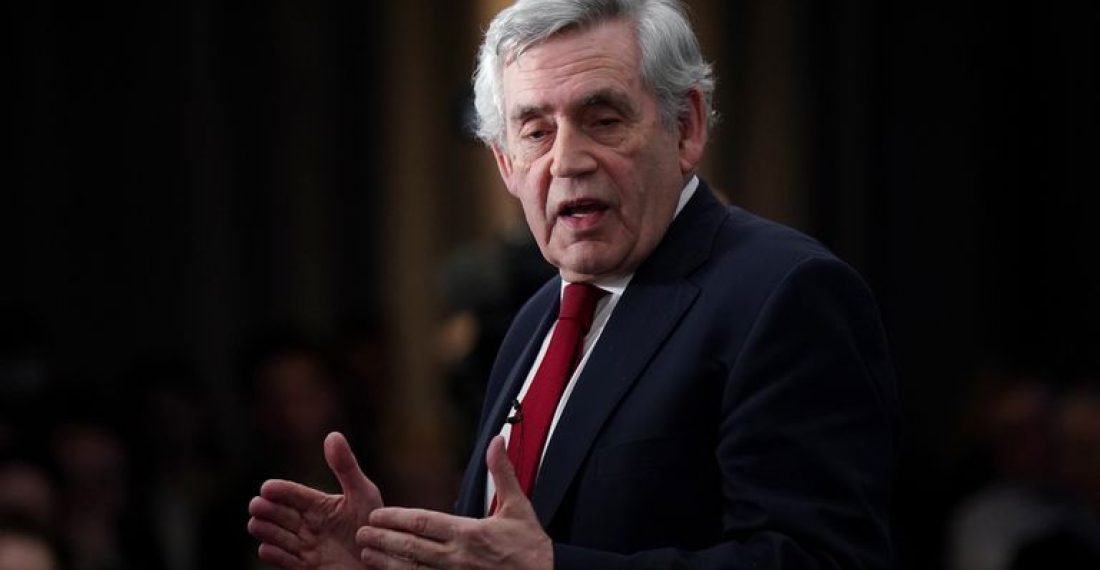
photo: Gordon Brown (archive picture)

Related articles

Editor's choice
News
UAE says it will withdraw from Yemen, but division emerges in Yemeni presidential council

UAE says it will withdraw from Yemen, but division emerges in Yemeni presidential council

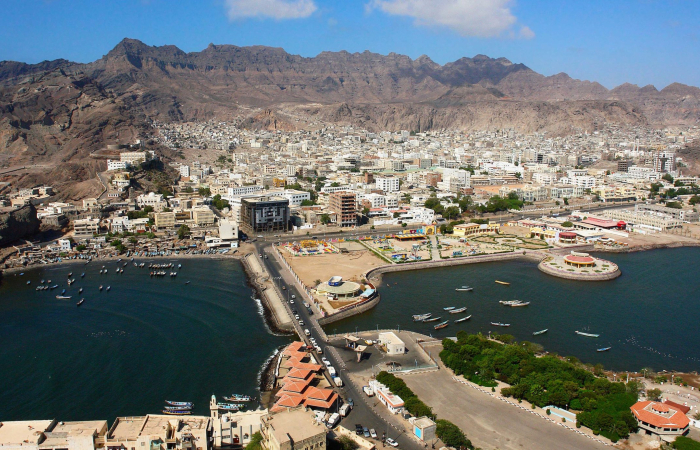
In a move seen as an attempt to de-escalate a crises with Saudi Arabia, the United Arab Emirates, on Tuesday (30th December) announced that it was heeding a call to withdraw its troops from Southern Yemen. UAE says that its presence included counter-terrorism teams that were crucial in fighting against Islamist groups. UAE sources said that parts of Yemen not controlled by the Houthis have had Al Qaeda in the Arab Peninsula (AQAP) operatives using the territory to launch attacks on Europe, the US and Middle East. UAE teams have co-ordinated with American and British special forces and intelligence. The sources added that Emirati forces and their Yemeni allies also helped reverse Houthi gains in the south. including the liberation of Aden port. The small UAE contingent has remained in place since the UAE withdrew most of its military personnel in 2019. The leading English-language newspaper in Abu Dhabi, The National, said that the main UAE force was based at Riyan Mukalla International Airport, with access to fixed-wing aircraft and helicopters, but also operated smaller contingents in the port town Balhaf and Shabwa. "It is understood it also flew a number of drones from the airbase that were able to track terrorist movements, pass information back to its allies and assisted special forces' missions." Meanwhile a division has emerged in Yemen's presidential council after four members denounced what they called the 'unilateral decisions' by the chairman. Four of Yemen’s eight Presidential Leadership Council members on Tuesday denounced an announcement by the council’s chairman accusing him of breaching the governing agreement. Tension between Yemeni leaders has been rising for weeks, underscoring the fragility of the country's already fractured political landscape and further complicating efforts to confront the Iran-backed Houthi rebels. The latest rift took an unprecedented turn on Tuesday morning, marked by a Saudi-led coalition “limited operation” striking combat vehicles Riyadh linked to the Southern Transitional Council, which has three members in the PLC. The PLC Chairman, Rashad al Alimi, on Tuesday said that he was seeking to cancel the joint defence agreement with the UAE. “What has been issued … constitutes a clear violation of the Declaration of the Transfer of Power [agreement], which explicitly stipulates that the Presidential Leadership Council is a collective body whose decisions are taken by consensus, or by majority when consensus is not possible,” the statement by the four members said. “It does not, under any circumstances, allow for unilateral decision-making on sovereign, military, or major political matters." The statement was signed by STC chief Aidarous Al Zubaidi, Faraj Al Bahsani, Tariq Saleh and Abu Zaraa al Muharrami. (click the picture to read the full article).

Popular

Editor's choice
News
UAE says it will withdraw from Yemen, but division emerges in Yemeni presidential council

UAE says it will withdraw from Yemen, but division emerges in Yemeni presidential council

In a move seen as an attempt to de-escalate a crises with Saudi Arabia, the United Arab Emirates, on Tuesday (30th December) announced that it was heeding a call to withdraw its troops from Southern Yemen. UAE says that its presence included counter-terrorism teams that were crucial in fighting against Islamist groups. UAE sources said that parts of Yemen not controlled by the Houthis have had Al Qaeda in the Arab Peninsula (AQAP) operatives using the territory to launch attacks on Europe, the US and Middle East. UAE teams have co-ordinated with American and British special forces and intelligence. The sources added that Emirati forces and their Yemeni allies also helped reverse Houthi gains in the south. including the liberation of Aden port. The small UAE contingent has remained in place since the UAE withdrew most of its military personnel in 2019. The leading English-language newspaper in Abu Dhabi, The National, said that the main UAE force was based at Riyan Mukalla International Airport, with access to fixed-wing aircraft and helicopters, but also operated smaller contingents in the port town Balhaf and Shabwa. "It is understood it also flew a number of drones from the airbase that were able to track terrorist movements, pass information back to its allies and assisted special forces' missions." Meanwhile a division has emerged in Yemen's presidential council after four members denounced what they called the 'unilateral decisions' by the chairman. Four of Yemen’s eight Presidential Leadership Council members on Tuesday denounced an announcement by the council’s chairman accusing him of breaching the governing agreement. Tension between Yemeni leaders has been rising for weeks, underscoring the fragility of the country's already fractured political landscape and further complicating efforts to confront the Iran-backed Houthi rebels. The latest rift took an unprecedented turn on Tuesday morning, marked by a Saudi-led coalition “limited operation” striking combat vehicles Riyadh linked to the Southern Transitional Council, which has three members in the PLC. The PLC Chairman, Rashad al Alimi, on Tuesday said that he was seeking to cancel the joint defence agreement with the UAE. “What has been issued … constitutes a clear violation of the Declaration of the Transfer of Power [agreement], which explicitly stipulates that the Presidential Leadership Council is a collective body whose decisions are taken by consensus, or by majority when consensus is not possible,” the statement by the four members said. “It does not, under any circumstances, allow for unilateral decision-making on sovereign, military, or major political matters." The statement was signed by STC chief Aidarous Al Zubaidi, Faraj Al Bahsani, Tariq Saleh and Abu Zaraa al Muharrami. (click the picture to read the full article).