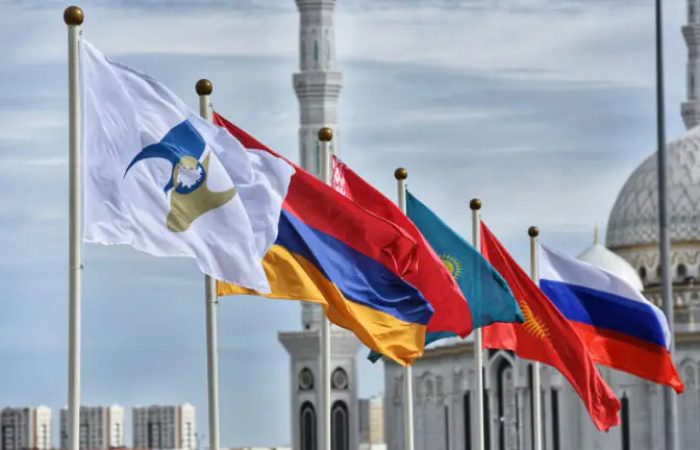
Kazakh President Kassym-Jomart Tokayev visited Brussels this week, closing major deals in the process, worth around 462 million USD or 407 million EUR in total. The four deals making up this package were unveiled at the “Strengthening EU-Kazakhstan Connectivity: Perspectives and Strategic Potential of the Middle Corridor” business forum, and as the name of the forum already indicates, all four of them revolve around transport and Eurasian connectivity. The conference was organised by Kazakhstan’s national railway operator, bringing together representatives of the European Commission, European Parliament, and stakeholders from industry, in particular European transport and logistics companies. More information can be found in our article written on the event, which has been published on commonspace.eu.
However, the transport deals only turned out to be the start of business deals signed during Tokayev’s Brussels visit. The Kazakh president would go on to meet with European Commission President Ursula von der Leyen and European Council President António Costa. Their joint statement following the meeting unsurprisingly focused on connectivity, energy security and resilient supply chains. Negotiators of the two parties also finished talks on a visa agreement simplifying short stays in the EU for Kazakh citizens. The agreement itself is not yet in force and only covers the process for Kazakh citizens to apply for a short-stay EU visa. A readmission agreement was also reached to facilitate the enforcement of the EU’s migration rules. Interestingly, the EU Commission’s press release made sure to cite “significant progress and good cooperation with Kazakhstan to prevent the circumvention of EU sanctions” as the reason for the discussions having taken place and ultimately for these agreements being reached, clearly making sure to highlight Kazakhstan’s cooperative conduct on sanctions. While this statement was not covered by most media outlets, the fact that the Commission’s press service made sure to include it should not be overlooked. The statement serves as a clear signal to relevant policymakers, who unlike the average reader, will be keenly aware of its inclusion and therefore of the Commission’s implied overarching message that those who play along with its sanctions regime will be rewarded with opportunities like these negotiations and potentially further lucrative prospects with the large economic bloc.
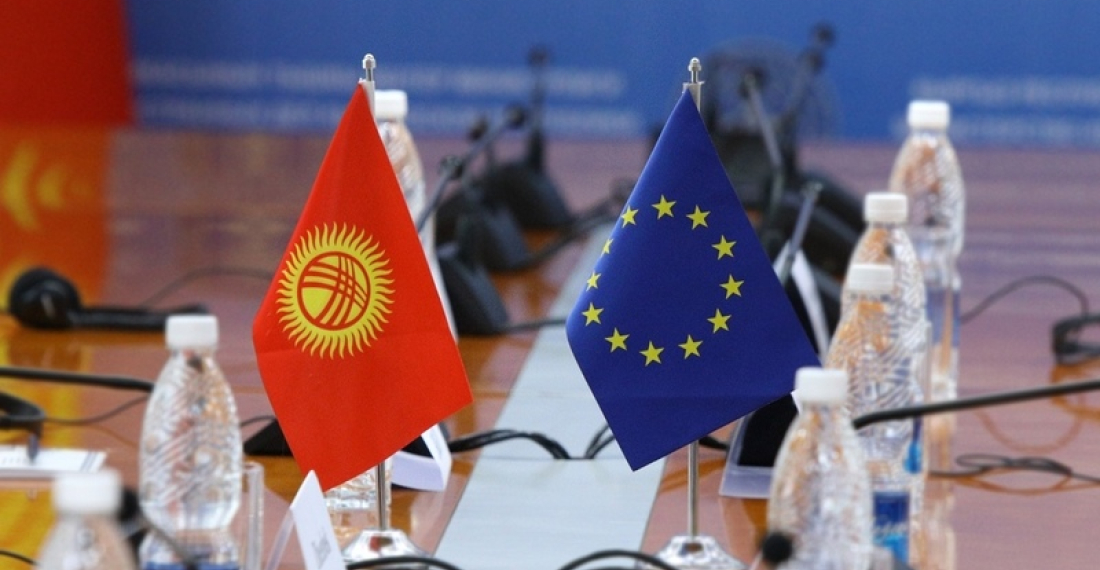
Looking at the regional Central Asian picture, it becomes clear that the Commission’s recent dealings with Kazakhstan stand in stark contrast to how it deals with one of its neighbours, Kyrgyzstan. Two months ago, on 24 April, the EU unveiled its 20th sanctions package and announced its first use of targeted ‘anti-circumvention’ tools applied to another country directly. For more information, see our recent Central Asia Concise newsletter written on this topic. This was due to Kyrgyzstan’s role in importing European dual-use technologies, in particular telecommunications equipment and metalworking machinery that far exceeded its own demand and were being re-exported to Russia, according to EU Sanctions Envoy David O’Sullivan. But when contrasted with the EU’s recent warm reception of Kazakhstan, its measures towards Kyrgyzstan become more akin to the ‘stick’ as opposed to the ‘carrot’ extended towards Tokayev’s government this week.
This ‘carrot and stick’ approach to Central Asia and sanctions circumvention is still in its early stages, but marks a much more confrontational and bold shift in the EU’s strategy to enforce its sanctions after years of criticism that the bloc was unable to leverage its political and economic power to effectively implement its secondary sanctions on countries indirectly supporting Russia’s war effort. It has been 2 months since the EU tested its ‘anti-circumvention’ tool on Kyrgyzstan, and some recent developments indicate that the pressure may be working. Recently two Kyrgyz state-owned banks, Eldik Bank and Abank removed 131 companies from their client lists, and are currently investigating another 80 companies due to “sanctions risks”. This follows an order from the Kyrgyz Ministry of Justice for 50 companies registered in the country to close. Although the Kyrgyz government has consistently denied accusations of sanctions circumvention, it has also criticised the EU’s “anti-circumvention” tools as unfair to the Kyrgyz economy. The EU says such measures are intended to be used only as a last resort against non-compliant countries. However, the government has clearly been taking steps to mitigate sanction-circumventing behaviour. As a result, the EU may already be replacing the stick with the carrot, as a much more positive meeting in Baku on June 24 between the two parties apparently focused on developing bilateral cooperation and building a partnership based on mutual trust and respect. Some recent positive developments are the inclusion of Kyrgyz honey in relevant registers of the EU Commission as well as the removal of Kyrgyz airline carriers from the EU Air Safety blacklist. Although this pales in comparison to the deals Kazakhstan has secured with the large economic bloc, it may signal a turnaround or at least recognition from the EU that Kyrgyzstan is acting in the bloc’s interest by reducing sanction-circumventing behaviour.
Kyrgyzstan’s increasingly precarious internal situation
Unfortunately, just as it seems that Kyrgyzstan is beginning to mend its relationship with the EU, the problems have also began stacking up internally. Two weeks ago the Kyrgyz State Comittee for National Security (GKNB) stated that it had detained 31 suspected members of Katibat al-Tawhid wal-Jihad (KTJ) and the Islamic State. KTJ in particular can be considered more dangerous than other terrorist groups that the GKNB has been dealing with in the region, due to their connections to al Qaeda and the Al-Nusrah Front which have been active since the Syrian Civil War or even earlier. The fact that the GKNB has identified the arrestees as part of these groups instead of the usual vague label of “religious extremists” also shows that the Kyrgyz government may take this specific threat more seriously. These woes are compounded by the current instability in the Kyrgyz government, particularly the GKNB, as their former leader Kamchybek Tashiev, often described as the second most powerful man in the country, is currently embroiled in a a messy trial after having been accused of plotting a coup (for more information please see the article below). Additionally, Kyrgyz Energy Minister Taalaibek Ibraev was recently dismissed from his position, signalling that President Sadyr Japarov may be looking to continue reshuffling his government. Kyrgyzstan has proved extremely resilient in the past, but with both external pressure and internal issues piling up, now is an important time to pay attention country’s political situation and how Japarov’s government plans to navigate through it.
Source: This briefing was first published on Central Asia Concise on 26 June 2026. Check the whole issue here. Subscribe for free here.