


Region

Türkiye

Editor's choice
Opinion
Opinion: A changing "Organisation of Turkic States"

Opinion: A changing "Organisation of Turkic States"

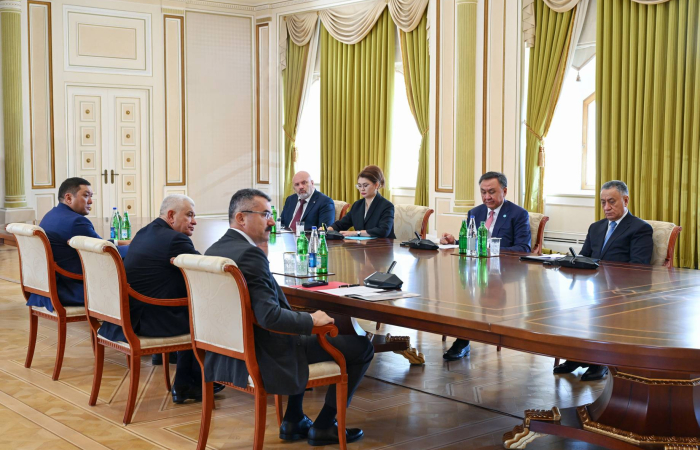
Until recently, the Organization of Turkic States (OTS) could best be understood in terms of identity, language, culture, and economic collaboration. This is changing. On September 17, Baku played host to the Fifth Meeting of the Secretaries of the Security Councils of the OTS countries. In his message to the meeting, the president of Azerbaijan, Ilham Aliyev, noted that cooperation among the Turkic peoples no longer consisted of political, economic, and cultural matters only but had gained a “long-term strategic nature.” More importantly, he referred to the consultations of the national security councils as a factor facilitating the emergence of a “common security architecture.” Clearly, it does not mean that the OTS is evolving into a military organisation of the NATO kind: there is no commitment of collective defence similar to that of NATO’s Article 5, and there is no evidence of this desire on the part of all members of the organisation. Yet, the September meeting means something different: security collaboration within the Turkic context is becoming more regular and operational. This process has been quite gradual. The OTS started organising meetings of national security council secretaries since 2022. As of September 2026, the mechanism had attained its fifth meeting. The organisation itself considers security cooperation to be an increasingly important area of interest in relation to both conventional and non-conventional threats. This includes such areas as terrorism, transnational organized crime, drug trafficking, extremism, hybrid threats, and critical infrastructure protection. (click image to read the op-ed in full)
Editor's choice
News
Leaders of Shanghai Cooperation Organisation gather in Bishkek

Leaders of Shanghai Cooperation Organisation gather in Bishkek

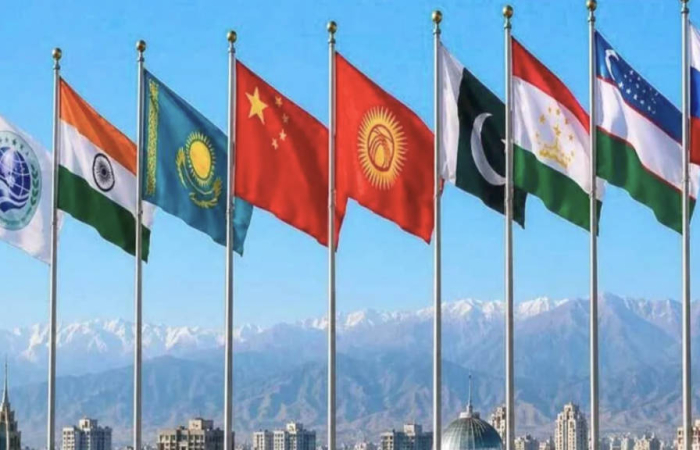
The 2026 Shanghai Cooperation Organisation Heads of State summit takes place from Tuesday, September 1, in Bishkek. It is being hosted by the president of Kyrgyzstan, Sadyr Japarov, who currently holds the SCO chair. High-level meetings will also be held in the SCO Plus format. The SCO summit will be attended by Belarusian President Alexander Lukashenko; Chinese President Xi Jinping; Indian Prime Minister Narendra Modi; Iranian President Masoud Pezeshkian; Kazakh President Kassym-Jomart Tokayev; Pakistani Prime Minister Shehbaz Sharif; Russian President Vladimir Putin; Tajik President Emomali Rahmon; Uzbek President Shavkat Mirziyoyev; as well as  Azerbaijani President Ilham Aliyev; Armenian Prime Minister Nikol Pashinyan; Mongolian President Ukhnaagiin Khürelsükh; Chairman of the Council of Ministers of Togo Faure Essozimna Gnassingbé; Turkish President Recep Tayyip Erdoğan; Laos President Thongloun Sisoulith; the Vice President of Vietnam Võ Thị Ánh Xuân; and the Deputy Prime Minister of Egypt Hussein Issa. Representatives of international organisations include UN Secretary-General António Guterres; CIS Secretary-General Sergei Lebedev; CSTO Secretary-General Taalatbek Masadykov; Chairman of the Board of the Eurasian Economic Commission Bakytzhan Sagintaev; and Secretary General of the Conference on Interaction and Confidence Building Measures in Asia Kairat Sarybay. The member-state session brings together Belarus, China, India, Iran, Kazakhstan, Kyrgyzstan, Pakistan, Russia, Tajikistan, and Uzbekistan. Combined, these ten SCO countries have a collective GDP (PPP) of about 36% of the global total (US$80 trillion) and a population of about 3.4 billion. They will discuss pressing issues on the international and regional agenda and priority areas for the SCO’s development, as well as prospects for deepening cooperation in the political, trade and economic, transport and logistics, digital, environmental, cultural and humanitarian spheres. Following the meeting, a ‘Bishkek Declaration’, marking the 25th anniversary of the SCO, as well as documents and decisions aimed at further strengthening multifaceted cooperation and improving the organisation’s activities, will be signed. A number of thematic statements by the heads of state will also be adopted. At the expanded SCO Plus format, participants will exchange views on strengthening the central coordinating role of the United Nations and international law, as well as promoting sustainable development and expanding mutually beneficial cooperation.