October is Ghvinobistve, also known as the Georgian month of wine, when Georgia’s vineyards are filled with pickers, and the harvest feasts begin. Wine here is not simply tradition; it's a livelihood and hallmark for the country, even bringing in politics and the wider world along with it. Georgian wine has been continually made in the same buried clay vessels used for thousands of years, yet it remains heavily tied to a single market: Russia took almost two-thirds of the value of Georgia’s wine exports in the first nine months of this year.
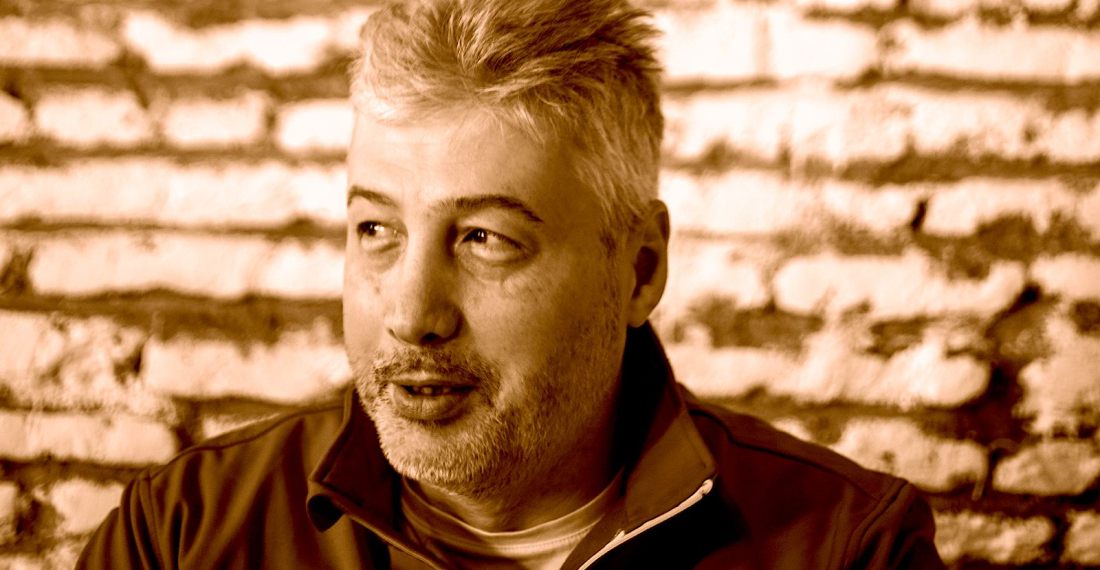
Giorgi Dartsimelia has spent a substantial amount of his career linking the vineyard, the tourist, and delicious cuisine. A sommelier and WSET-certified educator, he is the founder and CEO of Queen Tamada, which has run boutique wine and gastronomy journeys across Georgia since 2014. In this conversation, he talks about growing up in a “wine nation” and turning that into a career, why the qvevri is both an ancient method and a modern marketing symbol, what a difficult harvest means for growers, why he thinks Georgia must look beyond Russian buyers, and how wine could bring Georgia, Armenia and Azerbaijan together.
Read the full interview below:
Welcome, Giorgi. You founded Queen Tamada, which has been running boutique wine journeys across Georgia since 2014, and you’re also a sommelier and WSET-certified educator, so you spend your days both showing people wine and teaching them how to understand it. That’s not the usual route into a career, so I’d love to start at the beginning. How did you first come to wine, and how did that grow into guiding, teaching, and building your own tourism company?
My relationship with wine — as I'm Georgian, I was born with it. That's how we say it, because we are the wine nation, and I think my relationship started in childhood. Yeah, then over time, maybe at a later age, I was asking myself what I wanted to do for myself, as I was not young anymore.
I said maybe I should commit myself to wine. That came first to my mind, and after, I double-checked it several times. So I was certain that I would be dealing with it… It's kind of a logical connection how I started, because at that time I was in tourism. And in tourism, you always try to find a niche if you want to create some special product. And again, wine was the first idea that came to my mind, coupled with food, of course. Because what is wine without proper food, or what is good food without a good wine? So that's how we started wine tourism, and we still keep doing this.
Georgia has been making wine for thousands of years, and the qvevri, the buried clay vessel, is still at the centre of that tradition, while much of the wider wine world works with steel and oak. Having taught and guided on both sides of that divide, what does the qvevri do differently, in the glass and in the way of thinking behind it? Do you feel European winemakers are starting to learn from it, or do they still see it simply as a foreign curiosity?
Qvevri is actually… well, look, there are two things about qvevri. One is its connection to possibly the most ancient ancestors — not only Georgians, but whoever started producing wine.
And the second thing is that it is a marketing niche for Georgia. When it entered the wine market, or it entered the tourism market, qvevri kind of became like an iconic item or symbol for Georgia, one of the core things that Georgia uses to advertise itself.
So in a way, that is kind of a modern advertising tool. And also there is something connected more with the first and the second: the Georgians' resistance to keep making wines in qvevri despite the fact that a lot of modern winemaking means, techniques, and vessels also exist.
So Georgians do this because they like it. It's not just a vessel but also a method, with skin-fermented white wines, which the rest of the world still struggles to understand. Well, there is orange wine, but it has a very, very small portion, possibly the smallest on the wine market. So orange wines are not well understood — what the skin contact actually means. So in a way, the Georgian understanding of skin contact and the understanding in the rest of the world differ, of course. And that's where there is a niche to explain this through our wine tours, because it becomes like an educational activity, together with, I don't know, enjoying nice food and sightseeing and so on.
So always the intellectual people who value wine and good food come not only to try and see it, but also to experience and to learn something new. So if you ask me what the qvevri is, maybe I would add that third element, which is that it is for knowledge lovers, intellectual people. So that is an additional thing as well.
In truth, Georgia can set up a model, let's say, and create a new niche for these wines to have a market. As there is also a certain portion of customers who appreciate these wines where it's not only the taste of it, but also its connection to something. And those people who have a good taste, they also love to hear stories, and every wine comes always with a story. And also, that's an important thing: when they taste the qvevri wines, they also go and see people who hand-make this vessel, and that is a special experience.
Wine in Georgia is about far more than what’s in the bottle: the supra, the tamada, the harvest gatherings. It’s also tied up with politics, since Russia still takes nearly two-thirds of the value of Georgian wine exports, while many producers have spent years courting Europe and the US. From where you sit, with one foot in the vineyards and one in the tourism trade, what does wine tell visitors about Georgian society, and how much do the families who make it feel that pull between east and west?
Well, I should apologize, but I should tell: this is very silly of us — that we have such a great environment and place, and actually a good heritage, as we've got from our ancestors, with these great varieties, with such a large diversity.
And look, we have the capability, and I mean, we have the support. Georgia is not limited to selling its wine, as it was in Soviet times, when you were prohibited from trading with the rest of the world.
Now it's open, but our brains still remain attached. So maybe the Soviet Union died long ago, but the brains that function in a Soviet way are still alive. So for me, honestly, it is unacceptable to actually sell wine to an aggressor country. So this does not bring Georgia anywhere; it holds it back.
So I remember the 2006 or 2007 Russian ban on wines. That was a rebirth of Georgian wines. Suddenly Georgians recalled that they can make a real wine, a proper one, improve its quality, take care of certain things, and move to other places to introduce their wine to the rest of the world.
And, I mean, for almost 20 years I've been trying to understand where did we go, and we actually went back. You know, it's just OK; we sell more wine now than we were selling in 2007, and in the coming years. But, obviously, we are losing the position at the moment. And the wines we should be producing now are more about introducing wines to the rest of the world — higher quality, taking off special niches, further approaching all of these qvevri wines, which are still not legally defined as what it really is.
There are no control mechanisms, less involvement for winemakers, less initiative from businesses about the style, quality, or technologies involved in this wine — whether we can make skin fermenting in other vessels and still call it qvevri, and so on. And there are so many issues that we should be working on now — and selling wines at this time to Russia and not caring about introducing to other markets. Well, I would not call Russia a market for Georgia at all for now, but anyway. So we should save ourselves from this. We are doing the opposite at the moment. I'm sorry to say that, but it's a shame on us, really.
Would you find that other winemakers or people in the tourism industry have a similar perspective on that?
I honestly have not asked, but the tendency shows that there is a certain pattern created by large producers, let's say, and then the rest follows.
Tourism actually uses whatever is made in the country, and if it is designed for Russian tourists, they come to taste Georgian wines and go to Georgian restaurants and places and so on — they adapt to that.
So I don't really find many people… I find those who actually share my view: it should be, in principle, a ban on selling wines to Russia. Well, I'm not saying to host Russian tourists or not; that's another case. But banning the selling of wines to Russia, that would do a lot to Georgia. And that's a big step: that you don't trade with a country that has actually done such harm to us. Also, the problem is to recognize… our state, as it is a constant threat to our statehood, to our nation, and it's the one that keeps slaughtering people in Ukraine for the fifth year.
So why should we trade with them and also make it one of our largest trade partners? I have no understanding of this. So I don't think there is any explanation or forgiveness. It's immoral; it is very silly. For security, it's, I mean, very dangerous, and from an economic point of view, this is absolutely suicidal.
It’s October, which Georgians call the month of wine, and the harvest is the heart of the year. But growers in recent years have been dealing with difficult weather, including heat, drought, and heavy rain at the wrong moment. What are you seeing on the ground, and how are growers adapting? And as wine tourism grows, how do you keep it from wearing down the landscapes and traditions that visitors come to see? Does the old qvevri approach, so rooted in the land, have anything to offer here?
Oh, well, the first concern is the weather conditions and this year's harvest. This was a tough year. It still is. So many of the vineyards have not been picked because of the harsh weather conditions. And, I mean, Georgia is known for weather variations, but this was too extreme. Even Kakheti, which is actually a very important producer of about two-thirds of the overall Georgian wine, really suffered from the weather hazards. And I don't know when everything will be over — the harvest will be completed — we'll see what kind of wine it will result in. In terms of affecting wine tourism, I don't think one harvest can harm it, so it will carry on.
What worries me in terms of wine tourism, or gastronomic tourism in general, is that again we don't try to innovate, you know, to offer something new — going to new markets, creating new marketing tools, or new themes outside of qvevri. I mean, we appreciate and present ourselves as qvevri winemakers, but this is not the only thing that Georgia has, or the Georgian wine industry has.
So it should move further — move into new technologies, some new styles of wine, new rules for winemaking, some better involvement of business in wine law, wine rules, better standards, better cooperation between the tourism people and wine industry people.
And maybe we should listen more to the guests who come, who appreciate Georgian wine, who promote Georgian wine without Georgians actually being involved in that. So Georgia does not spend on this. So we gain money from receiving tourists, and they go outside and promote us, and there should be appreciation of this. These people, in a sense, work for us for free, so we should understand this.
And look, there are new styles of wines appearing, which are important to introduce. And I think the gastronomic and this niche, the wine and gastronomy tourism people — I would call them professionals — they've worked in this field already for, I think, the second decade. So I've known people who stably do this.
So, I mean, we should move on, carry on to further things, you know — to further explore, introduce, listen to our guests, you know, make some records, ask for feedback, analyze it, and plan something for the future. You know, you can't always do things in the same way. You are expected to do something different, especially if you have returning customers, let's say, or returning tourists who come back again. So you should be able to offer something new.
And are these returning tourists asking for something new?
Yeah, that's the thing. In my experience, they always do. They may come in five years and ask you, ‘Show me what new things you have, take me to other places — some special experiences.’ You know, it's not only the packages that change; actually, wineries, restaurants, or other places should be offering something new, really. So, I mean, they did not grow with, like, a mental growth [?8], you know, in terms of something new, being more innovative and so on. So that's what we still lack.
Would you say there's also optimism in the wine community to utilize new technologies?
Honestly, what I discovered is a bit of chaos mixed with new bureaucratic things that the wine industry has not gained anything from. And, well, my understanding is, like, certain personalities have the power to create rules just to pretend that they are doing something for the industry, and in fact they are doing the opposite.
So, just a recent update of the wine legislation — certain restrictions brought in, and something… this is not going to work; everybody knows. They keep their mouth shut because nobody wants to make the government angry. So it would not be my style, but anyway. When I didn't like the rules, I was honest at certain meetings and said that I was going to stop working in the field where it was impossible for me to understand. So from one side, the business understands and keeps its mouth shut, and from another side, government people who do not have the political will to actually ask business what they want and what is better for them to perform.
So if wine keeps going to Russia, I don't think it will go anywhere. So — totally contrary.
To close, imagine a reader who has never been to Georgia and has only one chance to understand it through wine. What would you tell them to do: one bottle, one village, one meal, and why?
Well, that is a tough thing — to reduce such a diversity into one bottle, one meal and one place. I'll tell you why. So when a tourist comes to Georgia, especially from long distances — and we love those coming from Australia, let's say, South Africa, Japan, the United States, Canada; these are tourists that actually, I think, the Georgian market should try to develop itself — they don't come only for a small place; they want to see a larger area.
So I was once hosting transboundary tours with our partners in Armenia and Azerbaijan. So transboundary tours would be what I would encourage. And all these tourism industry people in all these three countries — I would encourage the interconnections, you know, like three-country programs, and something that would bring a tourist to one country would automatically mean that they are in all three, and the attraction would increase, because they are going to see it in a triple way.
If there is a shortage of time — there is a distance, and there is no time to do things for 2, 3, 4 days possibly — but if there is time for, like, 10 days, 2 weeks, you can travel around, enjoy the places, and that would give you an overview. The Caucasus is a tiny place. Georgia is a small country, and so are the two other neighboring countries. And I think something done together, you know, joining forces, possibly sharing ideas, showing each culture creates a more complete picture — so we have more chance to work together, to attract more tourists from better markets, much better than Russia, and move into a proper, safer, and more prosperous direction. I think that's the way we should be going. My partner in the company is Armenian, so we plan to do at least these two countries together.
That's the way to do it. There's no bad choice. There is always something that you can compare and say one is bad, good, or excellent. Well, you can divide, but to make restrictions would simplify what is otherwise diverse.
And its beauty, and the secret of enjoyment of such things as wine and gastronomy, is its diversity, and always comparing things. So it's like a never-ending story — every time you're trying, you discover something new. So I think it should not be restricted or diminished to only one exceptional thing, especially if you take either Georgia, Armenia, or Azerbaijan], let's say, Romanée-Conti or Château Pétrus or something. Look we have a long way to go. So I can't really reduce it to one wine or one thing only.
Enjoyed this interview? Thursday Interview has featured a wide range of voices from across Europe, the Caucasus and Central Asia, and beyond. You can read them here:
15 October - Tinatin Khidasheli read the interview here
1 October - Dr. Farid Shafiyev read the interview here
24 September - Benyamin Poghosyan read the interview here
11 June - Satu Koivu read the interview here
4 June - Amanda Paul read the interview here
28 May - Régis Genté read the interview here
21 May - Stephen Gethins MSP read the interview here
14 May - Nigel Ellway read the interview here
7 May - Mehman Aliyev read the interview here
30 April - Dr. Andrzej Klimczyk read the interview here
23 April - Dimitar Borumov read the interview here
19 March - Brian Mefford read the interview here
12 March - Dr. Jamie Shea read the interview here
5 March - Fidan Namazova read the interview here
27 February - Dr. Anar Valiyev read the interview here
19 February - Ambassador Akan Rakhmetullin read the interview here
12 February - Johnny Melikyan read the interview here
5 February - Dr. Sarah Njeri read the interview here
29 January - Mykhailyna Skoryk-Shkarivska read the interview here
22 January - Dr. Stepan Grigoryan read the interview here
15 January - Murad Muradov read the interview here