Theme

Conflict and War

Stories related to violent conflicts, diplomatic tensions, and conflict prevention, mediation and resolution.

Editor's choice
News
In Ethiopia, government forces take rebel capital

In Ethiopia, government forces take rebel capital

Government forces in Ethiopia, have taken control of the town of Mekelle, capital of the Tigray region. Earlier, Ethiopia's federal military said it had recaptured the main airport in the capital of the northern Tigray region, dealing a major setback to an ​opposition alliance in its stronghold. Clashes pitting a rebel alliance led by Tigray's ruling party ‌against the government and its allied forces broke out in northern Ethiopia last week, in the most serious escalation of violence since a 2020-2022 civil war. The fighting has stoked fears that it could escalate into a wider regional conflict, potentially drawing in neighbouring ​countries in the Horn of Africa and the Gulf. In recent days Ethiopia and Eritrea broke off diplomatic relations amid mutual accusations. In Washington, State Department spokesman Tommy Pigott ​said the United States strongly urged Ethiopia and Eritrea to "exercise maximum restraint and return ⁠to dialogue and cooperation as agreed in their 2018 peace framework." "The Horn of Africa cannot sustain another ​military conflict and humanitarian crisis," Pigott said. "A conflict jeopardizes ongoing U.S. collaboration on shared interests with both countries." The ​federal government in Addis Ababa accused Eritrea of supporting the rebel alliance alongside Sudan and Egypt. The three countries deny this. Troops from the Ethiopian National Defence Forces had regained control of Alula Aba ​Nega Airport in Tigray's capital Mekelle,   A Mekelle resident who asked not to be named for security reasons, confirmed the ‌taking of ⁠the airport by government forces and added they could hear gunfire outside the city centre. This source said they had seen some Tigrayan Defence Force fighters abandoning their posts and heading home, and that there was looting of government facilities taking place in the city. Mekelle's airport, which ​is around 10 km (6 miles) from the centre of the city, was ​one of three ⁠airports in the region that were seized by the opposition forces at the start of the fighting on September 23. The taking of Mekelle by government forces would be a major setback for the opposition alliance, although analysts say ⁠it ​would be unlikely to end the conflict. In 2020, federal forces captured ​Mekelle within the first month of the two year war before the TPLF reclaimed it seven months later.
Editor's choice
Monday Commentary
Monday Commentary: On Ukraine, Europe must remain united and resolute

Monday Commentary: On Ukraine, Europe must remain united and resolute

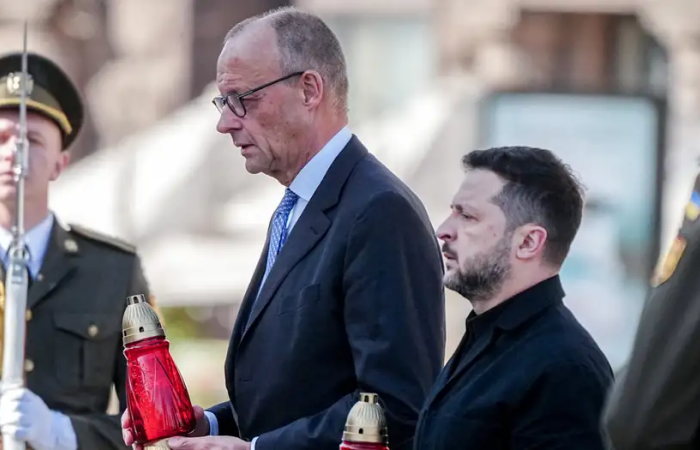
The war in Ukraine rages on, and the constant pounding of Kyiv by Russian drones and missiles, is a reminder that this is not a war being fought in some far away border region. The war turned out very different from the one Vladimir Putin had envisioned when he launched his full scale invasion of Ukraine in February 2022. Thousands of young Ukrainians have died defending their country. Ukraine has been able to optimize its drone capability in order to take the battle back to the Russians, including to Moscow and St Petersburg. But to defend itself and its cities and citizens from sophisticated Russian weaponry Ukraine needs western support. This has not been as forthcoming as the Ukrainians hoped. Certainly Donald Trump has been less enthusiastic in helping Ukraine than his predecessor. Maybe this is now changing too. Europe’s support needs to remain high and consistent, and ambivalence must be avoided. Last week, Germany’s foreign minister held talks with his Russian counterpart in the first face-to-face meeting between top officials of the two nations since Vladimir Putin’s full-scale invasion of Ukraine. Johann Wadephul said he used the “intense conversation” with Sergei Lavrov in New York to warn Moscow against further escalation after a drone laden with explosives was discovered at Leipzig airport last month in an incident that Berlin has blamed on Russia. He said that he “gave Russia a clear warning” not to continue in the same vein, adding: “We can defend ourselves, we can fight back and we will do so.” Wadephul told German public broadcaster ZDF that he had also offered Lavrov “a chance to de-escalate” in Ukraine, adding that it had “fallen on deaf ears”. “I also made it very clear to Russia: we stand with Ukraine, Ukraine has our full support, and economic pressure on Russia will continue,” he said. “I said that again to Lavrov and called on him finally to be prepared to enter talks.” The meeting lasted around 20 minutes and ended with a handshake between the two men. I support diplomacy and dialogue as a means of resolving issues. But I am also aware that isolating Russia diplomatically is an important way of putting pressure on Russia to end the mayhem it unleashed in Ukraine. The German Foreign Minister has to ask himself if the 20 minute meeting with Lavrov was worth easing that pressure. The last time Lavrov met a German foreign minister was in January 2022, the month before Putin launched his full-scale assault on Ukraine. Europe must continue supporting Ukraine, and isolating Russia should be part of that strategy. On the other hand engaging with Russia as part of a search for a solution is necessary. Balancing the two considerations is a difficult business, and Europe is best acting in a united fashion on this matter too. (click image to read the Monday Commentary in full).

Stories related to violent conflicts, diplomatic tensions, and conflict prevention, mediation and resolution.