Iran war deadline - Trump versus the War Powers Act

Friday (1 May) marks US President Donald Trump’s deadline to end hostilities with Iran or seek congressional approval under the War Powers Resolution. The law requires presidents to obtain authorisation from Congress within 60 days of entering hostilities, or begin withdrawal.

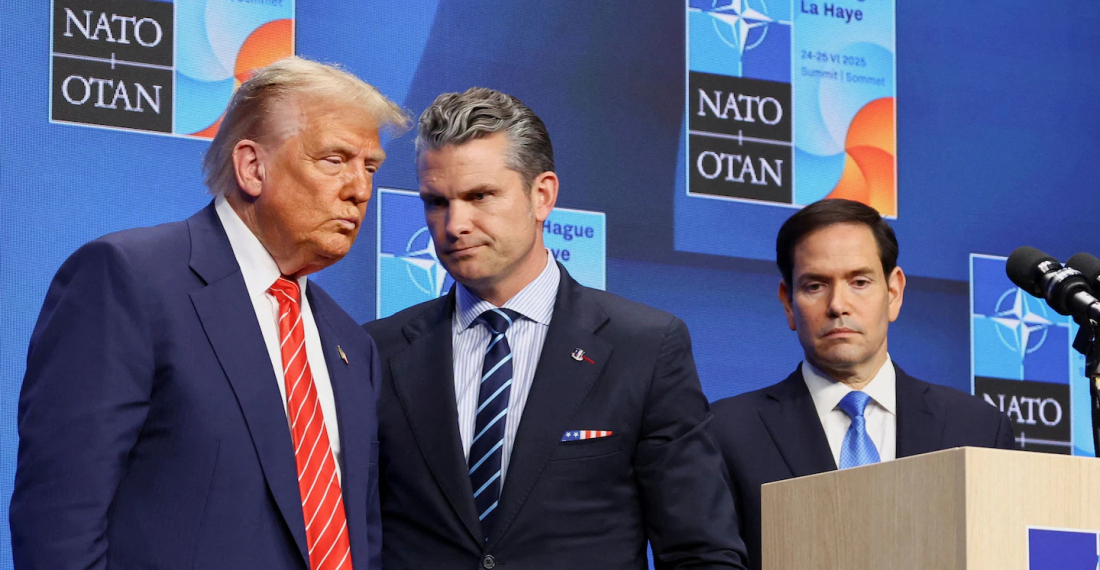
Defense Secretary Pete Hegseth has argued that an ongoing ceasefire “pauses” the legal countdown. Administration officials say hostilities effectively ended on 7 April, when exchanges between US and Iranian forces stopped.

The War Powers framework is intended to ensure the “collective judgment” of both Congress and the president. While Trump notified Congress on 2 March, after launching strikes on 28 February alongside Israel, he did not seek prior authorisation, triggering the 60-day clock now expiring.

The White House has framed the operation as limited and time-bound, contrasting it with prolonged US wars in Iraq and Afghanistan, and maintaining it is necessary to prevent Iran from acquiring a nuclear weapon.

Lawmakers are divided. Senator Susan Collins said the deadline is “not a suggestion,” while Senator Tim Kaine accused the White House of looking for a loophole. House Speaker Mike Johnson said the US is “not at war.”

Trump could seek a 30-day extension, but pressure is growing for a clearer strategy. With Congress in recess, attention is shifting to whether the administration will formalise its position or push ahead without approval as talks with Iran remain stalled.

Source: commonspace.eu with the Washington Post
Related articles

Popular

Editor's choice
Interview
Thursday Interview: Murad Muradov

Thursday Interview: Murad Muradov

Today, commonspace.eu starts a new regular weekly series. THURSDAY INTERVIEW, conducted by Lauri Nikulainen, will host  persons who are thinkers, opinion shapers, and implementors in their countries and spheres. We start the series with an interview with Murad Muradov, a leading person in Azerbaijan's think tank community. He is also the first co-chair of the Action Committee for a new Armenian-Azerbaijani Dialogue. Last September he made history by being the first Azerbaijani civil society activist to visit Armenia after the 44 day war, and the start of the peace process. Speaking about this visit Murad Muradov said: "My experience was largely positive. My negative expectations luckily didn’t play out. The discussions were respectful, the panel format bringing together experts from Armenia, Azerbaijan, and Turkey was particularly valuable during the NATO Rose-Roth Seminar in Yerevan, and media coverage, while varied in tone, remained largely constructive. Some media outlets though attempted to represent me as more of a government mouthpiece than an independent expert, which was totally misleading.  Overall, I see these initiatives as important steps in rebuilding trust and normalising professional engagement. The fact that soon a larger Azerbaijani civil society visits to Armenia followed, reinforces the sense that this process is moving in the right direction." (click the image to read the interview in full)