The Armenian parliamentary elections on 7 June are crucial in more ways than one. A fragile peace between Armenia and Azerbaijan is still at stake. While progress has been made since President Trump’s August 2025 meeting with Azerbaijani President Ilham Aliyev and Armenian Prime Minister Nikol Pashinyan, where a peace agreement was initialled, much remains uncertain. Key elements of the settlement are yet to be finalised, and the political will required to sustain momentum will depend heavily on the outcome of the vote. The peace agenda is heavily politicised, adding further sensitivity to the process, as conduits for Kremlin policy continue to disseminate fear and uncertainty within Armenian society regarding the ongoing peace process with Azerbaijan.
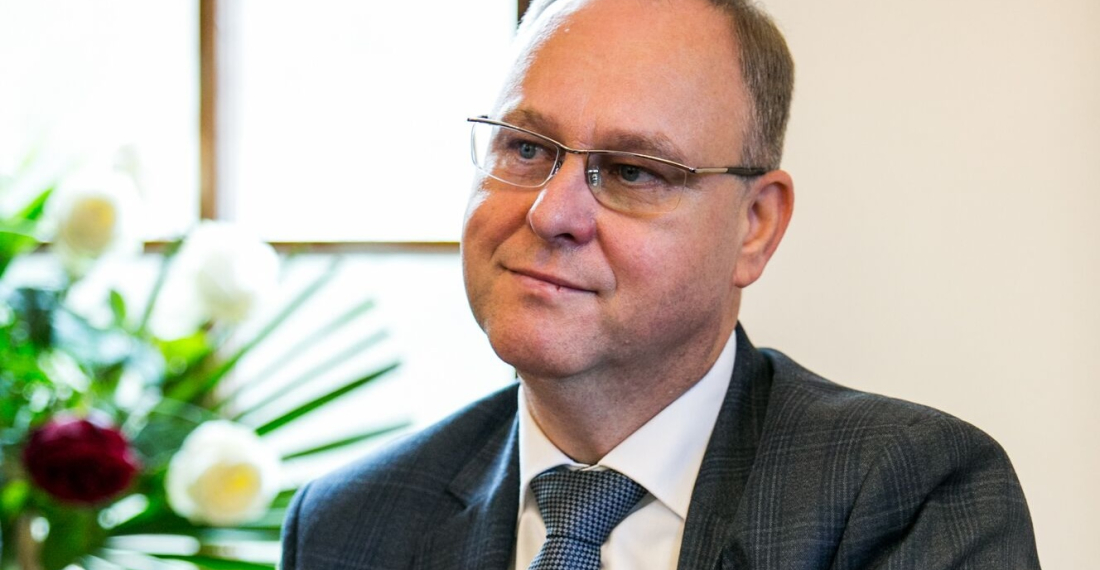
In this week’s Thursday Interview, former Polish diplomat Dr. Andrzej Klimczyk draws on decades of experience across the post-Soviet space to reflect on Armenia’s upcoming parliamentary elections and the wider dynamics in the South Caucasus. He argues that while the European Union has the potential to play a stronger geopolitical role in the region, its approach remains too bureaucratic and insufficiently attuned to local realities.
Klimczyk also outlines his proposal for a “South Caucasus Euroregion” as a long-term framework for cooperation between Armenia, Azerbaijan, and Georgia, aimed at unlocking the region’s economic and geopolitical potential.
On Armenia’s June 2026 elections, he highlights a highly polarised political environment, with competition focused more on personalities than programmes and a fragmented opposition. He also warns of growing risks of disinformation and hybrid interference, cautioning that the main challenge may be the erosion of trust in the information environment rather than the integrity of the vote itself.
“We can already observe significant social polarisation, the use of hate speech, and brutal media attacks by competing electoral entities on each other. Unlike Georgia or Moldova, Armenia is operating under intense and immediate security pressure following the end of the Nagorno-Karabakh conflict. Border issues, normalisation of relations with Azerbaijan, and relations with Türkiye are not just foreign policy issues, they are existential political issues. This raises the stakes of each election and increases the likelihood of hardline rhetoric that could complicate post-election management."
A note to our readers:
This interview marks the start of a special “Armenia Season” on commonspace.eu. The summit of the European Political Community will be held in Yerevan on 4 May. This will be immediately followed by an EU-Armenia summit. On 7 June Armenia will hold parliamentary elections.
Our twice-weekly newsletter Armenia Election Monitor, will be published between 1 May and 15 June, and will track and analyse key developments ahead of the parliamentary elections on 7 June, with concise, fact-based and non-partisan insights, and will after analyse the results.
LINKS Europe Foundation will host a webinar titled: Armenia between a historic summit and a crucial election. Join us on 6 May at 15:00 (Amsterdam) / 17:00 (Yerevan) for a panel discussion on the European Political Community Summit in Yerevan and Armenia’s upcoming parliamentary elections. Sign up using this link.
Read the full text of our interview below:
Welcome, Dr. Klimczyk. Could you start by telling us about your professional journey, and what drew you to focus extensively on the South Caucasus and wider region?
I am a former Polish diplomat with over 25 years of experience in post-Soviet countries. I worked, among others, at the Polish Embassy in Moscow, at the OSCE Mission in Moldova, and at the NATO Liaison Office in Georgia. In Moscow I met my wife. She was Armenian. Wanting to learn more about the culture, the history of Armenia, and the traditions prevailing in this country, I became interested not only in Armenia, but in the entire South Caucasus.
After becoming more familiar with the region, the South Caucasus became increasingly interesting to me. According to many of my colleagues, it is a region that does not always receive consistent global attention. I consider it to be of immense importance in terms of energy routes, security dynamics, and cultural complexity. It quickly became a topic of great interest and fascination for me. After my wife passed away, I established the Anush Klimczyk Foundation in March 2025 in Yerevan, Armenia.
You’ve criticised the EU’s approach to Georgia, and noted similar patterns in Armenia and Azerbaijan. What do you consider the EU’s shortcomings as they pertain to the South Caucasus, and do you believe the EU has the capacity to act as a meaningful geopolitical actor in the region?
The short answer is yes, the European Union can play a significant role, but only if it moves away from an approach based mainly on bureaucratic procedures. The EU should try harder to understand local people, their history, and their mentality, which is slightly different from the mentality of a European.
The EU can become a significant geopolitical player if it tries to view Azerbaijan, Armenia, and Georgia not as separate states, but as a single whole, as a region. The EU possesses real advantages. It has significant influence on the global economy, many EU countries are among the world’s richest states, and it offers political attractiveness and a code of values.
The EU can provide financial support and build ideological clout, especially among societies that perceive a European orientation as a long-term goal. It can influence reforms, infrastructure development, and transport accessibility, which are gaining importance with the emergence of new transit routes connecting the Black Sea with Central Asia and Europe. In one word, the European Union can be a partner you can rely on.
At the same time, the EU is a very bureaucratic organisation. Decision-making is slow, lengthy, and not always accurate. Speaking about Georgia, the EU has invested heavily in democratisation, the rule of law, and institutional reforms through programmes such as the European Neighbourhood Policy and the Eastern Partnership. While these programmes appear logical on paper, in practice they are often perceived as technocratic, slow, and sometimes out of touch with the political realities of partner countries.
When domestic political crises arise, Brussels typically vacillates between excessive diplomatic caution and declarative pressure that is not supported by real leverage. In my opinion, a large part of the responsibility for what we are currently seeing in Georgia, the retreat from democratic standards, lies with the bureaucratic approach of the EU.
The EU has to be more active in areas such as democratisation, good governance, and the rule of law. An integral part of this process is strengthening the independence of the judiciary, implementing public administration reforms, creating a cohesive and professional civil service, and ensuring the effective functioning of institutions in law enforcement and the market economy.
Building on that, you’ve championed the idea of a South Caucasus “Euroregion”. How realistic is trilateral integration given current politics?
A long time ago, in November 2023, I presented my idea of a “Euroregion South Caucasus”. The idea was born after the exodus of residents of Nagorno-Karabakh in September 2023. It became clear that the region needed an idea that could contribute to the peaceful coexistence of Armenia, Azerbaijan, and Georgia.
As I mentioned, the EU is a very bureaucratic organisation, and Brussels is staffed mostly by bureaucrats rather than politicians or diplomats. Therefore, it is difficult to expect new ideas or concepts for the South Caucasus region from there. I would also add that, in my opinion, the idea of the Eastern Partnership, initiated in 2009 by Poland and Sweden, has exhausted itself.
It seemed natural to me that someone should take the initiative and develop a new idea for the countries of the South Caucasus. In the course of more than 30 years of independence, the region lost the chance, unlike the Baltic states, to establish a stable and secure space with broad prospects for economic cooperation. Instead, divisive lines emerged, separating nations and diminishing the prospects of shared prosperity.
This is precisely where this concept still has value. It transforms the region from a set of bilateral conflicts into a potential shared space of cooperation and good neighbourly relations. The South Caucasus has immense geopolitical and geo-economic opportunities. It has significant transit and tourist potential, important natural resources, and an educated, almost fully literate, and relatively cheap labour force. In other words, all the necessary factors are in place for the region to succeed and to occupy a worthy place in international relations.
Armenia, Azerbaijan, and Georgia could create unique conditions for common development, allowing them to capitalise on their geopolitical and geostrategic location, natural resources, and human capital. The creation of a South Caucasus Euroregion would bring these countries closer to the European Union and would contribute to stability and security in the region. Integration and trust could create a cumulative effect, and the region could follow examples of cooperation such as Benelux and the Visegrad Group.
In the longer term, this could lead to a European model of cooperation, with a common space, freer movement, and more symbolic borders. Military expenditure could be reduced, living standards improved, and the region’s economic and transit potential more fully developed. It would also increase confidence in the future.
The benefits for the countries would be clear, starting with the integration of economic interests. In a more distant perspective, this could include the abolition of trade barriers and the development of free movement of people, goods, and business. It would mean a common market, stronger security guarantees, shared infrastructure projects, increased attractiveness for investors, and better prospects for future generations.
After presenting the idea, I held consultations with experts from Georgia, Azerbaijan, and Armenia. They agreed that the concept has potential, but needs to be thoroughly studied. I believe it would be worthwhile to organise a meeting of experts from these countries together with EU representatives to discuss it further. I remain open to any proposal that could bring this idea closer to realisation.
Based on your experience observing elections in Russia, Ukraine, Georgia, and Moldova, how do you assess the prospects and challenges of the upcoming June 2026 Armenian parliamentary elections?
The upcoming parliamentary elections will undoubtedly be crucial for the country’s future. We can already observe significant social polarisation, the use of hate speech, and brutal media attacks by competing electoral entities on each other. Unlike Georgia or Moldova, Armenia is operating under intense and immediate security pressure following the end of the Nagorno-Karabakh conflict. Border issues, normalisation of relations with Azerbaijan, and relations with Türkiye are not just foreign policy issues, they are existential political issues. This raises the stakes of each election and increases the likelihood of hardline rhetoric that could complicate post-election management.
Armenia continues to hold genuinely competitive, free elections. Compared to countries such as Russia, this remains an important strength. The main problem is not the lack of competition, but the quality of it. Politics is highly polarised and often based on support for or opposition to Nikol Pashinyan. This risks narrowing the political debate and turning elections into referendums on leadership rather than on future-oriented programmes.
On April 23, the Central Election Commission registered 19 entities, including 17 political parties and 2 electoral alliances. In my view, this is too many. At present, I do not observe a real contest over programmes, but rather a contest over names. Voters are being asked to choose between party leaders, not between policy proposals.
Another major challenge is the fragmented opposition. In Armenia, opposition forces often unite around protest movements, but struggle to maintain cohesion during elections. This situation favours the ruling party, despite high levels of public dissatisfaction.
Do you see risks of disinformation or hybrid interference in these elections, and is Armenia prepared to counter them effectively?
If I had to give a short answer, yes. There are real threats not only during the campaign, but also on election day and afterwards. In my opinion, the greatest threat is the constant flow of hate-driven narratives, which reinforce existing polarisation rather than creating a stable pre-election environment.
Hybrid interference may focus on issues such as security and stability. Messages related to the Nagorno-Karabakh conflict, including peace agreements, borders, and refugees, can be used to polarise voters or lower turnout. Disinformation can also target the diaspora. Armenia’s large diaspora is an asset, but it also allows narratives to spread outside the country and return through social media platforms.
Is Armenia prepared to counter external disinformation? I would say partly. There are many organisations, civil society groups, and independent media outlets actively engaged in fact-checking and monitoring, often with support from the European Union. This is an important strength.
At the same time, there are weaknesses. There are institutional gaps, including the lack of a fully integrated, state-led strategy that combines cybersecurity, strategic communications, platform engagement, and crisis response. Responsibilities are fragmented, and responses are often reactive. Public awareness is also relatively low, which allows even weak or poorly documented claims to gain traction quickly.
There is an important role here for official authorities and fact-checking organisations. Faster and clearer communication from authorities is needed to prevent information vacuums. Coordination across social platforms and closer cooperation with major technology companies may also be necessary to detect coordinated behaviour at an early stage.
In summary, Armenia is better prepared than it was a decade ago, but its defences against hybrid interference are still not fully integrated. The greatest risk is not that the elections will be technically manipulated, but that the information environment becomes so polarised that the outcome is widely questioned.
Follow Dr. Klimczyk on LinkedIn
Support the Anush Klimczyk Foundation here