In its relations with the European Union, Azerbaijan believes that political alignment must be matched by practical delivery. "While joint statements and high-level visits signal shared intent, Azerbaijan is increasingly looking for measurable outcomes – investment commitments, infrastructure development, and deeper economic integration", writes Vasif Husseynov in this op-ed for commonspace.eu
The recent visit of António Costa, President of the European Council, to Baku on March 11 has once again highlighted the growing strategic alignment between Azerbaijan and the European Union. His talks with President Ilham Aliyev took place against a backdrop of intensifying geopolitical turbulence stretching from Eastern Europe to the Middle East. While both sides reaffirmed their commitment to closer cooperation, the visit also exposed a persistent gap between political declarations and tangible implementation – one that Azerbaijan increasingly expects the EU to address.
In recent years, EU–Azerbaijan relations have evolved from a largely technical partnership into a more strategic engagement. Brussels views Baku as a critical partner in ensuring energy security and advancing connectivity with Central Asia, while Azerbaijan sees the EU as its leading economic counterpart. Yet despite this mutual recognition, progress in translating political intent into concrete initiatives has remained uneven.
At the core of this relationship lies energy cooperation. Since the launch of the Southern Gas Corridor, Azerbaijan has steadily expanded its role in European energy markets, supplying natural gas to a growing number of countries. This expansion has become especially significant following the disruption of traditional supply routes after the Russian invasion of Ukraine. As European states accelerated efforts to diversify away from Russian energy, Azerbaijan emerged as a reliable alternative supplier. Today Azerbaijan exports natural gas to 12 countries in Europe. As President Aliyev underscored during his press conference with President Costa, “for us, the European Union is the number one trading partner,” highlighting that roughly half of Azerbaijan’s trade turnover is conducted with EU member states.
However, this growing interdependence has also brought structural challenges into sharper focus. Azerbaijan’s existing export infrastructure is approaching full capacity, limiting its ability to meet rising European demand. Expanding pipeline networks and increasing upstream production require substantial long-term investments. It is an area where Azerbaijani officials believe European engagement has been insufficient. As President Aliyev noted in Davos earlier this year, “Europe has shown little investment interest in Azerbaijan’s fossil fuel or renewable energy sectors,” stressing that without stronger financial commitments and long-term guarantees, expanding supply capacity will remain constrained.
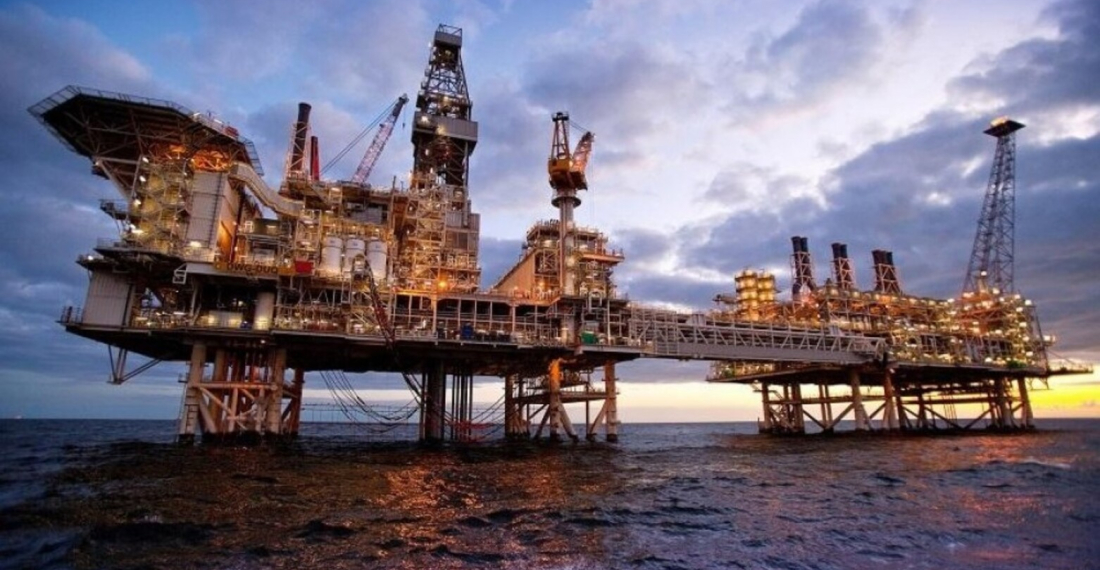
From Baku’s perspective, the EU’s approach has been characterized by strong political messaging but cautious financial commitment. Azerbaijani leadership has repeatedly pointed out that without clearer demand guarantees and more robust investment frameworks, large-scale expansion of gas production and transport infrastructure remains economically uncertain. This concern is particularly relevant as Azerbaijan seeks to develop new phases of major offshore fields and bring additional volumes to market in the coming decade.
The issue is not limited to hydrocarbons. Azerbaijan is also positioning itself as a future supplier of green energy to Europe. Ambitious plans to develop renewable energy capacity (particularly in wind and solar) are already underway, with the aim of eventually exporting electricity across the Black Sea. Projects such as the planned submarine cable linking the South Caucasus to Southeastern Europe could play a transformative role in reshaping regional energy flows. Yet here too, progress depends heavily on external financing and technological cooperation, areas where EU involvement remains critical.
Beyond energy, connectivity has emerged as another pillar of the partnership. Azerbaijan’s geographic position makes it a central node in the so-called Middle Corridor, a trade route linking Europe with Central Asia and China via the South Caucasus. As global supply chains undergo reconfiguration, this corridor offers the EU an opportunity to reduce reliance on traditional transit routes and enhance its economic presence in Eurasia.
A further area where the gap between rhetoric and implementation is particularly visible concerns the development of the Middle Corridor and related initiatives such as the Trans-Caspian International Transport Route and TRIPP. European officials consistently underline the strategic importance of this corridor for linking Europe with Central Asia and China. Its relevance has increased even further amid rising geopolitical instability, particularly in light of the Iran war, which have reinforced the Trans-Caspian route via Azerbaijan as the only viable overland alternative connecting Europe with its eastern partners. Despite this growing importance, EU financial engagement is not visible, which is essential for the corridor’s full functionality.
Concrete figures illustrate this imbalance. Under the EU’s Global Gateway initiative, Brussels and its partner institutions have pledged around €10 billion for the development of the Trans-Caspian corridor, alongside a broader €12 billion package for Central Asia, including approximately €3 billion earmarked for transport infrastructure. While these commitments demonstrate strategic intent, the South Caucasus was not adequately addressed. EU involvement in Azerbaijan and the wider South Caucasus has largely been confined to feasibility studies and policy-level engagement rather than direct infrastructure financing.
This disparity is particularly evident in specific projects critical to regional connectivity. The proposed railway connection through Nakhchivan – which could significantly enhance transit efficiency and regional integration – remains at an early stage, with EU participation limited to feasibility support rather than construction financing. Similarly, despite frequent references to TRIPP and the Middle Corridor in EU strategic discourse, Brussels has yet to make concrete financial commitments to their large-scale implementation in Azerbaijan. As a result, a crucial segment of the Europe–Asia connectivity chain remains underdeveloped, raising questions about the EU’s capacity to operationalize its strategic ambitions.
Concerns about this imbalance have also been voiced by Azerbaijani officials. Speaking at the GLOBSEC Forum 2025 in Prague, Hikmat Hajiyev, foreign policy advisor to President Aliyev, recalled that when the Baku–Tbilisi–Kars railway project was initially proposed, “European and American funds refused to finance it. So, we decided to implement it using our own resources – and we did.”
He emphasized that Azerbaijan continues to invest heavily in regional connectivity in cooperation with partner countries, noting that the country has already linked major transport infrastructure with Central Asia through the Caspian corridor. At the same time, Hajiyev openly questioned the EU’s role, asking: “Where is the European Union? Yes, you are welcome to join us as a partner, but it is still not clear what exactly the EU wants.”
Against this backdrop, Baku’s message to Brussels is becoming increasingly clear: political alignment must be matched by practical delivery. While joint statements and high-level visits signal shared intent, Azerbaijan is increasingly looking for measurable outcomes – investment commitments, infrastructure development, and deeper economic integration.