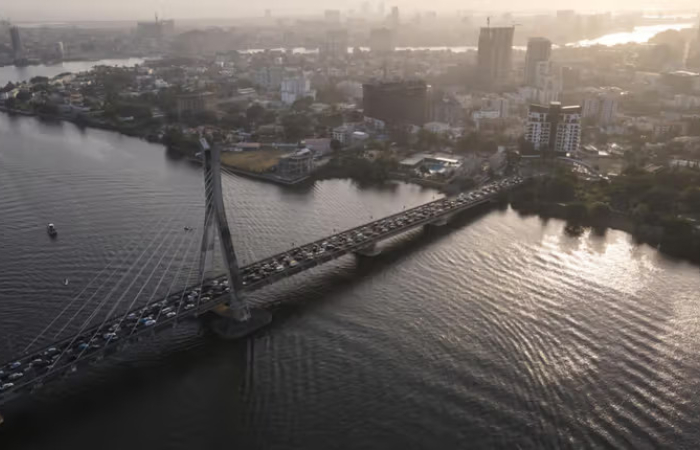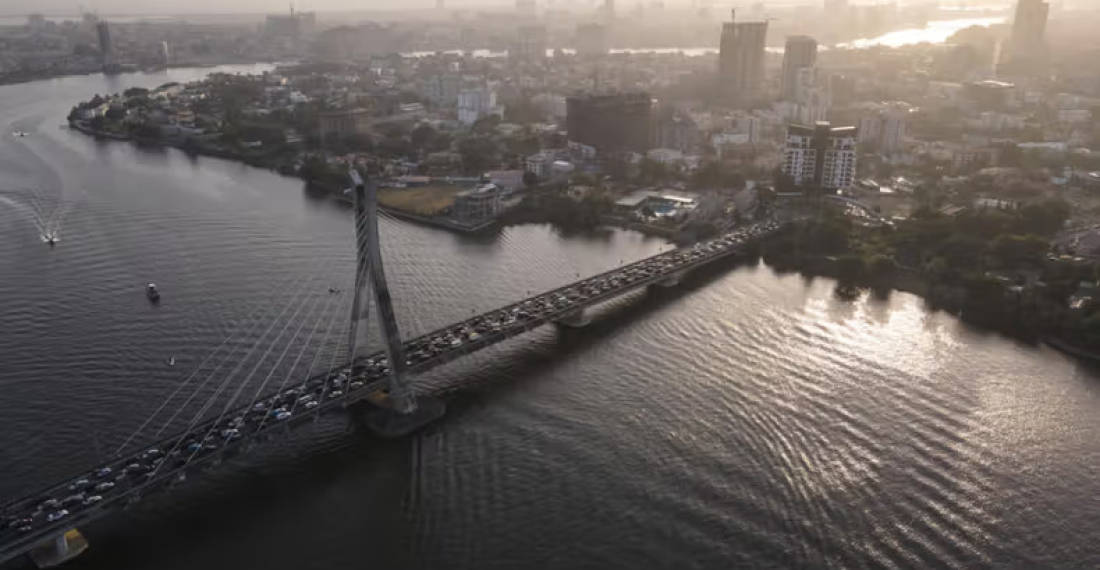
On Thursday (26 March), Lagos, Nigeria, launched a $7.5 million parametric flood insurance policy aimed at compensating up to four million residents in the event of flooding.
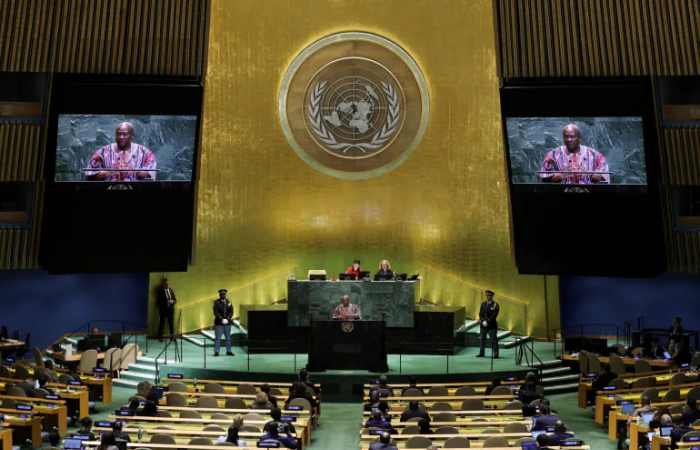
“Climate inaction could cost Lagos State just under $40 billion by 2050,” Lagos State Governor Babajide Sanwo-Olu said. “This pioneering parametric flood insurance policy strengthens our ability to protect lives, livelihoods, and public finances.”
Parametric insurance policies differ from traditional insurance by outlining triggered payouts when a specific hazardous event occurs, rather than relying on post-event damage assessments. Under Lagos’ parametric insurance plan, residents in seven flood-prone areas would receive direct cash transfers if water levels surpass 50 centimetres.
The policy was presented and designed by a team within the Insurance Development Forum (IDF), a public-private partnership made up of global insurers, including the Lagos State Government, AXA Climate, AXA Mansard in Nigeria, Swiss Re, flood modeller JBA Risk Management, satellite company ICEYE and African Risk Capacity Ltd. The InsurResilience Solutions Fund, financed by Germany, contributed 90 percent of funds for the first-year premium, while Lagos State covered the remainder and plans to contribute greater sums in the following years of the programme.
Lagos is Nigeria’s commercial hub and home to approximately 24 million people. The low-lying geography of the coastal city has made it vulnerable to climate hazards such as rising sea levels and land subsidence. These hazards, intensified by climate change, threaten to make parts of the city uninhabitable by the end of the century, according to a Nigerian government statement in October 2025.
Climate hazards are exacerbated by the city’s rapid urbanisation, where 80 percent of households qualify as low-income, and insurance penetration is below 0.5 percent.
Flooding has already displaced 3,000 people and affected over 6,000 between January and October 2025.
The government of Nigeria hopes to expand the scale of the insurance policy to other states. According to the United Nations Development Programme, the project proposes a model for technology-driven flood-risk management that could prove useful for resilience-building in climate-vulnerable locations around the world.
Source: commonspace.eu with Business Insider Africa and UNDP