The United Nations General Assembly voted on Wednesday (25 March) to recognise transatlantic slavery as the “gravest crime against humanity” and calling on UN member states to contribute to a reparations fund.
The resolution was proposed by Ghana, which advocated for this designation, and called for apologies and financial reparations from member states for their role in the slave trade. No specific amount was outlined.
The resolution passed with 123 member states in favour and three opposed, including the United States, Israel, and Argentina. Fifty-two countries abstained from voting, including the United Kingdom and European Union member states.
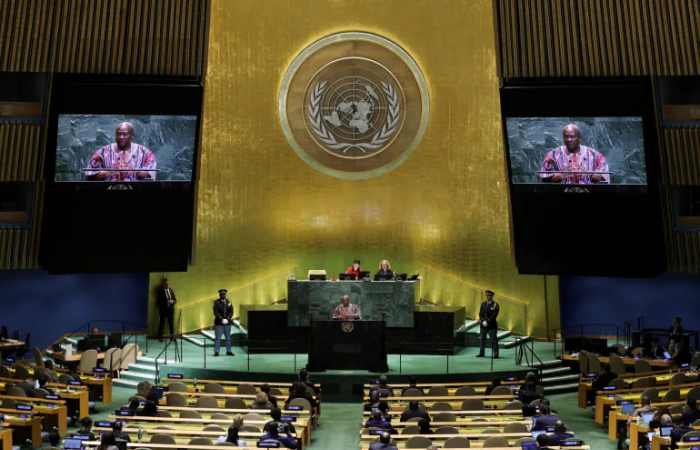
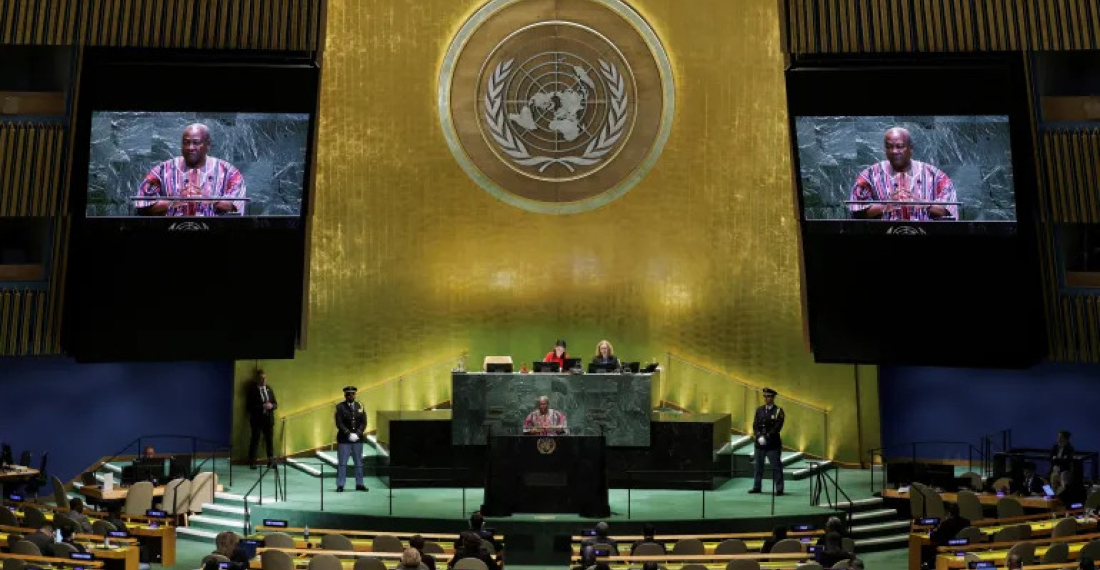
UN General Assembly resolutions are not legally binding, but decisions nevertheless carry substantial political weight. Ghana’s President John Dramani Mahama addressed the UN General Assembly on Wednesday (26 March): "This resolution is a pathway to healing and reparatory justice. This resolution is a safeguard against forgetting. This is a resolution of destiny."
“Let it be recorded that when history beckoned, we did what was right for the memory of the millions who suffered the indignity of slavery.”
Before the vote, Samuel Ablakwa, Ghana's Foreign Minister, told the BBC’s Newsday programme that they are demanding compensation: "We want justice for the victims and causes to be supported, educational and endowment funds, skills training funds."
Between 1500 and 1800, the transatlantic slave trade abducted and sold approximately 12-15 million Africans, transporting them to the Americas and systematically forcing them into slave labour.
The resolution, supported by the African Union and the Caribbean Community, states that the impacts of transatlantic slavery reverberate in racial inequalities and underdevelopment, “affecting Africans and people of African descent in all parts of the world”.
Ablakwa told the BBC: "Many generations continue to suffer the exclusion, the racism because of the transatlantic slave trade, which has left millions separated from the continent and impoverished.”
Source: commonspace.eu with BBC and Al Jazeera