

Editor's choice
Opinion
Shenzhen is not Yalta

Shenzhen is not Yalta

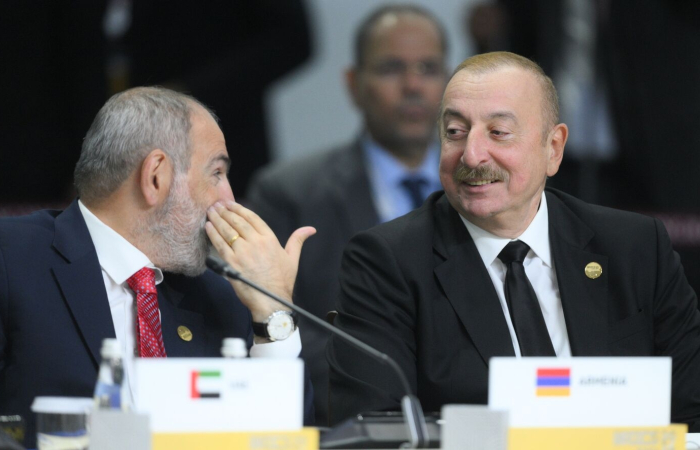
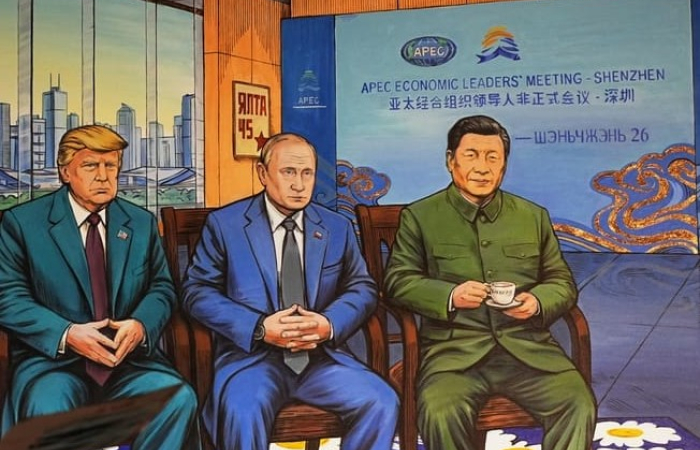
This is a comment prepared by the editorial team of commonspace.eu The leaders of Russia, China and the United States will meet on Thursday, 19 November 2026, in the city of Shenzhen, on the margins of the APEC summit, taking place in the Chinese city. Some are calling the summit historic, and the leaders of the three countries have never met in this format before. They call themselves the G3, and are being compared with the meeting of Roosevelt, Churchill and Stalin in 1945 in Yalta. But this is no Yalta 2.0, and the world does not have to hold it breath, and await the outcome. Yet the meeting is not without importance, and the messages that it sends are not without significance. As London’s Financial Times put it, “While expected to deliver few concrete outcomes, the powerful imagery of Trump meeting authoritarian Xi and revanchist Putin will reverberate throughout the world, especially in flashpoints such as Ukraine, Taiwan, and the Middle East”. Let us be clear, this is first and foremost a photo opportunity. The Russian and the American leaders need this. China less so, and at first were quite reluctant. In the end they saw something in it for them, and they acquiesced. For the US the main topic is arms control, and particularly how to bring China in the frame of a new arms control agreement; for Putin it is Ukraine. The Chinese are not ready to discuss either very deeply, and will instead focus on “global stability”. For Putin the summit is a win. It brings Russia back to the front. But the reality is that it is increasingly dependant on China, and Trump cannot deliver the kind of agreement on Ukraine that Russia wants. The G3 will not discuss Ukraine. The Chinese see the summit as another proof that they are now a superpower. They are happy to sustain the current trade truce with the US, whilst taking a long term view and using the interim period to strengthen their economic and military strength. Trump goes to the summit damaged. The war in Iran has done nothing but harm to the US. From January, Congress will be controlled by the Democrats. He is still the president, and still Commander in Chief, but he is much weakened. Its unlikely that anything positive will come out from the G3 summit. But it is good that the three are talking, and it is good that they will agree, as is likely, to talk more.
Editor's choice
Opinion
Opinion: A changing "Organisation of Turkic States"

Opinion: A changing "Organisation of Turkic States"

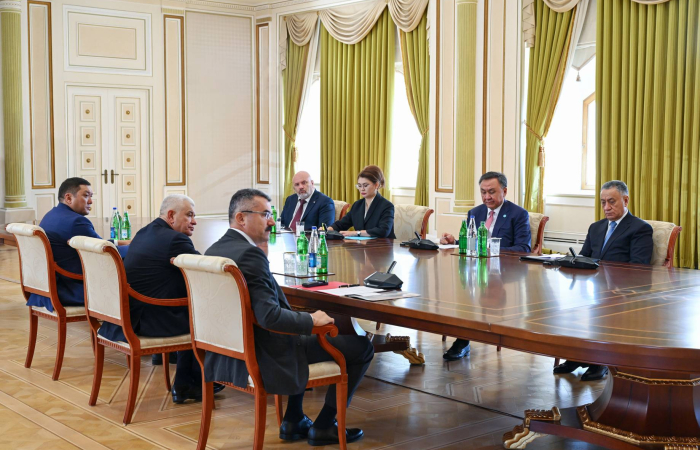
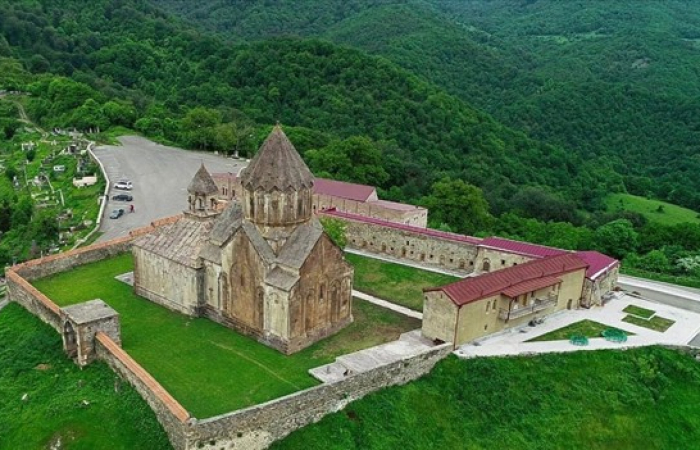
Until recently, the Organization of Turkic States (OTS) could best be understood in terms of identity, language, culture, and economic collaboration. This is changing. On September 17, Baku played host to the Fifth Meeting of the Secretaries of the Security Councils of the OTS countries. In his message to the meeting, the president of Azerbaijan, Ilham Aliyev, noted that cooperation among the Turkic peoples no longer consisted of political, economic, and cultural matters only but had gained a “long-term strategic nature.” More importantly, he referred to the consultations of the national security councils as a factor facilitating the emergence of a “common security architecture.” Clearly, it does not mean that the OTS is evolving into a military organisation of the NATO kind: there is no commitment of collective defence similar to that of NATO’s Article 5, and there is no evidence of this desire on the part of all members of the organisation. Yet, the September meeting means something different: security collaboration within the Turkic context is becoming more regular and operational. This process has been quite gradual. The OTS started organising meetings of national security council secretaries since 2022. As of September 2026, the mechanism had attained its fifth meeting. The organisation itself considers security cooperation to be an increasingly important area of interest in relation to both conventional and non-conventional threats. This includes such areas as terrorism, transnational organized crime, drug trafficking, extremism, hybrid threats, and critical infrastructure protection. (click image to read the op-ed in full)
Editor's choice
Opinion
Elchin Amirbayov: " Let us make sure that, when we speak about peace in the South Caucasus, we are not speaking only about the absence of war"

Elchin Amirbayov: " Let us make sure that, when we speak about peace in the South Caucasus, we are not speaking only about the absence of war"

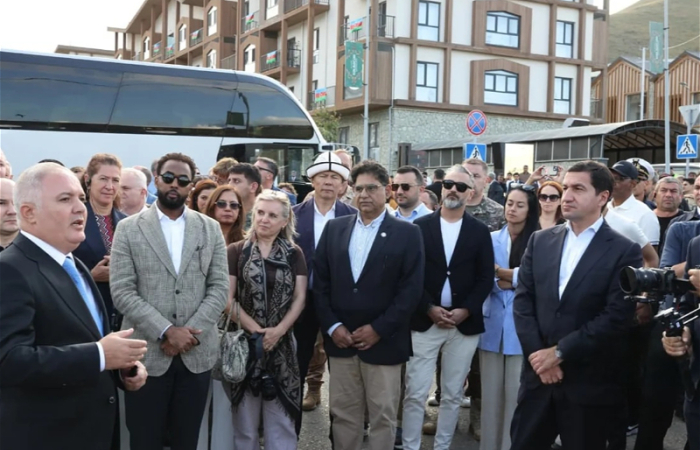
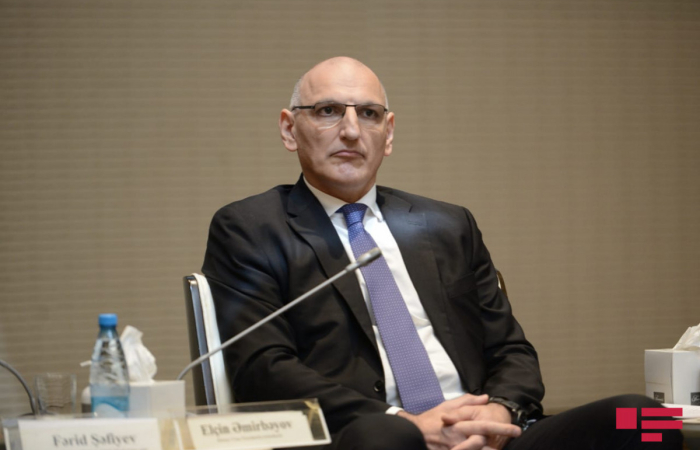
On Thursday (3 September), in an important speech to the 4th International Mine Action Conference, organised in Baku by ANAMA and the United Nations, Ambassador Elchin Amirbayov, Representative of the President of Azerbaijan on special assignments, spoke about the importance of mine action in the wider context of peace, with particular reference to the South Caucasus. He said: "Azerbaijan and Armenia have a unique opportunity to turn a page. The political process has created the conditions for a different South Caucasus — one based on peace, connectivity, economic cooperation and good-neighbourly relations. But if we want peace to be sustainable, durable and irreversible, we must remove the remnants of war both from the ground and from existing political and legal framework. Because:  above all, peace needs the next generation to inherit a landscape without mines – both beneath the ground and in our discourse. So the idea is to turn mine action from a legacy of war into an instrument of peace. Jointly, we can accelerate this. And let us make sure that, when we speak about peace in the South Caucasus, we are not speaking only about the absence of war. Let us make peace something people can walk on, live on, build on — and pass on to their children". (click the image to read the speech in full)
Editor's choice
Opinion
What is Russia's game with Azerbaijan?

What is Russia's game with Azerbaijan?

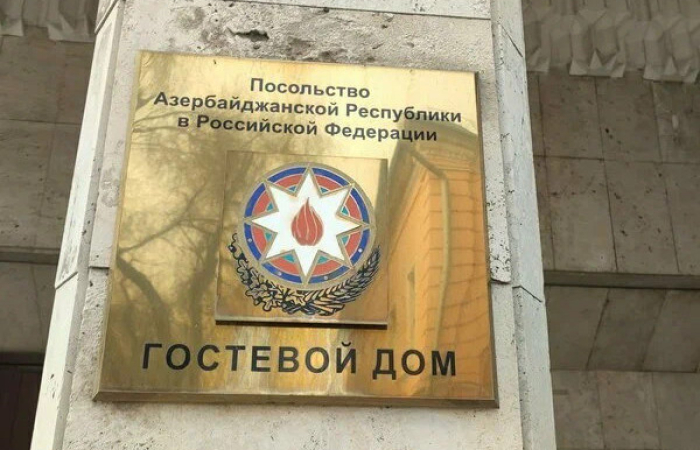
The number of provocations against Azerbaijan in Russia is increasing. Whilst official Moscow maintains a friendly tone towards Baku, daily incidents indicate otherwise. The latest incident involved the posting of provocative images against Azerbaijan by unknown individuals in front of the guest house of the Embassy of Azerbaijan in the Russian Federation on August 27 at around noon on 27th August The incident was strongly condemned by the Azerbaijan Ministry of Foreign Affairs in a statement issued shortly afterwards. "It is not excluded that this unacceptable provocation, in addition to serving to artificially strain Azerbaijani-Russian relations, is part of the dirty and biased campaign against Azerbaijan conducted in a number of Russian media resources in recent times. The Azerbaijani side calls on the relevant bodies of the Russian Federation to give the necessary legal assessment to such provocative actions, ensure a thorough investigation of the incident, and take necessary measures to prevent the recurrence of such cases. We expect the Russian side to fully fulfill its obligations to ensure the security of the Embassy of the Republic of Azerbaijan and its employees at the appropriate level, as well as to prevent any provocative actions that may impede the normal activities of the diplomatic mission, in accordance with the 1961 Vienna Convention on Diplomatic Relations," the Ministry of Foreign Affairs statement said. In an editorial, the influential Azerbaijani website haqqin.az stated: "What happened on August 27, around midday, outside the guesthouse of the Azerbaijani Embassy in Moscow is disgusting. Hanging insulting notes on the walls of a foreign country's diplomatic building is cowardly, dirty, and petty to the point of disgust. And note where they ended up. The guesthouse is the same mission property and is protected by the same Vienna Convention as the embassy chancery on Leontievsky Lane; this is precisely why the Azerbaijani Foreign Ministry cited the convention today. The difference between the two addresses isn't legal. The difference is in who's behind the door. Diplomats are in the chancery. People in the guesthouse are in Moscow on business.  This speaks volumes about the "courage" of the perpetrators and, more accurately, about the conscience of those who sent them.' Moscow works in mysterious ways, but one must ask, what's the point?