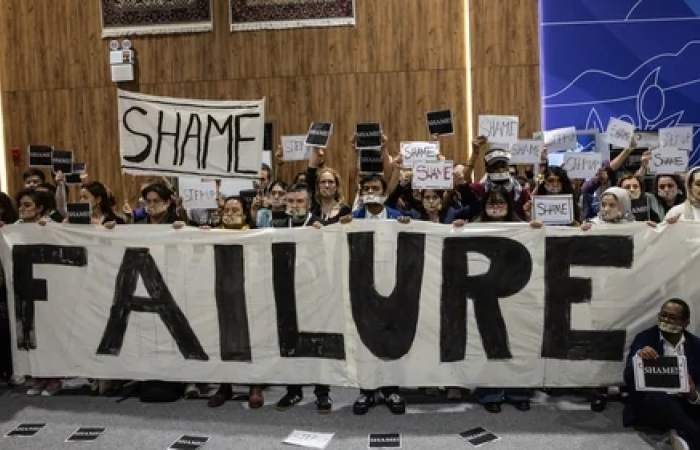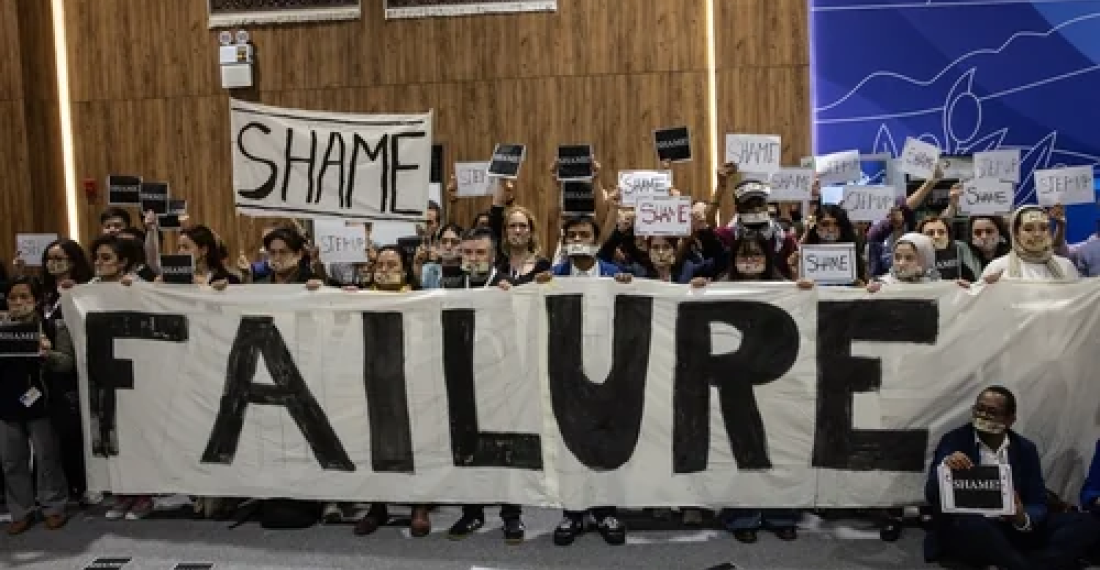
The UN climate summit in Antalya, Türkiye, extended into Saturday, November 21, after negotiators failed to reach consensus on several major issues by its scheduled Friday conclusion. Talks among nearly 200 countries remained deadlocked over whether the final agreement should recognise the transition away from fossil fuels and provide additional financial support for developing countries, prompting increasingly vocal criticism from civil society.
Negotiations progressed slowly on Friday, with few formal consultations taking place. The only technical session concerned the periodic review of the long-term global climate goal and progress towards achieving it. Nevertheless, parties failed to agree on whether the review should continue, despite developing countries' support for maintaining the process.
Ultimately, the disagreement over fossil fuels has proved an insurmountable obstacle to a deal. Profound division emerged on Thursday, when the second draft conclusion proposed removed all references to transitioning away from fossil fuels. The omission prompted criticism from the European Union and countries advocating stronger climate commitments. Meanwhile, Saudi Arabia and other oil-producing countries have opposed including such language, arguing that governments should retain the right to determine their own energy policies.
Consequently, EU Climate Commissioner Wopke Hoekstra warned that the summit could end either with a satisfactory agreement or with no deal at all, arguing that an inadequate outcome would be worse than failing to reach consensus. The EU has also reportedly been consulting island states and least developed countries on whether they would support holding out for stronger commitments. However, neither group has publicly endorsed the EU's position.
Climate finance remains another major point of contention. Thursday's draft removed a proposed $120 billion target for adaptation finance, while developing countries continued demanding greater assistance to cope with the consequences of warming. Negotiations on a just transition also remained unresolved. Australia proposed agreeing on the mechanism's functions and continuing the existing work programme, while postponing decisions on governance until June 2027. Some countries supported the proposal, while others questioned whether the mechanism's functions could be agreed upon at this stage.
The lack of progress fuelled civil society criticism. Mohamed Adow, director of Power Shift Africa, described COP31 as the “worst COP ever”, reflecting frustration over the absence of stronger commitments on fossil fuels, finance and support for vulnerable countries.
Although the closing plenary adopted several decisions on Friday, including those concerning international cooperation under Article 6 of the Paris Agreement and matters relating to least developed countries, these agreements appear ineffective when it comes to resolving the summit's main political disputes. COP31 President Murat Kurum acknowledged these outstanding issues and announced that a third version of the proposed cover decision, alongside revised negotiating texts reflecting countries' feedback, would be published on Saturday. The closing plenary was suspended at 10:29 pm, with delegates expected to reconvene the following day. By Saturday afternoon, however, there is no sign of a revised text, as discussions continue without a clear indication of whether the remaining differences will be resolved.
Source: Anna Szedlacsek for commonspace.eu with the International Institute for Development (Winnipeg), Reuters (London), and RTÉ (Dublin).