On 28 February, Donald Trump connived with Israel to attack Iran, thinking that the US military strength will easily sweep away the Islamic Republic. He did so without seeking the views of experts within the American bureaucracy, getting the necessary congressional and cross-party support, and, importantly, without consulting with his allies in the region, in NATO, and beyond.
The result has been a terrible and costly failure. The Islamic Republic has survived, despite losing its supreme leader and top officials, and is even emboldened. The limits of US military power have been exposed, and China and others are watching carefully. Allies are distancing themselves from the US, and the cost for the global and American economy, has been huge.
But the harshest costs of Trump’s miscalculation is being paid by the Arab states, on and around the Arabian Peninsula.
In the first year of Trump’s second term, Saudi Arabia, Qatar and the UAE thought they had achieved a privileged relationship with the American president. Trump visited them and was lavishly feted. When, in January, the adventure in Iran loomed, Saudi Arabia and others tried hard to dissuade Trump, but failed. Ever since, the Arab states of the Arabian Peninsula have paid the price. And this price keeps getting higher and higher.
Loss of revenue from energy
The most obvious consequence is the disruption of energy supplies. For most of the world, this means higher prices for petrol, electricity, etc. This morning, a barrel of Brent Crude was being traded at 107 US$.
But for the energy-exporting countries this means a disruption in revenue. They can deal with this for a few weeks. But when weeks become months, it becomes a problem. Money from energy is the blood that keeps states like Saudi Arabia, Kuwait, UAE and Qatar going. When it is disrupted over some time, it stops being a nuisance and becomes a problem.
Business model in tatters
All Arab Gulf countries have, in past years, been investing in other areas except for energy. Billions have been invested in Dubai, Qatar, and others in tourism. The war with Iran has left this strategy in tatters. It may be recovered, but it will take hard work and time.
Security Deficit
The war has also exposed a security deficit. Until 1970, the Gulf was a British lake. When Britain withdrew from “East of Suez” the Arab Gulf states rushed to the US and pleaded that the US replace the UK. It did, and this engagement increased year by year, until at the start of 2026 the US had military facilities in all the GCC countries, Jordan and Iraq.
The Arab countries have also spent billions on arms, which they bought mainly from the US.
The US-Iran war has exposed a serious security deficit. The limits of the US umbrella have been exposed. One only needs to look at the destroyed headquarters of the US Fifth Fleet in Bahrain to understand.
The US cannot defend its Arab allies, even if it wants to. The huge expenditure of the Gulf countries on defence in the last decades has only been marginally effective.
It opens a discussion on future security, which will last a while.
Those are some of the seen consequences of the US-Iran war. But there are also consequences not yet seen
Stress on internal cohesion
The war is putting a stress on internal cohesion. By and large, in the early days the people rallied around their leaders in the face of external aggression. But as the conflict drags on, questions become deeper and more persistent. In the past, the Gulf monarchies have used wealth to manage their populations. This formula may not work in the future.
In the larger countries, natural fault lines have the potential to re-emerge. For example, as the name suggests, the United Arab Emirates (UAE) is a federation of seven emirates. In the construction of the UAE, Dubai was to balance Abu Dhabi. The five smaller northern emirates have generally followed Abu Dhabi’s tune, thanks to the financial largesse, which has often reached the ruling families, though not necessarily the population at large. Dubai is a different story. It has had little in energy revenues. It has developed as the quintessential global, service, trading and leisure centre. The disruption of the last six months is serious.
In Dubai, also, many of the established trading families have Iranian ancestry. There is more sympathy here for Iran, than in Abu Dhabi.
Radicalization
In the region, there has also been a steady fight against radicalisation. Yet we know that every outburst of “western war” against an Islamic country in the past has resulted in a swell in the ranks of radicalised Islamists across the world, but particularly in the Arab countries. One needs to monitor developments on this issue closely.
Internal debates
One can assume without any doubt that the US-Iran war, and what has happened since February in the wider region, has widened the internal discussion on how the region is managed. Most of this is done under the radar. One should not overstate this. The governance model in the GCC states has deep local and historical roots, which Westerners do not always understand and appreciate. But if we assume that the US-Iran war is having a seismic impact on the GCC countries and their societies, then we have also to assume that it has unleashed internal debates, that were, until recently, unthinkable.
Managing Iran
One of the challenges that all countries in the region will have to address is their future relations with Iran. It is clear we are in a new phase, and in uncharted waters.
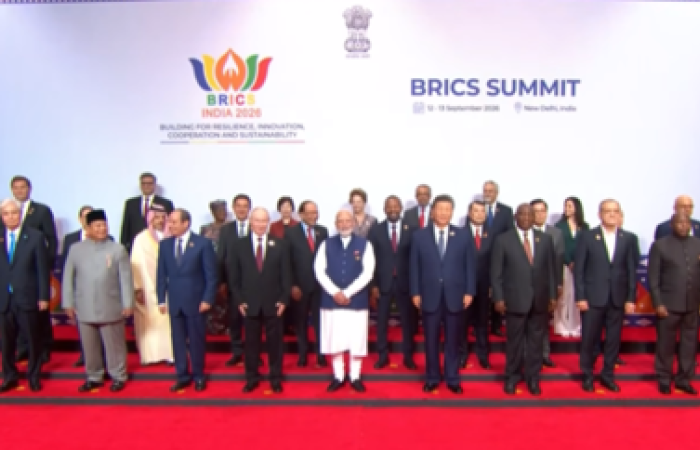
An indication of what can come is the meeting on the margins of the BRICS summit in New Delhi between Iran’s President Masoud Pezeshkian and Abu Dhabi’s Crown Prince Khaled bin Mohamed Al Nahyan, their highest-level talks since the conflict began. Both backed calls for restraint. Iran is also planning to meet GCC countries at the Foreign Minister level in Oman. A meeting scheduled for today (14 September) was postponed, probably because of Bahrain’s refusal, but will probably happen in the near future.
Managing Iran, will become a priority for the GCC countries. They must do it, and they must be allowed the space to do it. In the end the future will depend on their success in this venture.
The Houthis and Bab al Mandeb
For most of the US-Iran crisis, the Houthis in Yemen were largely passive, even if vocal. This changed in the last days when the Houthis bombed Saudi targets and swept down the Yemeni coast, occupying Mocha, the strategic island of Pemba, and other Islands in the Red Sea. In the process, they sealed their control over Bab al-Mandeb. They banned any Saudi traffic through it.
With Iran practically controlling the Strait of Hormuz, and the Houthis controlling Bab el Mandeb, the noose around the GCC states is tight.
The Houthis are a Saudi problem. They have tried bribes, and they have tried military options to solve it. Both remain options, and their decision will be clear soon.
Can the GCC countries buy themselves out of the crises?
Over the last five decades, the GCC countries have largely bought themselves out of any problems which they faced. Three of them at least – Saudi Arabia, Qatar and UAE, have the stamina to do so again if necessary. But the question remains, will it be enough this time?
Be prepared for change
The world must be prepared for a changing region. Europe in particular needs to be able to deal with the new reality, and to do this with an open mind. In March of this year, I wrote that by attacking Iran, Trump had opened “Pandora’s box”. That has definitely been the case for the US. Others, however, may take heart from the saying that “from every crises, an opportunity arises”.
Source: Dr Dennis Sammut is the Director of LINKS Europe, and Managing Editor of commonspace.eu