Türkiye urges response ‘to Israel’s potential acts of sabotage’ in US-Iran ceasefire

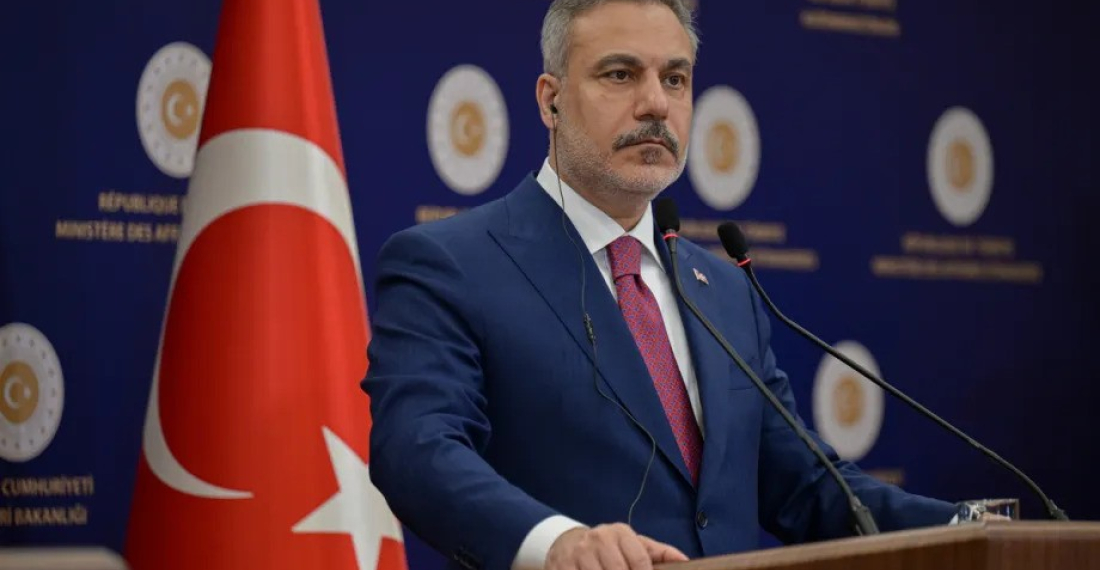
Turkish Foreign Minister Hakan Fidan on Thursday (9 April) urged the international community to appropriately respond “to Israel’s potential acts of sabotage” amid the US-Iran ceasefire.

“We… hope for the establishment of a new security and peace architecture in the region, including the normalization of relations between Iran and the Gulf countries on a stronger foundation. As Türkiye, I would like to reiterate that we are ready to play an active role in this process and provide all necessary support,” Fidan said during a press conference.

It was reported on Friday (10 April) that Washington DC will host Israeli and Lebanese envoys next week to discuss ceasefire negotiations. However, a senior official in the Lebanese president's office has confirmed to the BBC that Lebanon will participate in direct negotiations with Israel next week if, and only if, there is a ceasefire in place beforehand.

Fidan warned that Tel Aviv was “extending” its genocide in Gaza to Lebanon, stressing that “even before the ink on the ceasefire has dried,” Israel’s attacks in Lebanon were carried out without distinction between children and civilians.

He warned that Israel’s large-scale airstrike on Lebanon immediately after the ceasefire announcement was a serious provocation that could make negotiations even more difficult.

Source: commonspace.eu with Middle East Monitor and the BBC
Related articles

Editor's choice
News
"Peace Bridge" between Armenia and Azerbaijan takes next step

"Peace Bridge" between Armenia and Azerbaijan takes next step

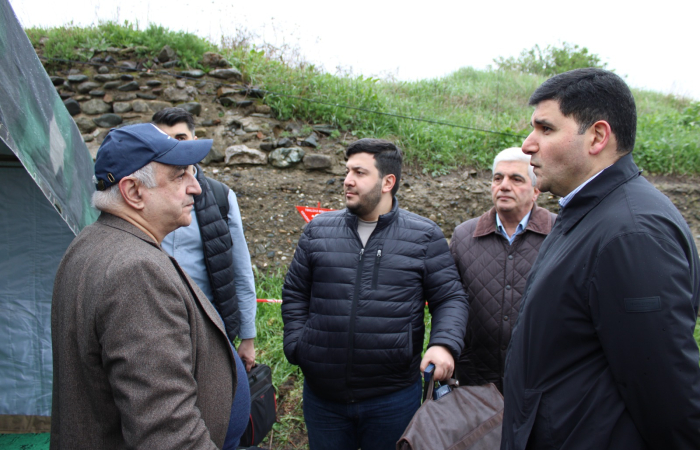
From 10 to 12 April 2026, within the framework of the “Peace Bridge” Initiative, another bilateral roundtable with the participation of representatives of Azerbaijani and Armenian civil society is taking place, this time in Azerbaijan. "Peace Bridge" was launched in November 2025 with the support of the governments of Armenia and Azerbaijan, to foster dialogue and direct engagement between civil society representatives from Azerbaijan and Armenia. On Friday, 10 April, an Armenian group arrived in Azerbaijan via the land border, crossing through a formally delimited and demarcated section and undergoing all relevant border and passport control procedures.  According to the website of the Armenian public broadcaster, 1lurer.am, this weekend's meeting  includes discussions on the current state of the peace process; the activities undertaken by participants in the “Peace Bridge” Initiative in their respective countries and the results of those efforts; as well as the situation in the region. The meeting agenda also includes separate sessions devoted to efforts to advance peace at the societal level and to increase trust during the next stages of the peace process. (click picture to read the news item in full)

Popular

Editor's choice
Interview
Thursday Interview: Murad Muradov

Thursday Interview: Murad Muradov

Today, commonspace.eu starts a new regular weekly series. THURSDAY INTERVIEW, conducted by Lauri Nikulainen, will host  persons who are thinkers, opinion shapers, and implementors in their countries and spheres. We start the series with an interview with Murad Muradov, a leading person in Azerbaijan's think tank community. He is also the first co-chair of the Action Committee for a new Armenian-Azerbaijani Dialogue. Last September he made history by being the first Azerbaijani civil society activist to visit Armenia after the 44 day war, and the start of the peace process. Speaking about this visit Murad Muradov said: "My experience was largely positive. My negative expectations luckily didn’t play out. The discussions were respectful, the panel format bringing together experts from Armenia, Azerbaijan, and Turkey was particularly valuable during the NATO Rose-Roth Seminar in Yerevan, and media coverage, while varied in tone, remained largely constructive. Some media outlets though attempted to represent me as more of a government mouthpiece than an independent expert, which was totally misleading.  Overall, I see these initiatives as important steps in rebuilding trust and normalising professional engagement. The fact that soon a larger Azerbaijani civil society visits to Armenia followed, reinforces the sense that this process is moving in the right direction." (click the image to read the interview in full)