


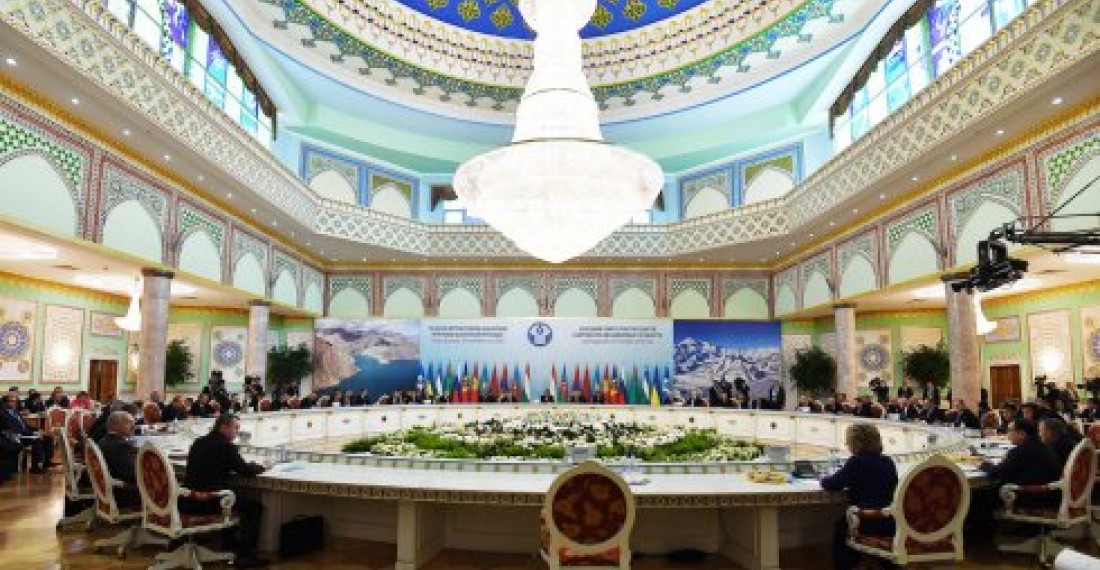
Реакция на переговоры Алиева-Пашиняна в Душанбе

После неофициальных внеплановых переговоров между президентом Азербайджана Ильхамом Алиевым и премьер-министром Армении Николо Пашиняном, состоявшихся в кулуарах саммита СНГ в Душамбе, в пятницу (28 сентября), был высказан ряд комментариев.

Обе стороны в минувшие выходные сообщили о прошедшей встрече, используя в целом одни и те же формулировки.

Подробнее: Алиев и Пашинян провели внеплановые неофициальные переговоры в Душанбе

Впоследствии были сделаны дальнейшие комментарии.

Азербайджан всегда готов к конструктивным переговорам и контактам, служащим урегулированию армяно-азербайджанского конфликта, сообщил в понедельник утром (1 октября) заместитель начальника управления внешней политики Администрации президента Азербайджана Хикмет Гаджиев. Разговор в Душамбе «начался по инициативе премьер-министра Армении», - сказал Гаджиев.

"Это еще раз показывает, что формат переговоров остается неизменным, а переговоры ведутся только между Арменией и Азербайджаном, которые являются сторонами конфликта. В рамках того же формата в сентябре во время Генеральной Ассамблеи ООН в Нью-Йорке и в июле в Брюсселе состоялись встречи между министрами иностранных дел Армении и Азербайджан. Мы оцениваем это позитивно, и Азербайджан всегда готов к конструктивным переговорам и контактам, служащим урегулированию армяно-азербайджанского конфликта. Это еще раз демонстрирует приверженность Азербайджана существующему формату", - сказал Гаджиев.

Он также прокомментировал укрепление режима прекращения огня на армяно-азербайджанской границе и линии соприкосновения войск.

"Азербайджанская сторона неоднократно заявляла, что главной причиной нарушения прекращения огня является незаконное присутствие армянских войск на оккупированных азербайджанских территориях и продолжение военной оккупации. Армянская сторона всегда несет ответственность за нарушение режима прекращения огня и обострение ситуации. Я хотел бы упомянуть о широкомасштабных военных учениях вооруженных сил Армении на оккупированных азербайджанских территориях после встречи глав государств в ноябре 2014 года в Париже, подстрекательство к известному инциденту с вертолетом, а также обстрел армянскими вооруженными силами тяжелыми вооружениями мирных жителей вдоль линии соприкосновения в апреле 2016 года, и умышленное обострение ситуации", - сказал Гаджиев.

"Таким образом, вывод армянских войск с оккупированных азербайджанских территорий в соответствии с требованиями резолюций Совета Безопасности ООН устранит не только военный риск, но также не будет необходимости в прекращении огня, и будут широкие возможности для политического решение конфликта, что обеспечит мир, стабильность и безопасность в регионе", - добавил он.

Ранее прозвучал еще один комментарий премьер-министра Армении Никола Пашиняна: президент Азербайджана Ильхам Алиев оставил впечатление образованного человека, сказал он армянским СМИ. "Он оставил положительное впечатление, у нас был нормальный, цивилизованный разговор", - цитирует слова Пашиняна армянские СМИ.

Премьер-министр сказал, что достигнута договоренность о регулярных контактах с Алиевым, но Пашинян не уверен, что руководство Азербайджана будет следовать этому соглашению. "Я не уверен, что соглашения будут реализованы", - сказал он.

Он добавил, что они планируют информировать сопредседателей Минской группы ОБСЕ о договоренностях, достигнутых между руководством Армении и Азербайджана по поддержке постоянных контактов между странами.

Обсуждался вопрос о возвращении Карабаха к переговорному столу. "Мы также обсудили этот вопрос. Конечно, у нас разные взгляды, я позвонил президенту Арцаха Бако Саакяну и проинформировал его о достигнутых соглашениях. Президент Арцаха отметил, что соглашение приемлемо и для них".

В то же время было высказано мнение де-факто властей самопровозглашенной Нагорно-Карабахской Республики: "Республика Арцах приветствует соглашение между премьер-министром Армении Николом Пашиняном и президентом Азербайджана Ильхамом Алиевым о деэскалации ситуации", сказал в беседе с корреспондентом «АРМЕНПРЕСС» пресс-секретарь де-факто властей Давид Бабаян.

"Это интересное и достойное похвалы развитие, если мы должны дать политическую оценку. Три момента, которые они согласовали, очень важны. Но здесь есть оговорка, что полностью доверяя Алиеву или вообще азербайджанскому руководству не правильно, потому что они могут нарушить какое-либо соглашение/.../, что показала практика. Тем не менее, будем надеяться, что на этот раз это соглашение даст какой-то положительный эффект", - сказал он.

Пресс-секретарь предостерег от каких-либо краткосрочных ожиданий. "Мы должны подождать. Мы должны рассматривать это соглашение не в течение двух часов или одного-двух дней, а в долгосрочной перспективе", - сказал он, заявив, что "согласие Алиева на соглашение может зависеть от давления со стороны разных уровней против руководства Азербайджана".

"Интересно, что до этого сопредседатели сделали очень строгие заявления. Конечно, это было в первую очередь адресовано Азербайджану, потому что именно эта сторона нарушает режим прекращения огня, и это интересное совпадение, что именно российский Президент [Путин] представил лидеров Армении и Азербайджана друг другу с формальной точки зрения. Принимая во внимание, что Россия является одной из стран-сопредседателей ОБСЕ, не исключено, что Алиев находится в очень уникальной ситуации, когда против него существует давление, и он нашел подходящий случай как узнать нового армянского лидера, так и продемонстрировать себя конструктивной стороной", - сказал Бабаян.

Тем не менее, Бабаян отметил, что ситуация на линии соприкосновения стабильна.

источник: commonspace.eu по материалам информационного агентства TREND Баку, Арменпресс (Ереван) и news.am (Ереван)

 

Latest

Editor's choice
Monday Commentary
Monday Commentary: PEACE IN OUR TIME?

Monday Commentary: PEACE IN OUR TIME?

Making peace between Armenia and Azerbaijan was never going to be simple, nor easy, nor quick. It is taking time, writes Dennis Sammut in this Monday Commentary. “There is a sense of realism coming from the leaders of the two countries – President Ilham Aliyev of Azerbaijan and prime minister Nikol Pashinyan of Armenia, that frankly, is necessary and welcome”, he writes. At a time when conflicts are raging all over the world – from Ukraine to the Gulf, from Africa to South Asia, the prospect that Armenia and Azerbaijan had finally, after decades of conflict that left thousands of dead and many more displaced, decided on embarking on a journey of peace was welcomed. Peace between Armenia and Azerbaijan can be top-down up to a point. Both leaders have spent political capital preparing for a peace deal. But both are aware that their people are not ready for peace yet. In fact, in Armenia, most of the elite are negative toward a peace deal with Azerbaijan. Pashinyan needs time to persuade his countryfolk. That is why 2031 is realistic. Ilham Aliyev runs a tighter shop, but he is also not immune to public opinion. Every time someone hits a landmine in Karabakh, which unfortunately happens often, peace comes into question. Which is why Aliyev chooses to sound hardline, more often than not. In pursuing the peace agenda, both Aliyev and Pashinyan need to proceed cautiously. But they are right in making peace the central issue in their agenda. It is the main issue, and the one that will define them in history. So forward, cautiously but resolutely! In pursuing the peace agenda, Aliyev and Pashinyan need to be supported clearly and unambiguously. There are too many people in Baku and Yerevan who are sitting on the sides, waiting. The international community is not doing enough. It is time to be counted. Otherwise, the spoilers will win, and the region will go back to its bad habits. (Click the image to read the full commentary).

Popular

Editor's choice
Monday Commentary
Monday Commentary: European-Azerbaijan relations need an intensive and multifaceted dialogue that is frank and honest

Monday Commentary: European-Azerbaijan relations need an intensive and multifaceted dialogue that is frank and honest

Last week I visited Baku, Azerbaijan. My visit was relatively short, but very intensive, and had many meetings with stakeholders and colleagues. When I arrived in Baku first time in 1996,  Azerbaijan was a different country: weak, poor, and shaken by defeat in war. For thirty year the Karabakh issue dominated the agenda: the political agenda but also the popular mindset. Now, thirty years later, Azerbaijan has returned to Karabakh, and peace with Armenia is on the horizon. It is a new era for Armenia-Azerbaijan relations, for the South Caucasus, but also for Europe.  But we cannot be complacent: the Peace agreement has been initialed but not signed; borders remain closed; TRIPP is ambitious but remains an idea; and there are spoilers who want to turn the clock back. We must not allow them, and in this Europe and Azerbaijan must work together. Europe’ vanguard organization is the European Union – it is a free union of 27 member states; it is a strong global economic force, and increasingly a diplomatic and military force too. But it remains “work in progress” and can often appear dysfunctional. It often lacks collective and institutional memory. In its dealings with Azerbaijan the EU has made many mistakes – not least opening the delegation here late – in 2008. It sometimes appears condescending. Some utterances from the European Parliament and from some quarters in some member states are not understandable even for me. They irritate the Azerbaijanis, but serve no other purpose But Azerbaijan has also not handled relations with the EU well. It has failed to respond when the hand of friendship reached out; and it confused irritating actions, sometimes by well-meaning people; sometimes by outright spoilers, with strategic action. In short, EU-Azerbaijan relations have suffered from a lack of proper dialogue. This dialogue must be frank, honest and multi-faceted involving different segments of society on both sides.   Is Azerbaijan Europe? When Azerbaijan applied to join the Council of Europe in the 1990s, there were some who opposed, saying this was not Europe. I was one of the people who argued that Armenia and Azerbaijan may be on the periphery of the continent geographically, but were European in essence. Certainly their elites. During the discussion on 4 September in Baku, my friend Farhad Mammedov, mentioned that Azerbaijan is not interested in joining the EU, and was now close to the Central Asian countries in the 5 plus 1 format. Neither things mean that Azerbaijan is not Europe. There are several European countries that are not in the EU, and do not want to be, for example Norway and Switzerland. Iceland has recently voted to stay out of the EU. The UK was a member and left. Europe is bigger than the EU, and the holding of the European Political Community summit in Baku in 2027 proves that. Despite all the rhetoric, I never heard the president of Azerbaijan  saying that Azerbaijan is not Europe, nor have I heard any European president say it either. Not wanting to join the EU and forging close relations with neighbouring regions does not make Azerbaijan any less European. It is only logical that when Europeans talk to Azerbaijan they talk like family. The conversation is often frank. It must also be honest, and Europeans need always to remember this too. A frank, honest and multi-faceted dialogue A frank, honest and multifaceted dialogue will contribute to relations between Azerbaijan and the rest of Europe: it will avoid misperception, which unfortunately is very common on both sides; it will provide a forum where problems can be discussed and resolved, and it will increase mutual trust, so that together common problems can be addressed. (click image to read the full Monday Commentary)
Editor's choice
Monday Commentary
Monday Commentary: “The barren rocks of Aden” and “These lands of Yemen are so ruthless”

Monday Commentary: “The barren rocks of Aden” and “These lands of Yemen are so ruthless”

There are two early 20th-century tunes that mark foreign attempts to occupy and “pacify” Yemen. The Scottish tune “The barren rocks of Aden” marks the mobilisation of Highland soldiers, enlisted to be deployed to the Yemeni port of Aden, that in 1837 became the last colony to be incorporated into the British Empire. The tune talks of the harshness of the terrain, but is celebratory, It was even played as a farewell tune to Sir William Luce at the parade in Sharjah celebrating his end as “British Viceroy” in the Middle East in 1966. The second tune is an Anatolian lament. As Ilker Sezer reminded us this weekend, in his weekly feature on “Turkiye Today”, it “mourns the tragic fate of Ottoman soldiers dispatched to the harsh, remote deserts of Yemen during the fall of the empire, young men who marched away from their villages and never returned home. Most of their names, and numbers, were never recorded. Yet, their fate left a mark on the Turkish psyche.” Subsequent invaders have discovered that Yemen is a grave that cannot be overcome by the strength of modern technology, and that whilst Yemeni society is splintered and divided, building a reliable alliance with Yemeni factions is difficult. These are the harsh lessons facing Saudi Arabia, as the Kingdom faces its biggest challenge in its modern history. The leadership of the Kingdom now has to respond decisively. At stake is their very credibility. This is likely to be a long and messy conflict. Saudi military objectives need to be focused: to box in the Houthis rather than destroy them. This is likely to include: (a) regaining territory lost on the Red Sea coast; (b) control over Bab el Mandeb Strait; (c) some kind of cordon sanitaire on the Saudi-Yemeni border; and if things go well (d) the capture of Sanaa. All this would not eliminate the Houthi problem, but it will contain it. In the end the Saudis will have to continue managing Yemen with a mixture of carrot and stick. For the moment, the stick is likely, but the carrot cannot be forgotten either. (click the image to read the Monday Commentary in full)

