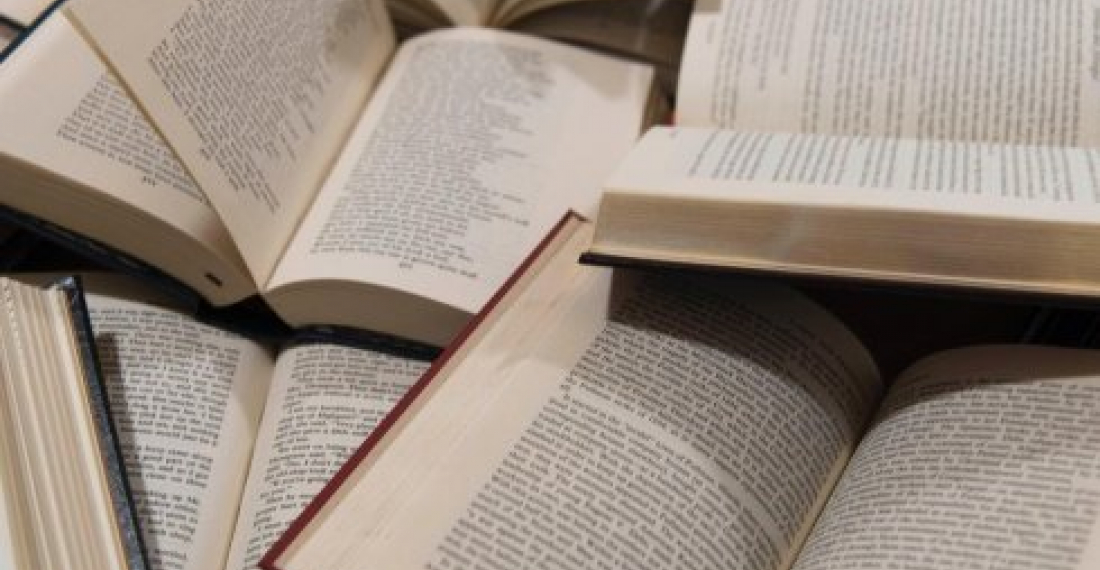
Много свободного времени? Может быть, пришло время почитать книгу

Эти регулярные советы для наших читателей от Уильяма Мюррея подготовлены специально для commonspace.eu, чтобы помочь вам справиться с кризисом коронавируса. В условиях самоизоляции двух с половиной миллиардов человек многие оказываются дома одни, имея в расположении достаточно много времени. Литература может быть выходом из скуки, объясняет Уильям в сегодняшнем материале.

В начале очередной недели изоляции люди будут искать интересные и конструктивные способы провести время дома. Для книжных червей и случайных читателей литература может стать выходом в сложившейся ситуации.

Хотя это не станет сюрпризом для заядлых читателей, исследования показали, что чтение имеет много преимуществ для нашего психического здоровья, и есть целые области психологии, которые способствуют этой практике. Исследования показали, что чтение книги всего на шесть минут может снизить уровень стресса, расслабить мозг больше, чем прослушивание музыки или же видеоигры.

В качестве отправной точки издательство Penguin перечисляет свои «100 обязательных к прочтению классических книг ...». Или для тех, кто ищет что-то более современное, на этой неделе BBC опубликовала статью «Лучшие книги 2020 года», в которой перечислены 16 известных романов, изданных в этом году.

Хотя чтение в значительной степени является уединенным занятием, Интернет предоставляет множество форумов для обсуждения интересующих вас книг с другими людьми. Хотите поделиться своими мыслями или ищете рекомендации Reddit's / r / books и goodreads - отличные места для начала.

источник: Этот материал был подготовлен Уильямом Мюрреем для commonspace.eu
 

Related articles

Editor's choice
News
Azerbaijan-Armenia Internet Transit Deal Marks New Step in Regional Connectivity

Azerbaijan-Armenia Internet Transit Deal Marks New Step in Regional Connectivity

Azerbaijan and Armenia have signed an agreement allowing the mutual transit of international internet traffic, creating a direct telecommunications link between the two countries for the first time since the collapse of the Soviet Union. The deal, announced on 17 June by AzerTelecom and Telecom Armenia, is intended to improve route diversity and network resilience in the South Caucasus. The development follows a gradual process of normalisation of relations between Baku and Yerevan. Notably, Azerbaijan has repeatedly identified the restoration of transport and communication links as a key component of a future peace settlement. Since the initialling of a peace agreement during a summit in Washington in August 2025, the two sides have taken several important steps, including progress on border delimitation and the easing of certain transit restrictions. The telecommunications agreement is also significant because it was negotiated by private operators rather than government officials. Industry observers note that commercial infrastructure projects can create long-term economic ties and mutual dependencies that are more difficult to reverse than political declarations.

Popular

Editor's choice
Interview
Thursday Interview: Murad Muradov

Thursday Interview: Murad Muradov

Today, commonspace.eu starts a new regular weekly series. THURSDAY INTERVIEW, conducted by Lauri Nikulainen, will host  persons who are thinkers, opinion shapers, and implementors in their countries and spheres. We start the series with an interview with Murad Muradov, a leading person in Azerbaijan's think tank community. He is also the first co-chair of the Action Committee for a new Armenian-Azerbaijani Dialogue. Last September he made history by being the first Azerbaijani civil society activist to visit Armenia after the 44 day war, and the start of the peace process. Speaking about this visit Murad Muradov said: "My experience was largely positive. My negative expectations luckily didn’t play out. The discussions were respectful, the panel format bringing together experts from Armenia, Azerbaijan, and Turkey was particularly valuable during the NATO Rose-Roth Seminar in Yerevan, and media coverage, while varied in tone, remained largely constructive. Some media outlets though attempted to represent me as more of a government mouthpiece than an independent expert, which was totally misleading.  Overall, I see these initiatives as important steps in rebuilding trust and normalising professional engagement. The fact that soon a larger Azerbaijani civil society visits to Armenia followed, reinforces the sense that this process is moving in the right direction." (click the image to read the interview in full)