


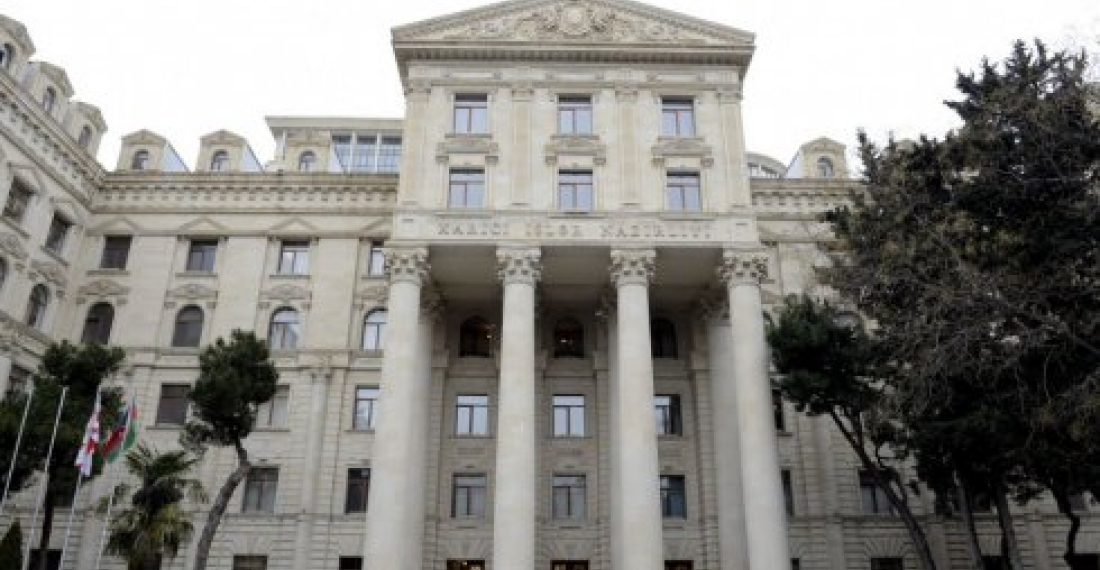
Баку реагирует на речь Пашиняна в Нагорном Карабахе

МИД Азербайджана вчера (6 августа) опубликовал заявление в ответ на выступление премьер-министра Армении Никол Пашиняна в понедельник (5 августа) в Степанакерте. Заявление МИД обвиняет «агрессивные заявления» премьер-министра в «явном [противоречии] духу и сути переговоров по урегулированию армяно-азербайджанского нагорно-карабахского конфликта, которые велись в течение многих лет, в том числе недавних обсуждений встреч между Арменией и Азербайджаном».

В заявлении говорится, что речь является «серьезным ударом по переговорному процессу при посредничестве сопредседателей Минской группы ОБСЕ» и что слова премьер-министра не соответствуют призыву Армении к «исключительному мирному урегулированию конфликта».

Заявление МИД также каснулось целей развития Армении до 2050 года, о которых Пашинян заявил во время выступления в понедельник, заявив, что страна не сможет «достичь своих амбиций в течение следующих 30 лет, скрываясь за своей агрессивной политикой». Он обвинил армянское руководство в использовании этих целей для обмана армянского народа, при этом выступив за то, чтобы Армения «[оценила] текущую ситуацию и [нормализовала] свои отношения с соседними странами».

МИД Армении отреагировал на заявление МИД Азербайджана, раскритиковав его как «яркую демонстрацию несоблюдения основных правил вежливости и порядочности, неспособности поддерживать цивилизованные нормы поведения между народами, особенно между сторонами вовлеченными на высшем уровне в очень сложный и деликатный процесс разрешения конфликта». В ответном заявлении МИД Азербайджана обвинилb в "нападках личного характера" и "в поощряемой властями Азербайджана нетерпимости и ненависти".

МИД Армении также обвинил азербайджанцев в том, что они «не понимают контекста и содержания» речи, отстаивая риторику Пашиняна как «общеармянскую повестку дня по продвижению единства, солидарности, развития и процветания для Армении, Арцаха и диаспоры». «Армения является единственным гарантом народа Арцаха в деле обеспечения его прав» - сказано в заявлении. Оно подтверждает неизменную приверженность Армении «строго мирному урегулированию конфликта», но любое решение «должно быть приемлемым для народов Арцаха, Армении и Азербайджана».

Вчера начальник управления по внешней политике Администрации президента Азербайджана Хикмет Гаджиев сказал: «Делая это деструктивное и провокационное заявление, армянская сторона вновь ставит регион лицом к лицу с угрозами и рисками и намеренно обостряет ситуация, чтобы отвлечь внимание общественности от своих внутренних проблем». Гаджиев обвинил Пашиняна в противоречии с его «недавними заявлениями о том, что он «не может говорить от имени Нагорного Карабаха» и в введении в заблуждение международного сообщества на переговорах.

Наблюдатели обеспокоены тем, что такое развитие может подорвать возможность того, что новое правительство Пашиняна сможет продвинуться вперед в нагорно-карабахском мирном процессе, и что это может повысить вероятность «случайной войны», поскольку Азербайджан отказывается от веры в мирное урегулирование конфликта.

источники: commonspace.eu и другие агентства

фото: МИД Азербайджана (фото любезно предоставлено сайтом Азертаг)

Related articles

Editor's choice
News
Nikol Pashinyan re-appointed as Armenian prime minister after decisive June election victory

Nikol Pashinyan re-appointed as Armenian prime minister after decisive June election victory

Armenia president, Vahagn Khachaturyan has re-appointed Nikol Pashinyan as Armenian prime minister, after the decisive victory of his Civil Contract party in parliamentary elections in June. During a ceremony at the Presidential Palace in Yerevan, President Khachaturyan signed a decree on the appointment of Nikol Pashinyan as Prime Minister of the Republic. President Vahagn Khachaturyan said in short remarks: It is a great honor for me to sign a decree on appointing you to the post of Prime Minister of the Republic of Armenia, for which I received a proposal from the political majority in the National Assembly, under Article 149 of the Constitution of the Republic of Armenia. I sincerely congratulate you, I wish you great patience, endurance, and determination to lead us in these difficult times, to lead the country to the future, a prosperous future. Nikol Pashinyan thanked the president and added,  I must say honestly that in 2018, when I assumed the post of Prime Minister of the Republic of Armenia as a result of the People's, non-violent, velvet revolution, it would have been difficult to predict that we would go down such a path and I think it would have been difficult to predict that we would be able to overcome this path. But we are where we are, and I think that the key role and significance in all this is unequivocally and undoubtedly the people of the Republic of Armenia, who, after all, have demonstrated special expressions of state consciousness and state-centeredness throughout this period. And of course, this is a great obligation and commitment. Of course, the Government will be formed in the near future and all members of the Government, including me, will already enshrine our obligations to our people in the text of the oath.  In the meantime Ruben Rubinyan has been elected Speaker of the National Assembly of Armenia, following a secret vote of MPs. He is a 36-year-old MP from the ruling Civil Contract party, who was one of the deputy speakers in the previous parliament and, until recently, was the special representative in the negotiations on the normalization of relations with Turkey.

Popular

Editor's choice
Interview
Thursday Interview: Murad Muradov

Thursday Interview: Murad Muradov

Today, commonspace.eu starts a new regular weekly series. THURSDAY INTERVIEW, conducted by Lauri Nikulainen, will host  persons who are thinkers, opinion shapers, and implementors in their countries and spheres. We start the series with an interview with Murad Muradov, a leading person in Azerbaijan's think tank community. He is also the first co-chair of the Action Committee for a new Armenian-Azerbaijani Dialogue. Last September he made history by being the first Azerbaijani civil society activist to visit Armenia after the 44 day war, and the start of the peace process. Speaking about this visit Murad Muradov said: "My experience was largely positive. My negative expectations luckily didn’t play out. The discussions were respectful, the panel format bringing together experts from Armenia, Azerbaijan, and Turkey was particularly valuable during the NATO Rose-Roth Seminar in Yerevan, and media coverage, while varied in tone, remained largely constructive. Some media outlets though attempted to represent me as more of a government mouthpiece than an independent expert, which was totally misleading.  Overall, I see these initiatives as important steps in rebuilding trust and normalising professional engagement. The fact that soon a larger Azerbaijani civil society visits to Armenia followed, reinforces the sense that this process is moving in the right direction." (click the image to read the interview in full)


