


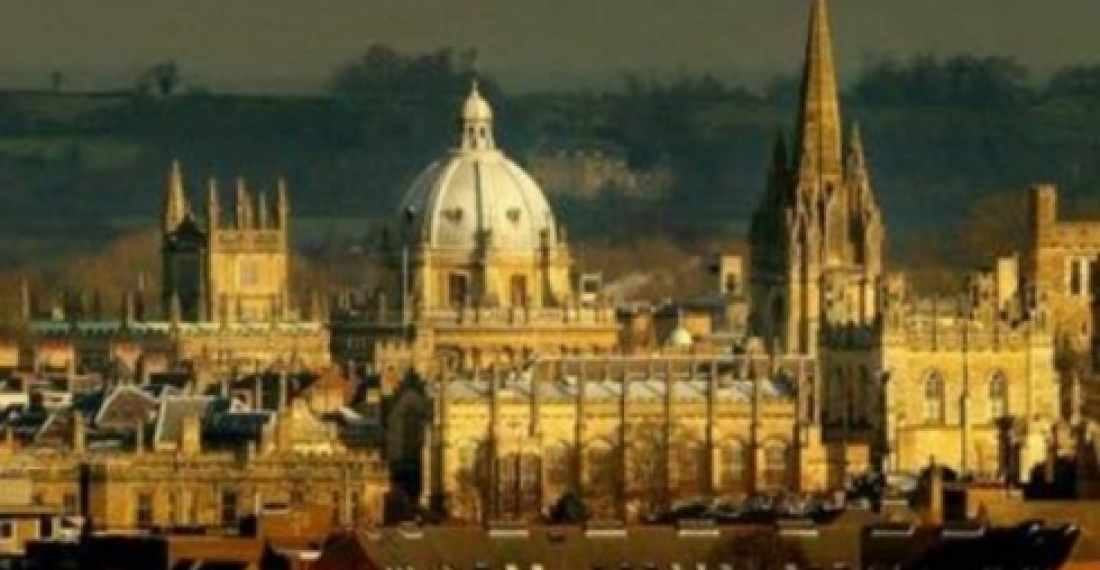
На конференции в Оксфорде обсудят процесс урегулирования карабахского конфликта.

Ученые из ряда европейских университетов и исследовательских центров, дипломаты и специалисты-практики, а также активисты, представляющие заинтересованные стороны в процессе урегулирования нагорно-карабахского конфликта собираются в Оксфорде на конференции на тему "Влияние международных и региональных событий на процесс урегулирования конфликта вокруг Нагорного-Карабаха". Организаторами Конференции выступили LINKS (Диалог, анализ и исследования) и Центр исследований России и Евразии, в колледже Святого Антония Оксфордского университета, которая состоится во вторник, 11 ноября.

В период повышенной глобальной напряженности, и в то время, когда Европа сталкивается с некоторыми из самых больших вызов для мира и безопасности с момента окончания холодной войны, усилия по мирному урегулированию нагорно-карабахского конфликта все больше переплетаются  с другими региональными и международными вопросами. В то же время,  события последних нескольких недель показали, что конфликт продолжает  уносить жизни многих армян и азербайджанцев в инцидентах на линии соприкосновения, напоминая нам, что этот конфликт остается серьезной угрозой для мира и процветания на Кавказе и Европы. Это также негативно сказывается на сотни тысячах людей с обеих сторон конфликта.

На конференции проанализируют текущую ситуацию, и обсудят, что же еще  может быть сделано в целях продвижения мирного процесса.

Исполнительный директор LINKS Деннис Саммут, сообщил commonspace.eu, что конференция предоставляет пространство для анализа того, что получилось, и чего же не хватает в процессе урегулирования карабахского конфликта, и как новые реалий, которая Европа переживает повлияет на будущее. "Конференция призывает заглянуть в будущее, но мы неизбежно должны извлечь уроки из прошлого. В связи с этим тот факт, что конференция проводится 11 ноября, в день, когда мы в Британии вспоминаем павших в двух мировых войнах и в других конфликтах, несет в себе много символики даже для участников конференции. Говоря о нагорно-карабахском конфликте, мы никогда не должны упускать из виду тот факт, что конфликт унес жизни многих людей, особенно много молодежи, и продолжает делать это. Мы в долгу перед ними и поэтому должны работать над разрешением этого конфликта и над избавлением региона от этой самой сложной проблемы", сказал Деннис Саммут

Commonspace.eu будет освещать ход конференции.

Related articles

Editor's choice
News
Nikol Pashinyan re-appointed as Armenian prime minister after decisive June election victory

Nikol Pashinyan re-appointed as Armenian prime minister after decisive June election victory

Armenia president, Vahagn Khachaturyan has re-appointed Nikol Pashinyan as Armenian prime minister, after the decisive victory of his Civil Contract party in parliamentary elections in June. During a ceremony at the Presidential Palace in Yerevan, President Khachaturyan signed a decree on the appointment of Nikol Pashinyan as Prime Minister of the Republic. President Vahagn Khachaturyan said in short remarks: It is a great honor for me to sign a decree on appointing you to the post of Prime Minister of the Republic of Armenia, for which I received a proposal from the political majority in the National Assembly, under Article 149 of the Constitution of the Republic of Armenia. I sincerely congratulate you, I wish you great patience, endurance, and determination to lead us in these difficult times, to lead the country to the future, a prosperous future. Nikol Pashinyan thanked the president and added,  I must say honestly that in 2018, when I assumed the post of Prime Minister of the Republic of Armenia as a result of the People's, non-violent, velvet revolution, it would have been difficult to predict that we would go down such a path and I think it would have been difficult to predict that we would be able to overcome this path. But we are where we are, and I think that the key role and significance in all this is unequivocally and undoubtedly the people of the Republic of Armenia, who, after all, have demonstrated special expressions of state consciousness and state-centeredness throughout this period. And of course, this is a great obligation and commitment. Of course, the Government will be formed in the near future and all members of the Government, including me, will already enshrine our obligations to our people in the text of the oath.  In the meantime Ruben Rubinyan has been elected Speaker of the National Assembly of Armenia, following a secret vote of MPs. He is a 36-year-old MP from the ruling Civil Contract party, who was one of the deputy speakers in the previous parliament and, until recently, was the special representative in the negotiations on the normalization of relations with Turkey.

Popular

Editor's choice
Interview
Thursday Interview: Murad Muradov

Thursday Interview: Murad Muradov

Today, commonspace.eu starts a new regular weekly series. THURSDAY INTERVIEW, conducted by Lauri Nikulainen, will host  persons who are thinkers, opinion shapers, and implementors in their countries and spheres. We start the series with an interview with Murad Muradov, a leading person in Azerbaijan's think tank community. He is also the first co-chair of the Action Committee for a new Armenian-Azerbaijani Dialogue. Last September he made history by being the first Azerbaijani civil society activist to visit Armenia after the 44 day war, and the start of the peace process. Speaking about this visit Murad Muradov said: "My experience was largely positive. My negative expectations luckily didn’t play out. The discussions were respectful, the panel format bringing together experts from Armenia, Azerbaijan, and Turkey was particularly valuable during the NATO Rose-Roth Seminar in Yerevan, and media coverage, while varied in tone, remained largely constructive. Some media outlets though attempted to represent me as more of a government mouthpiece than an independent expert, which was totally misleading.  Overall, I see these initiatives as important steps in rebuilding trust and normalising professional engagement. The fact that soon a larger Azerbaijani civil society visits to Armenia followed, reinforces the sense that this process is moving in the right direction." (click the image to read the interview in full)


