


Выбор Армении. Премьер-министр Армении проливает свет на то, как его страна управляет своими отношениями с Россией и ЕС в интервью Ъ.
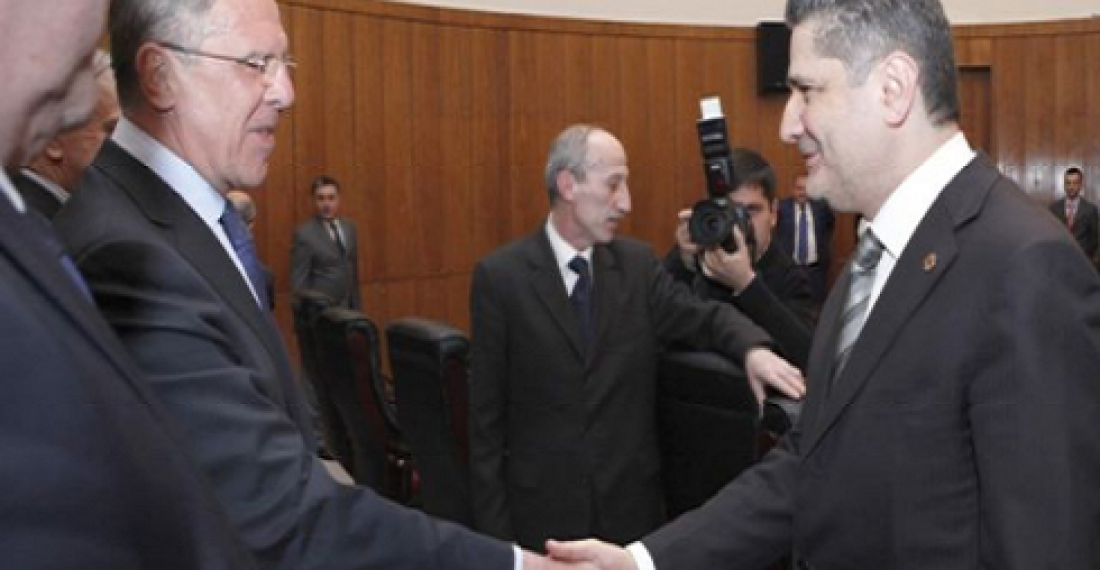

Премьер-министр Армении Тигран Саркисян в очередной раз исключил вступления Армении в Таможенный союз России и двух других бывших советских республик и заявил, что его страна будет продолжать углубление интеграции с Европейским Союзом. В интервью российскому ежедневной газете "КоммерсантЪ", опубликованном в среду, он также заявил, что Ереван готов рассмотреть вопрос о размещении российской военной радиолокационной станции, которая в настоящее время находится в Азербайджане.

Комментируя возможность членство Армении в торговом блоке образованном Россией, Казахстаном и Беларусью, Саркисян подтвердил аргумент своего правительства о том, что Армения не имеет общей границы ни с одной из трех стран. "Это было бы бессмысленным", сказал он. "Смысл Таможенного союза заключается в том, что обмен товарами осуществляется без таможенного досмотра. В нашем случае это невозможно, потому что мы должны проходить через территорию соседнего государства и дважды преодолевать растаможку."

"Наши российские коллеги с пониманием относятся к данной ситуации. Мы ищем формы сотрудничества без Таможенного союза.", добавил он.

Премьер-министр Армении был главной силой выступающей за более тесное сотрудничество между его страной и Европейским Союзом. Он побывал в Брюсселе несколько раз в прошлом году и он пользовался доверием за продвижение реформ в своей стране. Саркисян заявил "Коммерсанту", что Восточное партнерство не направлено на ослабление присутствия России в Армении и в других странах бывшего Советского Союза. "Мы сотрудничаем с НАТО и ЕС", сказал он. "Эти процессы не направлены против третьей стороны. Точно так же, как наши стратегические партнерские отношения с РФ не направлены против ЕС." На данный момент Армения ведет переговоры о далеко идущем соглашении об ассоциации с ЕС. Если соглашение будет достигнуто, это даст стране впервые реальный выбор в своей внешней политике. Армении преследуя эту цель необходимо иметь в виду своего союзника Россию.

"Обо всех наших программах сотрудничества — будь то с ЕС, НАТО, США, Ираном, Китаем или Грузией — наш стратегический партнер Россия в курсе. Она с пониманием относится к тому, что мы делаем. Если на этот вопрос посмотреть с позиции Еревана, то станет очевидно, что у нас нет большого выбора для развития партнерских отношений — учитывая нашу геополитическую ситуацию и проблемы с соседями.", добавил армянский премьер.

Сарксян подчеркнул, что Ереван полагаться на военный союз с Москвой, когда его спросили, согласится ли он, чтобы Российские военные перенесли основную РЛС  раннего предупреждения из Азербайджана в Армению. "Почему нет? ...Если наша территория представляет собой такой интерес, то мы готовы обсуждать этот вопрос.", сказал он. Россия и Азербайджан ведут переговоры о возможном продлении аренды на российскую Габалинскую РЛС, аренда которой истекает в декабре 2012 года. Пока никакого соглашения они не достигли.

Политический редактор Commonspace.eu в комментарии сообщает, что "Выбор Армении не будет легким. Для ЕС это не игра с нулевой суммой и страны в ассоциации с ЕС в равной степени могут иметь стратегические отношения с Россией. Обусловленность основана на реформах и демократий на повестке дня. В этой связи испытанием для ЕС будут предстоящие парламентские выборы в мае, а не договоренности с Россией. Однако для Россий это может быть совсем другая история. На повестке дня у Путина, когда он вернется в Кремль в Мае, будет новый евразийский союз, который он предложил в ходе своей предвыборной кампании. Для России участие Армении в таком союзе может стать вопросом престижа и в этом случае у Еревана могут возникнуть проблемы."

Источник: commonspace.eu по материалам Радио Свободы

Фото: Премьер-министр Армении Тигран Сарксян в Ереване 2 апреля 2012 года и министр иностранных дел России Сергей Лавров (фото любезно предоставлено пресс-службой правительства Армении)

Related articles

Editor's choice
News
''Coalition of the Willing'' meets in Kyiv to restate its support for Ukraine

''Coalition of the Willing'' meets in Kyiv to restate its support for Ukraine

The ''Coalition of the  Willing''  of thirty five countries, has renewed its support of Ukriane, at a meeting in Kyiv, held on Ukraine's national day on 24 August, under the chairmanship of British Prime Minister,A ndy Burnham. Burnham has promised to keep up the pressure on Russia despite Moscow's "outrageous threats", on his first official visit to Ukraine as UK prime minister. Burnham met Ukrainian President Volodymyr Zelensky and chaired his first meeting of the "coalition of the willing", set up by the UK and France under his predecessor Sir Keir Starmer. He said the coalition was "doing everything we can" while urging the US Congress to "ratchet up" economic pressure on Russia. The government has agreed to hand over blueprints for British-made components for the Scalp missile, a French version of the UK's Storm Shadow cruise missile - allowing Ukraine to produce the long-range weapon domestically. During the meeting with France and Ukraine, Burnham said allies were doing "everything we can" to "dig into our own stocks and help others dig into their stocks" of air defences to protect Ukraine. "This is the moment to keep up the pressure on Russia, the moment to squeeze their ability to fund this illegal war," Burnham said, praising the "strength" of the Ukrainian people. "Ukraine has been Europe's protector, not a drain on our security but the front line in keeping Europe safe." It comes after Kremlin spokesman Dmitry Peskov criticised the UK's decision to share the missile blueprints. Peskov said it prevented "even the slightest progress" towards achieving peace. He told reporters on Monday that the Russian military was already gathering data to locate any missile production sites to destroy them. "Britain is involved in this war on the side of the Kyiv regime. Britain methodically and regularly adds fuel to the fire," he added. In response, Burnham said: "Who started the fire? That's the question, isn't it?" He added the issue of missile interceptors would be the main topic at the coalition of the willing meeting. Burnham chaired his first meeting of the "coalition of the willing" in Kyiv Burnham has been reaffirming the UK's backing for Kyiv in the wake of escalating Russian strikes on Ukraine in recent weeks - including one on a shopping centre on Friday that killed at least 16 people. In a joint statement after the meeting, Burnham and co-chairs French President Emmanuel Macron and German Chancellor Friedrich Merz said the group would aim to strength Kyiv's air defences "as a matter or urgent priority". They also condemned Moscow's "systemic and escalating strikes against Ukraine's cities, critical infrastructure and civilians" and pledged to "constrain Russia's war chest through sanctions and actions against the "shadow fleet". (click image to read more).

Popular

Editor's choice
Interview
Thursday Interview: Murad Muradov

Thursday Interview: Murad Muradov

Today, commonspace.eu starts a new regular weekly series. THURSDAY INTERVIEW, conducted by Lauri Nikulainen, will host  persons who are thinkers, opinion shapers, and implementors in their countries and spheres. We start the series with an interview with Murad Muradov, a leading person in Azerbaijan's think tank community. He is also the first co-chair of the Action Committee for a new Armenian-Azerbaijani Dialogue. Last September he made history by being the first Azerbaijani civil society activist to visit Armenia after the 44 day war, and the start of the peace process. Speaking about this visit Murad Muradov said: "My experience was largely positive. My negative expectations luckily didn’t play out. The discussions were respectful, the panel format bringing together experts from Armenia, Azerbaijan, and Turkey was particularly valuable during the NATO Rose-Roth Seminar in Yerevan, and media coverage, while varied in tone, remained largely constructive. Some media outlets though attempted to represent me as more of a government mouthpiece than an independent expert, which was totally misleading.  Overall, I see these initiatives as important steps in rebuilding trust and normalising professional engagement. The fact that soon a larger Azerbaijani civil society visits to Armenia followed, reinforces the sense that this process is moving in the right direction." (click the image to read the interview in full)


