


Хорошая работа Швейцария! Швейцарское председательство в ОБСЕ в 2014 году было отмечено беспрецедентным вызовом европейской безопасности/

Этот комментарий был подготовлен редакционной командой commonspace.eu

4 и 5 декабря в Базеле состоялся Совет министров Организации по безопасности и сотрудничеству в Европе (ОБСЕ), что совпало с окончанием годового председательства Швейцарии в организации.

Пятьдесят семь государств-членов организации, представляющие страны Европы, Северной Америки и Евразии были единодушны в своих похвалах деятельности Швейцарии для ОБСЕ в прошлом году, который, вероятно, был самым трудным годом для организации с момента ее создания. Год был омрачен кризисом в Украине и разрушением европейского порядка в области безопасности действиями российской стороны, которая оккупировала и аннексировала Крым. Министр иностранных дел Швейцарии Буркхальтер  назвал прошедший год "особенным", что, возможно, является сдержанным высказыванием. Генеральный секретарь Ламберто Дзанньер более реалистично описал в своей итоговой пресс-конференции в Базеле назвав минувший год одним из наиболее сложных в истории организации. Действительно, последние месяцы вполне могли прекратить существование ОБСЕ, но председательствующей Швейцарии удалось решить проблемы таким образом, что ОБСЕ удалось стать сильнее в результате  кризиса.

Результаты встречи министров в Базеле были скромными, и при таких обстоятельствах, это было ожидаемо. По окончанию совещания не было всеобъемлющей итоговой декларации, а в несколько итоговых документах, которые были приняты, не было ничего особенного. Но, как сказал министр иностранных дел Буркхальтер, было необходимо, чтобы все стороны участвовали в диалоге, для выявления областей, где может быть продолжено сотрудничество. Эта цель была достигнута. Однако, это, конечно, только кратковременный успех. Основные проблемы остаются.

В следующем году ОБСЕ отмечает 40-ю годовщину Хельсинкского Заключительного акта. Стратегия "Хельсинки+40" находится в стадии обсуждения, и различия в ее видении между различными сторонами, в частности, между Россией и Западом, по-прежнему огромны. Понятно, что ОБСЕ знает, точку отправления, но еще пока далеко не ясно, куда все это двигается вместе с будущим европейской безопасности. Поэтому организации стоит в течение следующих двух или трех лет активнее работать в этом направлении.

Сербия берет на себя председательство в ОБСЕ в 2015 году, за ней следуют Германия и Австрия в 2016 году и 2017 соответственно. Благодаря председательству Швейцарии будущее ОБСЕ обеспечено по крайней мере в краткосрочной перспективе. Входящим председателям теперь нужно двигать процесс вперед.

Однако, на данный момент дипломаты могут позволить себе момент самодовольства, и подлинно похвалить "за хорошую работу  Швейцарию"!

Источник: Этот комментарий был подготовлен редакционной командой commonspace.eu

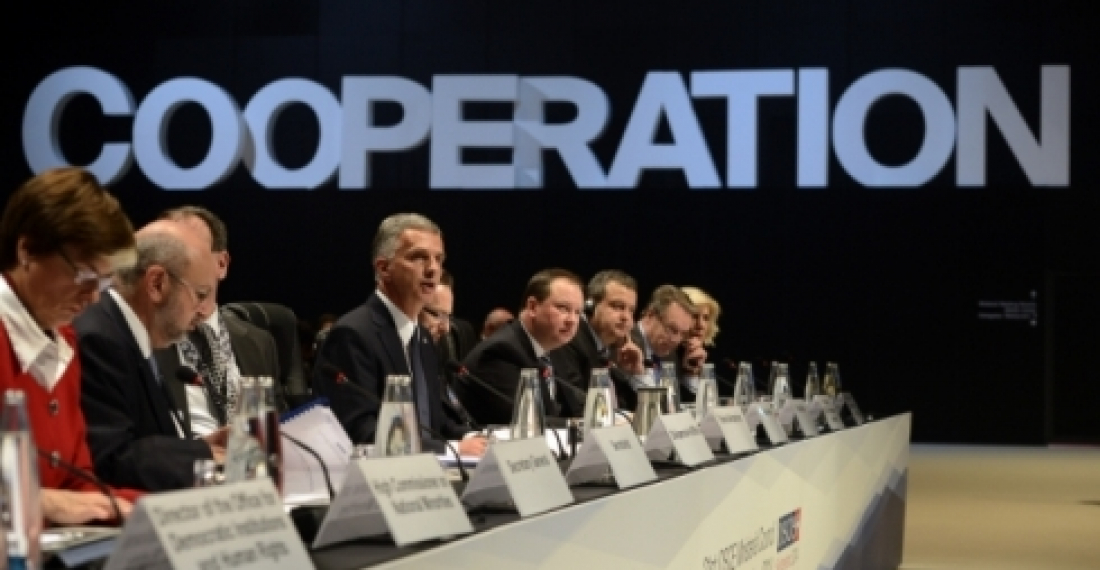
фото: Министр иностранных дел Швейцарии Буркхальтер, выступая на открытии заседания Совета министров иностранных дел ОБСЕ в Базеле, 4 декабря 2014 года (фото любезно ОБСЕ).


Related articles

Editor's choice
News
Nikol Pashinyan re-appointed as Armenian prime minister after decisive June election victory

Nikol Pashinyan re-appointed as Armenian prime minister after decisive June election victory

Armenia president, Vahagn Khachaturyan has re-appointed Nikol Pashinyan as Armenian prime minister, after the decisive victory of his Civil Contract party in parliamentary elections in June. During a ceremony at the Presidential Palace in Yerevan, President Khachaturyan signed a decree on the appointment of Nikol Pashinyan as Prime Minister of the Republic. President Vahagn Khachaturyan said in short remarks: It is a great honor for me to sign a decree on appointing you to the post of Prime Minister of the Republic of Armenia, for which I received a proposal from the political majority in the National Assembly, under Article 149 of the Constitution of the Republic of Armenia. I sincerely congratulate you, I wish you great patience, endurance, and determination to lead us in these difficult times, to lead the country to the future, a prosperous future. Nikol Pashinyan thanked the president and added,  I must say honestly that in 2018, when I assumed the post of Prime Minister of the Republic of Armenia as a result of the People's, non-violent, velvet revolution, it would have been difficult to predict that we would go down such a path and I think it would have been difficult to predict that we would be able to overcome this path. But we are where we are, and I think that the key role and significance in all this is unequivocally and undoubtedly the people of the Republic of Armenia, who, after all, have demonstrated special expressions of state consciousness and state-centeredness throughout this period. And of course, this is a great obligation and commitment. Of course, the Government will be formed in the near future and all members of the Government, including me, will already enshrine our obligations to our people in the text of the oath.  In the meantime Ruben Rubinyan has been elected Speaker of the National Assembly of Armenia, following a secret vote of MPs. He is a 36-year-old MP from the ruling Civil Contract party, who was one of the deputy speakers in the previous parliament and, until recently, was the special representative in the negotiations on the normalization of relations with Turkey.

Popular

Editor's choice
Interview
Thursday Interview: Murad Muradov

Thursday Interview: Murad Muradov

Today, commonspace.eu starts a new regular weekly series. THURSDAY INTERVIEW, conducted by Lauri Nikulainen, will host  persons who are thinkers, opinion shapers, and implementors in their countries and spheres. We start the series with an interview with Murad Muradov, a leading person in Azerbaijan's think tank community. He is also the first co-chair of the Action Committee for a new Armenian-Azerbaijani Dialogue. Last September he made history by being the first Azerbaijani civil society activist to visit Armenia after the 44 day war, and the start of the peace process. Speaking about this visit Murad Muradov said: "My experience was largely positive. My negative expectations luckily didn’t play out. The discussions were respectful, the panel format bringing together experts from Armenia, Azerbaijan, and Turkey was particularly valuable during the NATO Rose-Roth Seminar in Yerevan, and media coverage, while varied in tone, remained largely constructive. Some media outlets though attempted to represent me as more of a government mouthpiece than an independent expert, which was totally misleading.  Overall, I see these initiatives as important steps in rebuilding trust and normalising professional engagement. The fact that soon a larger Azerbaijani civil society visits to Armenia followed, reinforces the sense that this process is moving in the right direction." (click the image to read the interview in full)

