


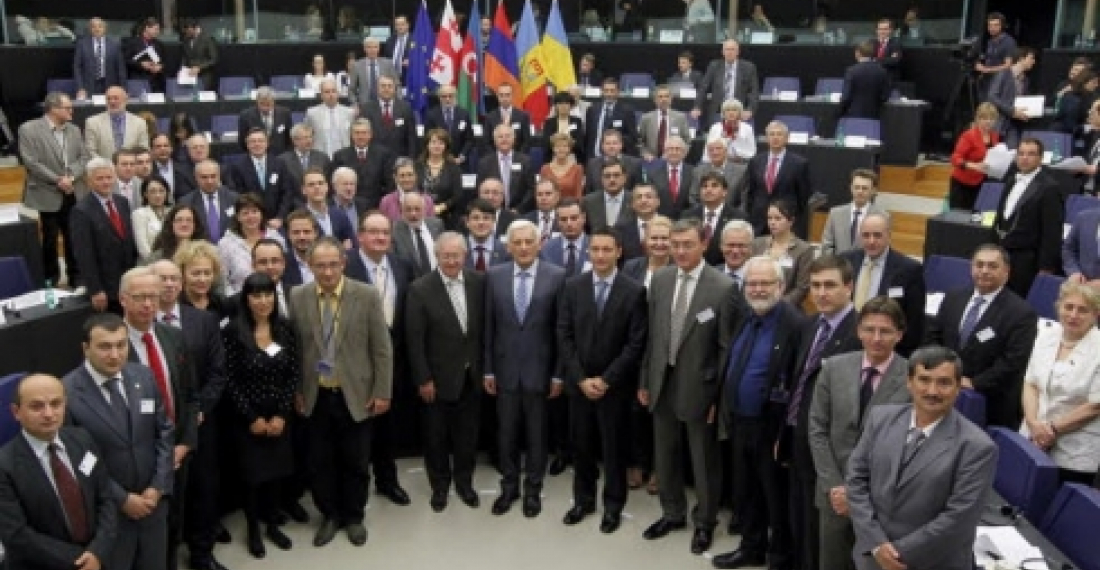
1-ая СЕССИЯ ЕВРОНЕСТ СОСТОЯЛАСЬ С "ОБЫЧНЫМИ ПРОБЛЕМАМИ", НО ПРОЦЕСС ДОЛЖЕН ПРОДОЛЖАТЬСЯ.

Несмотря на обращение Президента Европарламента Ежи Бузека, напряженность на Кавказе затронула первую сессию ЕВРОНЕСТа, состоявшуюся в Страсбурге на этой неделе. Несмотря на эти трудности, все стороны должны продолжать участвовать в этом процессе.

Президент Европейского парламента Ежи Бузек официально открыл 1-ую сессию Парламентской ассамблеи ЕВРОНЕСТ в Страсбурге, в четверг. Делегации из Армении, Азербайджана, Грузии, Молдовы и Украины присоединился к коллегам из Европейского парламента для запуска этого нового парламентского формата, который соединяет Европейский парламент с парламентами стран Восточного партнерства.

В своем вступительном слове президент ЕП призвал к усилению кооперации между пятью странами Восточного партнерства. "Важно, чтобы было более тесная интеграция между вами - я настоятельно рекомендую, чтобы вы двигаетесь к большей движению товаров, услуг, капитала и людей между вашими странами".


Бузек также добавил, что "расширение сотрудничества позволит нам справляться с местными проблемами лучше - такие, как региональные конфликты, в которых мы можем служить, как объективные посредники и обеспечить равное поощрение, чтобы найти мирное решение вопросов, которые касаются всех нас - энергетическая безопасность, социально-экономические проблемы, окружающая среда, инфраструктура - становятся более управляемыми, когда мы работаем вместе и по общим правилам".


Несмотря на этот призыв, наблюдатели отметили, что напряженность в Кавказском регионе, в частности между Арменией и Азербайджаном, продолжат создавать "обычные проблемы" в организации работы ЕВРОНЕСТ. Сессия затратило много времени на обсуждение места проведения следующего заседания после того, как Азербайджан предложил провести его. После "долгого обсуждения" было решено, что встреча пройдет в Баку в мае 2012 года. Это решение расстроило армянскую делегацию, которая весной безуспешно пыталась провести первую сессию в Ереване, что совпадало с 20-летием независимости Армении.


Несмотря на эти трудности ЕВРОНЕСТ является важным процессом, который имеет решающее значение для будущего успеха Восточного партнерства и отношений Европейского союза с его восточными соседями. Процесс должен быстро перейти от дискуссий по формату и процедуре к обсуждению по существу вопроса, где есть много общего, и где страны Восточного партнерства смогут сосредоточиться на положительных аспектах, которые принесут, на самом деле, пользу странам и народам.


Источник: Этот комментарий был подготовлен редакторской группой commonspace.eu


Фото: любезно предоставлено Пресс-службой Европейского Парламента

Related articles

Editor's choice
News
Borrell tells the European Parliament that the situation in Afghanistan was critical, but the EU will remain engaged

Borrell tells the European Parliament that the situation in Afghanistan was critical, but the EU will remain engaged

Borrell underlined that the European Union will make every effort to support the peace process and to remain a committed partner to the Afghan people. "Of course, we will have to take into account the evolving situation, but disengagement is not an option.  We are clear on that: there is no alternative to a negotiated political settlement, through inclusive peace talks.
Editor's choice
News
Germany accuses Russia of cyberattacks and disinformation campaign

Germany accuses Russia of cyberattacks and disinformation campaign

The German government holds Russia responsible for a cyberattack on German air traffic control, and for targeted disinformation campaigns before the last federal election. According to the German Foreign Office in Berlin, the incidents could be clearly attributed to the Russian military intelligence service, the GRU. In response, the Russian ambassador to Berlin was summoned to the Foreign Ministry. "We have been observing a massive increase in threatening hybrid activities by Russia for some time now," a spokesperson for the Foreign Ministry stated. These range from disinformation campaigns and espionage to cyberattacks and sabotage attempts. The aim is to divide society, sow distrust, and undermine confidence in democratic institutions. The spokesperson added that with these actions, Russia is "very concretely threatening our security, not only through its war of aggression against Ukraine, but also here in Germany."  The Foreign Ministry spokesperson explained that the cyberattack on air traffic control in August 2024 was clearly attributed to the hacker collective "APT28," known as "Fancy Bear," and to the responsibility of the Russian military intelligence service, the GRU. Furthermore, it could now be "conclusively stated" that Russia had attempted "to influence and destabilize both the last Federal election and the ongoing internal affairs of the Federal Republic of Germany." There was "absolutely irrefutable evidence" for this". The so-called "Storm 1516" campaign, which has been running since 2024, is allegedly backed by "reliable information" that the Moscow-based think tank "Center for Geopolitical Expertise" is behind it. The Center is also said to be supported by Russian military intelligence. Its primary aim is to influence democratic elections in the West. (Click the image to read more).

Popular

Editor's choice
News
Germany accuses Russia of cyberattacks and disinformation campaign

Germany accuses Russia of cyberattacks and disinformation campaign

The German government holds Russia responsible for a cyberattack on German air traffic control, and for targeted disinformation campaigns before the last federal election. According to the German Foreign Office in Berlin, the incidents could be clearly attributed to the Russian military intelligence service, the GRU. In response, the Russian ambassador to Berlin was summoned to the Foreign Ministry. "We have been observing a massive increase in threatening hybrid activities by Russia for some time now," a spokesperson for the Foreign Ministry stated. These range from disinformation campaigns and espionage to cyberattacks and sabotage attempts. The aim is to divide society, sow distrust, and undermine confidence in democratic institutions. The spokesperson added that with these actions, Russia is "very concretely threatening our security, not only through its war of aggression against Ukraine, but also here in Germany."  The Foreign Ministry spokesperson explained that the cyberattack on air traffic control in August 2024 was clearly attributed to the hacker collective "APT28," known as "Fancy Bear," and to the responsibility of the Russian military intelligence service, the GRU. Furthermore, it could now be "conclusively stated" that Russia had attempted "to influence and destabilize both the last Federal election and the ongoing internal affairs of the Federal Republic of Germany." There was "absolutely irrefutable evidence" for this". The so-called "Storm 1516" campaign, which has been running since 2024, is allegedly backed by "reliable information" that the Moscow-based think tank "Center for Geopolitical Expertise" is behind it. The Center is also said to be supported by Russian military intelligence. Its primary aim is to influence democratic elections in the West. (Click the image to read more).


