On 30 April the European Parliament issued a resolution on the South Caucasus, particularly on Armenia and Armenia-Azerbaijan relations.
The resolution was very badly received in Baku. The EU Ambassador was summoned to the Foreign Ministry, and the Azerbaijan Parliament cut off all contacts with the European Parliament and withdrew from the Euronest programme.
In an article in Eurasian Geopolitics Reader on LinkedIN, Murad Nasibov summarised the situation. We are reproducing most of the article, because of its importance:
In support of the incumbent rule of PM Pashinyan, the EU has intensified its support to Armenia, particularly since the Strategic Agenda for the EU-Armenia Partnership was set in December 2025 to May 2026. On 29 January, the EU adopted the second assistance measure to Armenia within the framework of the European Peace Facility, doubling the total amount to 20 million EURO from the first assistance measure provided in July 2024. The next day the EU extended the European Union Mission in Armenia – an unarmed civilian monitoring mission deployed on the Armenian side of the Armenia–Azerbaijan border since January 2023 (continuing the EUMCAP established in October 2022) – for two more years, until 19 February 2027, with a budget of over €44 million. In March, the sides inked the financing agreement for the remaining amount (140 million EURO) from of the €270 million Resilience and Growth Plan for Armenia the EU adopted in April 2024. On 16–17 March 2026, Kaja Kallas announced that, following Armenia’s request, the EU would deploy a Hybrid Rapid Response Team to Armenia to help counter threats ahead of the elections, explicitly framing this as support against foreign interference. Separately, EU ambassadors reportedly approved in mid-April a new civilian mission to Armenia focused on hybrid threats, with later political endorsement expected by EU foreign ministers. The next summit of the European Political Summit is planned to be held in Yerevan on 4 May, followed by the first EU-Armenia on the next day.
While most of these steps have triggered Azerbaijan's reaction, the latest being the EUMA's extension for another two years, none has cause as much trouble to the EU-Azerbaijani relations as the 30 April resolution of the European Parliament, titled “Supporting democratic resilience in Armenia.” While its main purpose was to signal to the Armenian society its support and solidarity, it did not hesitate to include a few politically sensitive clauses to cause the concern in Baku, Azerbaijan.
In its resolution, the EP reaffirmed support for the rights of Nagorno-Karabakh Armenians, including protection of identity, property and cultural heritage, and their right to a “safe, unimpeded and dignified return” under international guarantees. It also called for accountability for destruction of Armenian cultural and religious heritage and for an international assessment mission. The next paragraph condemned what it called Azerbaijan’s “unjust detention” of Armenian prisoners of war, detainees and hostages, demanded their immediate and unconditional release, and called for respect for international humanitarian and human rights law.
Azerbaijan first reacted through the Ministry of Foreign Affairs, summoning EU Ambassador Marijana Kujundžić and handing her a protest note that described the Azerbaijan-related provisions as “unfounded and biased”, distorting reality, contradicting objectivity and respect for sovereignty and territorial integrity, and harming both the regional settlement process and Azerbaijan–EU relations. Substantively, the MFA rejected the EP’s claims on three fronts: it called demands for the return of Karabakh Armenians interference in Azerbaijan’s internal affairs, arguing that Armenian residents had left voluntarily despite a 2023 reintegration plan; it said those described as Armenian POWs were not ordinary prisoners of war but persons convicted or accused of serious crimes, including terrorism, sabotage and war crimes; and it dismissed allegations on cultural heritage as unfounded while accusing European institutions of ignoring the destruction of Azerbaijani cultural and religious heritage during Armenian occupation.
The response was then escalated by the Milli Majlis, which on 1 May 2026 suspended cooperation with the European Parliament “in all areas”, ended participation in the EU–Azerbaijan Parliamentary Cooperation Committee, and initiated withdrawal from Euronest, while accusing the EP of an “anti-Azerbaijani policy”, slander, smear activity, pressure, blackmail, interference, and of undermining Azerbaijan–EU relations and long-term peace in the South Caucasus. From the presidential administration, Hikmet Hajiyev called the resolution a “diplomatic disgrace”, said EP decisions had “no significance” for Azerbaijan and no mandate over such issues, and framed the timing as deliberately destructive and provocative, coming just after economic steps towards Armenia–Azerbaijan peace and risking a push back towards conflict.
Some experts may suggest that the Azerbaijan-related clauses reflected the role of normatively acting figures in the European Parliament, pro-Armenian groups, or actors critical of Azerbaijan and Türkiye. These elements may indeed have been present: some actors may have acted from normative conviction, others from sympathy towards Armenia, and others from a more critical stance towards Azerbaijan. Yet such an explanation misses the strategic calculation behind the clauses. Their purpose was not only to state a position, but to generate a strong political signal to Armenian society.
That signal could be strongest precisely because Azerbaijan would react sharply. Without the clauses on return, detainees, cultural heritage and other sovereignty-sensitive issues, the resolution would likely have remained a general pro-Armenia document with limited emotional resonance. By inserting points that Baku was almost certain to reject, the resolution produced a visible confrontation in which Europe appeared to defend Armenia’s most sensitive concerns. In that sense, Azerbaijan’s reaction was not merely an unintended side effect; it was part of the political effect through which the message to Armenian society became stronger.
This signalling, however, relied on a specific European calculation. First, it assumed that Azerbaijan would continue to distinguish its relations with individual EU member states from its disputes with EU institutions. Second, it assumed that Baku would also distinguish the European Commission’s pragmatic engagement from the European Parliament’s more confrontational posture. In other words, Brussels could absorb the diplomatic tension generated by the Parliament because member-state bilateral tracks and Commission-level engagement with Azerbaijan would remain largely intact.
That differentiation has some basis, but also clear limits. An EP resolution is unlikely by itself to break Azerbaijan’s relations with EU member states, especially given Azerbaijan’s strategic relevance for energy, regional connectivity and the Middle Corridor. Yet Baku is unlikely to fully accept the idea that the European Parliament can make far-reaching claims on return, detainees, cultural heritage and sovereignty-sensitive issues while the Commission continues business as usual. Azerbaijan may therefore pressure the Commission and other EU actors either to distance themselves more explicitly from the Parliament’s language or to bear some of the political cost of it. The EU should therefore be careful not to assume that its internal institutional differentiation will always be accepted externally, particularly when the Parliament addresses issues that even the Armenian government is not foregrounding at the present stage of the peace process.
A further point is how Baku reads the longer-term function of such European Parliament resolutions. From Azerbaijan’s perspective, they do not merely express a temporary political position; they keep certain issues open in European discourse and frame them in a way that can later become a source of pressure, leverage, or conditionality towards Azerbaijan, including after a peace treaty. This matters especially because some of these issues are not being publicly foregrounded by the Armenian government at the present stage of the peace process, or at least not in such contentious terms. They may remain present in closed negotiations, but Yerevan is not necessarily turning them into an open public confrontation.
In that sense, the EP resolution can also be read as a form of indirect burden-shifting in Armenia’s favour. Issues that Yerevan may prefer not to articulate too loudly during the current peace phase are kept alive by European institutions instead. For Baku, this means that even if Armenia remains publicly cautious, the European Parliament preserves a political and discursive line that could be activated later. The fact that the language was not softened, despite the sensitivity of the peace process, reinforces the view that the purpose was not only to register concern, but to create a visible, emotionally resonant confrontation. That confrontation, in turn, strengthened the signal to Armenian society that Europe is willing to speak forcefully on Armenia’s most sensitive concerns.
This is likely to trigger a stronger Azerbaijani differentiation between EU member states and EU institutions. Baku has already moved against the European Parliament by suspending parliamentary cooperation; the next question is whether it will also seek to downgrade, compartmentalise, or more tightly condition its engagement with the European Commission and other EU-level bodies. The likely Azerbaijani response will be to preserve pragmatic bilateral tracks with key member states, especially where energy, trade, defence, transport and connectivity interests remain strong, while treating EU institutions with greater caution and demanding clearer political distancing from the Parliament’s language.
This strategy, however, has limits. Azerbaijan can try to privilege bilateral relations with member states over Commission-centred engagement, but it cannot fully bypass EU institutions where funding, regulatory frameworks, connectivity policy, sanctions debates, visa issues, market access, and neighbourhood instruments are concerned. How far Baku can push this differentiation will also depend on the broader European context: whether the European Commission can sustain its claim to act as a geopolitical actor, whether member states allow it to speak and negotiate with strategic coherence, and whether Brussels can convince partners such as Azerbaijan that parliamentary activism will not automatically become Commission policy. Thus, the episode may not rupture Azerbaijan–EU relations, but it may deepen Baku’s tendency to engage Europe selectively: bilaterally where possible, institutionally where necessary, and with far greater suspicion towards EU-level political signalling.
The deeper question is whether Europe can manage its own polyphony geopolitically. If it cannot, institutional plurality becomes strategic leakage: one institution creates leverage, another tries to contain the damage, and member states pursue their own bilateral tracks. That may work tactically, but it weakens Europe’s claim to be a serious geopolitical actor.
source: commonspace.eu with Murad Nasibov on LinkedIN, the press service of the European Parliament, Armenian Public Radio and agencies.
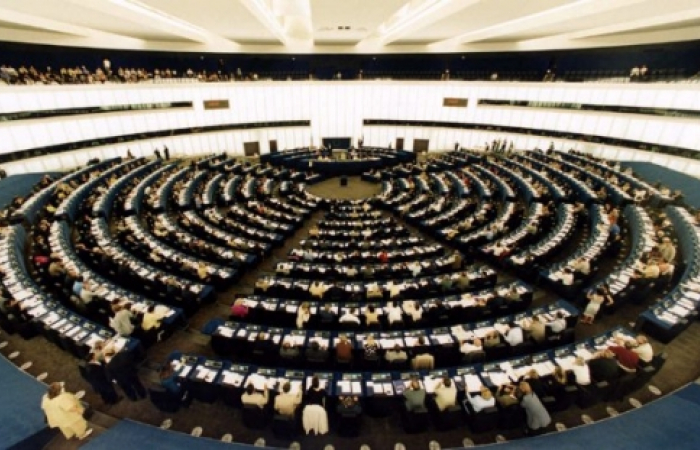
photo: The European Parliament