


Давутоглу использует визит в Армению для очертания видения мира, базирующегося на трех столпах.

Министр иностранных дел Турции Ахмет Давутоглу в минувший четверг  в кулуарах заседания экономического сотрудничества Организации Черноморского экономического сотрудничества (ОЧЭС), проходящего в Ереване, встретился с министром иностранных дел Армении, Эдвардом Налбандяном. Визит Давутоглу вносит положительный элемент в отношениях между двумя странами. Между Арменией и Турцией не было никаких контактов на высшем уровне с 2009 года, когда обе стороны подписали протоколы, которые были направлены на нормализацию отношений между ними. Обе стороны, по разным причинам, до сих пор не ратифицировали соглашения.

Министр иностранных дел Турции воспользовался возможностью визита в Ереван, чтобы очертить современные представления Турции о ситуации на Южном Кавказе. Давутоглу говорил о "всеобъемлющем мире", основанном на «трех китах».
"Наша главная цель не только открытие турецко-армянской границы, но и формирование основы, которая проложит путь ко всеобъемлющему миру", заявил Давутоглу. "Такой сир основан на трех столпах. Первый - отношения между Турцией и Арменией. Второй - азербайджано-армянские отношения. Это также включает грузино-абхазские отношения. Третий - отношения между турками и армянами", сказал он.
В то время как Армения видит свои двусторонние отношения с Турцией в качестве отдельного вопроса, не связанного с Нагорно-Карабахским конфликтом, у Давутоглу имеются другие взгляды на это. 
"Если один из столпов изувечен, то это создает бедствие. Скажем, мы открыли границу с Арменией. Если начнется война между Арменией и Азербайджаном, то мы будем вынуждены закрыть ее снова. Самое трудное  разморозить айсберг статус-кво.

Пытаясь разморозить его, вы можете разжечь войну," сказал он.
По словам политического комментатора Commonspace.eu:
"Три столпа политики Давутоглу являются значительными. Они показывают, что Турция пытается вырваться из смирительной рубашки, в которой она оказалась, после приостановленная подписания протоколов 2009 из-за резкой оппозиции Азербайджана к любому соглашению с Арменией до момента урегулирования карабахского конфликта. Турция нуждается в такой политике на Кавказе, которая будет признавать как свои непосредственные интересы, так и тот факт, что у Турции имеется исторический багаж в регионе и, следовательно, нужно действовать предусмотрительно. Концепция политики трех столпов основана на том, что проблемы региона необходимо решать комплексно, а не по частям, даже если в различных ситуациях должны быть использованы различные тактики. Турция делает правильно, преследуя эту ​​политику, в случае, если она также понимает, что должна сперва согласовать ее с другими ключевыми международными игроками, такими как Россия, ЕС и США, если она хочет, чтобы такая политика имела шансы на успех. Тем не менее близость Турции к региону, и ее влияние, которое является незначительным позволит Турции взять на себя ведущую роль в этом процессе.

В Ереване Давутоглу также коснулся вопроса о событиях 1915 года. Годовщина зверств, которые часто характеризуются как геноцид армянского народа в последние годы Османской империи, может привезти к накалу страстей с обеих сторон, так как нет никаких договоренностей о том, как читать эту сомнительную страницу истории. Однако, это может предоставить возможность для диалога и примирения. Давутоглу заявил журналистам в Ереване, что у турецких дипломатов теперь есть инструкции по вовлечению в диалог с армянскими диаспорами, многие из которых являются потомками жертв событий 1915 года. Все это является положительным моментом. Турцию нужно поощрять в ее инициативах, если она преследует их с добрыми намерениями и при широкой поддержке со стороны международного сообщества".
Источник: commonspace.eu по материалам Турецких СМИ.

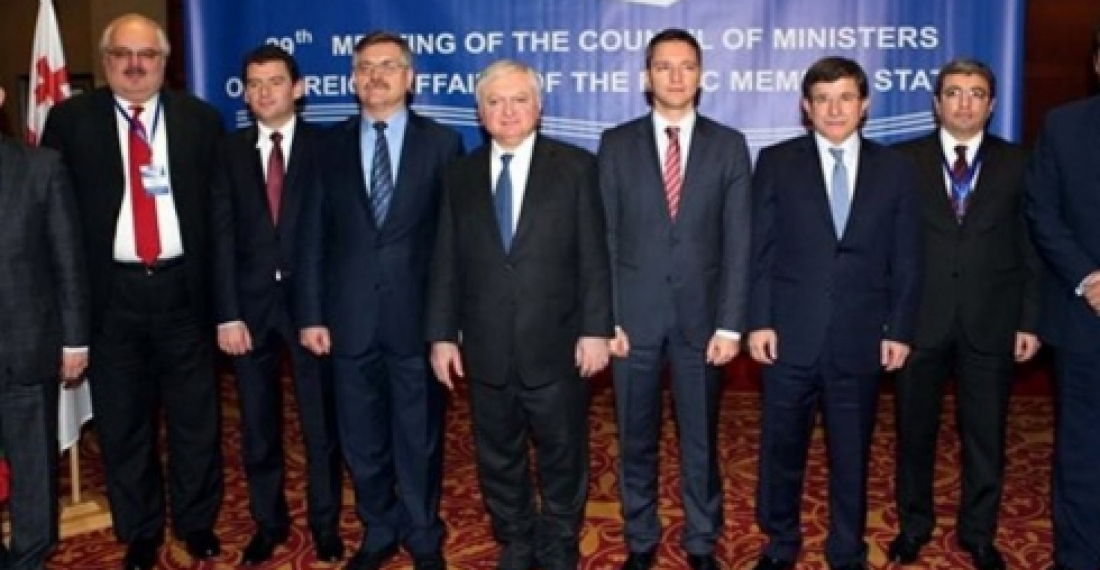
фото: Министры стран ОЧЭС на встрече в Ереване, 12 декабря (фото любезно предоставлено МИД Турции).


Related articles

Editor's choice
News
Israeli parliament votes to bring back the death penalty, but only for Palestinians

Israeli parliament votes to bring back the death penalty, but only for Palestinians

srael’s parliament approved a bill on Monday that would allow the execution of Palestinians convicted on terror charges for deadly attacks, a move that has been criticized as discriminatory and immediately drew a court challenge. Sixty-two lawmakers, including Prime Minister Benjamin Netanyahu, voted in favor and 48 against the bill, championed by far-right National Security Minister Itamar Ben Gvir. There was one abstention and the rest of the lawmakers were not present. Ben Gvir in the run-up to the vote had worn a lapel pin in the shape of a noose, symbolising his support for the legislation. “We made history!!! We promised. We delivered,” he posted on X after the vote. The bill would make the death penalty the default punishment for Palestinians in the Israeli-occupied West Bank found guilty of intentionally carrying out deadly attacks deemed “acts of terrorism” by an Israeli military court. The bill says that the sentence may be reduced to life imprisonment under “special circumstances.” Palestinians in the West Bank are automatically tried in Israeli military courts. Meanwhile, under the bill, in Israeli criminal courts anyone “who intentionally causes the death of a person with the aim of harming an Israeli citizen or resident out of an intention to put an end to the existence of the State of Israel shall be sentenced to death or life imprisonment.” Criminal courts try Israeli nationals, including Palestinian citizens and residents of east Jerusalem. The bill sets the execution method as hanging, adding that it should be carried out within 90 days of the sentencing, with a possible postponement of up to 180 days. - ‘Parallel tracks’ - The bill appears to conflict with Israel’s Basic Laws, which prohibit arbitrary discrimination, and shortly after it was passed, a leading human rights group announced that it had filed a petition with the Supreme Court demanding the legislation’s annulment. “The law creates two parallel tracks, both designed to apply to Palestinians,” the Association for Civil Rights in Israel said in a statement. “In military courts — which have jurisdiction over West Bank Palestinians — it establishes a near-mandatory death sentence,” the rights group said. In civilian courts, the law’s stipulation that defendants must have acted “with the aim of negating the existence” of Israel “structurally excludes Jewish perpetrators,” the group added. The association argued the law should be annulled on both jurisdictional and constitutional grounds. During the debate in parliament, opposition lawmaker and former deputy Mossad director, Ram Ben Barak, expressed outrage at the legislation. “Do you understand what it means that there is one law for Arabs in Judea and Samaria, and a different law for the general public for which the State of Israel is responsible?” he asked fellow parliamentarians, using the Israeli name for the West Bank. “It says that Hamas has defeated us. It has defeated us because we have lost all our values.” - ‘Discriminatory application’ - Lawmaker Limor Son Har-Melech from Ben Gvir’s party, who years ago survived an attack by Palestinian militants in which her husband was killed, urged fellow parliamentarians to approve the bill. “For years, we endured a cruel cycle of terror, imprisonment, release in reckless deals, and the return of these human monsters to murder Jews again ... And today, my friends, this cycle has come full circle.” The Palestinian Authority condemned the law’s adoption, saying that “Israel has no sovereignty over Palestinian land.” “This law once again reveals the nature of the Israeli colonial system, which seeks to legitimize extrajudicial killing under legislative cover,” it added. In February, Amnesty International had urged Israeli lawmakers to reject the legislation, citing its “discriminatory application against Palestinians.” On Sunday, Britain, France, Germany and Italy expressed “deep concern” over the bill, which they said risked “undermining Israel’s commitments with regards to democratic principles.” While the death penalty exists for a small number of crimes in Israel, it has become a de facto abolitionist country — the Nazi Holocaust perpetrator Adolf Eichmann was the last person to be executed in 1962. Israel has occupied the West Bank since 1967 and violence there has soared since Hamas’s October 7, 2023 attack on Israel triggered the Gaza war. (read more by clicking the image above).

Popular

Editor's choice
Interview
Thursday Interview: Murad Muradov

Thursday Interview: Murad Muradov

Today, commonspace.eu starts a new regular weekly series. THURSDAY INTERVIEW, conducted by Lauri Nikulainen, will host  persons who are thinkers, opinion shapers, and implementors in their countries and spheres. We start the series with an interview with Murad Muradov, a leading person in Azerbaijan's think tank community. He is also the first co-chair of the Action Committee for a new Armenian-Azerbaijani Dialogue. Last September he made history by being the first Azerbaijani civil society activist to visit Armenia after the 44 day war, and the start of the peace process. Speaking about this visit Murad Muradov said: "My experience was largely positive. My negative expectations luckily didn’t play out. The discussions were respectful, the panel format bringing together experts from Armenia, Azerbaijan, and Turkey was particularly valuable during the NATO Rose-Roth Seminar in Yerevan, and media coverage, while varied in tone, remained largely constructive. Some media outlets though attempted to represent me as more of a government mouthpiece than an independent expert, which was totally misleading.  Overall, I see these initiatives as important steps in rebuilding trust and normalising professional engagement. The fact that soon a larger Azerbaijani civil society visits to Armenia followed, reinforces the sense that this process is moving in the right direction." (click the image to read the interview in full)

