


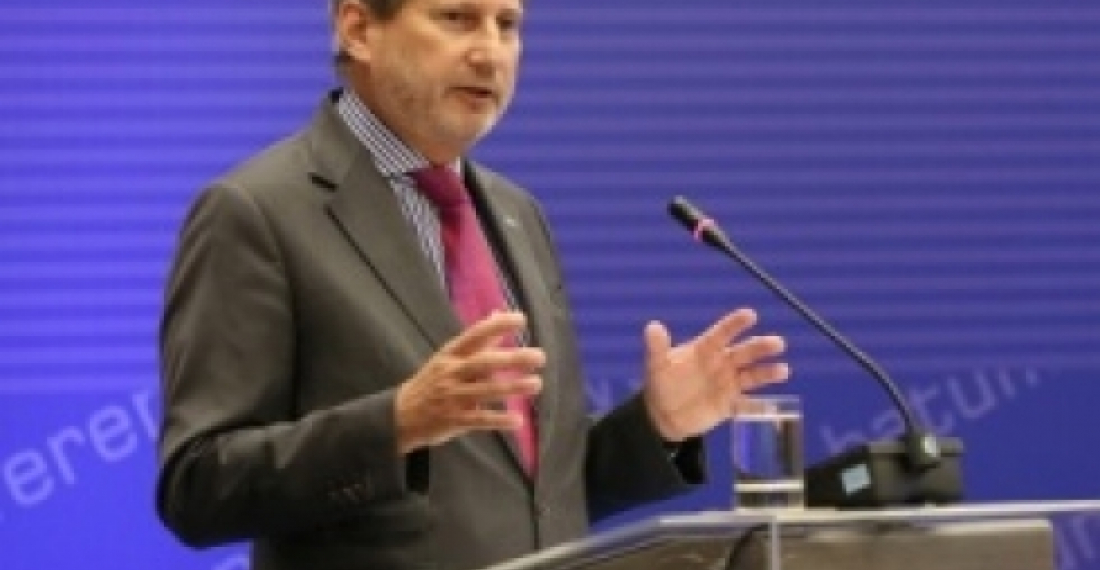
Йоханесс Хан: "Brexit" ничего не меняет в отношениях ЕС с соседями

В четверг (14 июля), Комиссар ЕС по вопросам Европейской политики соседства и переговоров по расширению Йоханесс Хан на конференции в Батуми (Грузия), заверил грузинскую сторону а также других соседей ЕС, что "Brexit" не повлияет на отношения ЕС с ними, и что ЕС будет придерживаться своих обязательств перед ними. Но Хан признал то, что Европейский союз вступает в трудный период, и сказал, что никто не может предсказать каким будет будущее.

Помимо этого Комиссар ЕС говорил о том, что стратегическая обстановка вокруг Европейского союза значительно изменилась и, что ЕС необходимо будет пересмотреть пути решения этих внутренних и внешних вызовов. Он призвал всех государств-членов к единству по вопросам безопасности и обороны. Йоханнес Хан также отметил, что ЕС продолжит интенсивно работать с партнерами как на юге, так и на востоке для построения более устойчивых государств и обществ в Европе. Ключевое слово в политике ЕС по отношению к соседству стабильность и признание того, что это может быть достигнуто только за счет экономического развития и повышения благосостояния и процветания обществ соседних государств, тем самым уменьшая значительно коренные причины нестабильности.

Комиссар Хан похвалил Грузию за достигнутый ею прогресс в отношениях с ЕС. Он сказал, что в 2015 году товарооборот между Грузией и ЕС составил 2,58 млрд евро. Грузия серьезно проводит программу реформ в целом ряде секторов. Йоханнес Хан отдал должное Грузии за то, что она выполнила все необходимые критерии, необходимые для предоставления либерализации визового режима с ЕС. Он также сказал, что контакты между людьми неотъемлемая часть политики ЕС, и выразил надежду, что представители грузинского бизнеса, студенты, ученые и художники в скором времени смогут посещать страны ЕС без необходимости в получении визы. Он выразил надежду, что это произойдет до октября.

Комиссар Хан подчеркнул важность того, чтобы действие Соглашения об ассоциации и свободной торговле между Грузией и ЕС почувствовали на себе обычные люди, и подчеркнул важную роль, которую играют малый и средний бизнес в этом процессе. Он дал высокую оценку за проделанную работу и вклад в этот процесс премьер-министру Квирикашвили и государственному министру по европейской интеграции Давиду Бакрадзе и сказал, что он надеется на сотрудничество с ними в течение следующих лет для завершения начатого.

источник: commonspace.eu

фото: Комиссар ЕС Йоханнес Хан в Батуми, 14 июля 2016 (фото любезно предоставлено Inter Press новостей)


 

Related articles

Editor's choice
News
Nikol Pashinyan re-appointed as Armenian prime minister after decisive June election victory

Nikol Pashinyan re-appointed as Armenian prime minister after decisive June election victory

Armenia president, Vahagn Khachaturyan has re-appointed Nikol Pashinyan as Armenian prime minister, after the decisive victory of his Civil Contract party in parliamentary elections in June. During a ceremony at the Presidential Palace in Yerevan, President Khachaturyan signed a decree on the appointment of Nikol Pashinyan as Prime Minister of the Republic. President Vahagn Khachaturyan said in short remarks: It is a great honor for me to sign a decree on appointing you to the post of Prime Minister of the Republic of Armenia, for which I received a proposal from the political majority in the National Assembly, under Article 149 of the Constitution of the Republic of Armenia. I sincerely congratulate you, I wish you great patience, endurance, and determination to lead us in these difficult times, to lead the country to the future, a prosperous future. Nikol Pashinyan thanked the president and added,  I must say honestly that in 2018, when I assumed the post of Prime Minister of the Republic of Armenia as a result of the People's, non-violent, velvet revolution, it would have been difficult to predict that we would go down such a path and I think it would have been difficult to predict that we would be able to overcome this path. But we are where we are, and I think that the key role and significance in all this is unequivocally and undoubtedly the people of the Republic of Armenia, who, after all, have demonstrated special expressions of state consciousness and state-centeredness throughout this period. And of course, this is a great obligation and commitment. Of course, the Government will be formed in the near future and all members of the Government, including me, will already enshrine our obligations to our people in the text of the oath.  In the meantime Ruben Rubinyan has been elected Speaker of the National Assembly of Armenia, following a secret vote of MPs. He is a 36-year-old MP from the ruling Civil Contract party, who was one of the deputy speakers in the previous parliament and, until recently, was the special representative in the negotiations on the normalization of relations with Turkey.

Popular

Editor's choice
Interview
Thursday Interview: Murad Muradov

Thursday Interview: Murad Muradov

Today, commonspace.eu starts a new regular weekly series. THURSDAY INTERVIEW, conducted by Lauri Nikulainen, will host  persons who are thinkers, opinion shapers, and implementors in their countries and spheres. We start the series with an interview with Murad Muradov, a leading person in Azerbaijan's think tank community. He is also the first co-chair of the Action Committee for a new Armenian-Azerbaijani Dialogue. Last September he made history by being the first Azerbaijani civil society activist to visit Armenia after the 44 day war, and the start of the peace process. Speaking about this visit Murad Muradov said: "My experience was largely positive. My negative expectations luckily didn’t play out. The discussions were respectful, the panel format bringing together experts from Armenia, Azerbaijan, and Turkey was particularly valuable during the NATO Rose-Roth Seminar in Yerevan, and media coverage, while varied in tone, remained largely constructive. Some media outlets though attempted to represent me as more of a government mouthpiece than an independent expert, which was totally misleading.  Overall, I see these initiatives as important steps in rebuilding trust and normalising professional engagement. The fact that soon a larger Azerbaijani civil society visits to Armenia followed, reinforces the sense that this process is moving in the right direction." (click the image to read the interview in full)

