


Серьезный инцидент на линии соприкосновения в Тавушской области. Один армянский солдат был убит и трое ранены. Азербайджанцы сообщают об интенсивном артобстреле со стороны армянских позиции.
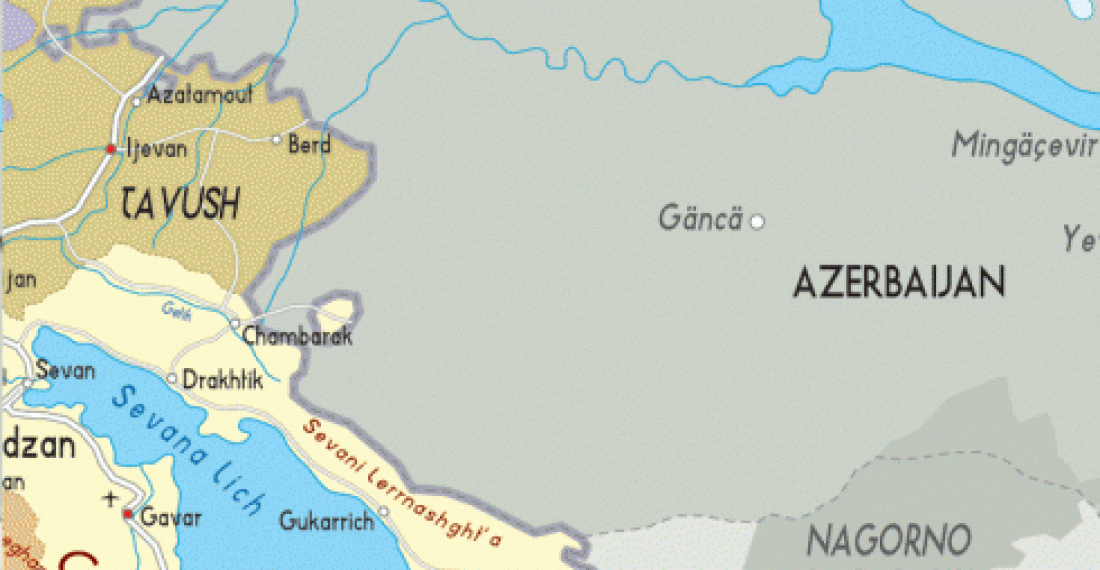

Армянские источники сообщают об инциденте на северном участке линии соприкосновения, разделяющей армянские и азербайджанские силы. Они утверждают, что азербайджанские войска обстреляли автоколонну, которая двигалась по трассе Берд-Иджеван в Тавушской области на севере Армении. Одна из машин была подбита в результате чего погиб, находившейся в ней солдат-срочник и трое получили ранения. Те же источники сообщает, что также была обстрелена машины с гражданскими лицами, хотя ни о каких жертвах среди мирного населения не сообщается.

В случае подтверждения инцидента, то это самая серьезная эскалация среди последних обстрелов, которые регулярно нарушают режим прекращения огня, действующий с 1994 года. Хотя на линии соприкосновения регулярно происходят перестрелки, нападение на транспортные средства за пределами линии соприкосновения выводят данную эскалацию за рамки обычных инцидентов. Власти Армении заявляют, что они проинформировали об инциденте ОБСЕ и что будет адекватный ответ.

Азербайджан пока никак не прокомментировал случившееся. В то же время азербайджанские военные сообщили СМИ, что армянские военные обстреляли позиции азербайджанской армии в деревне Гызылхаджылы и безымянные высоты Казахского района со своих позиции в деревне Беркабер, Иджеванского района Армении, во вторник и в среду утром. Позиции азербайджанской армии были также обстрелены с позиций на безымянных холмах Геранбойского района. Пресс-служба Министерство обороны Азербайджана заявило агентству АПА, что "враг был подавлен ответным огнем".

Источник: commonspace.eu по материалам агентств

Фото: Карта: Берд - Иджеван в Тавушской области на севере Армении.

Related articles

Editor's choice
News
The British prime minister says Europe must "stand on its own two feet" when it comes to defence

The British prime minister says Europe must "stand on its own two feet" when it comes to defence

The UK will deploy a carrier strike group, led by the aircraft carrier HMS Prince of Wales to the Arctic and the High North as part of efforts to bolster security against Russian threats. British prime minister, Sir Keir Starmer announced the deployment in a speech on Saturday (14 February) at the Munich Security Conference. Europe must be ready to fight to protect its people, values, and way of life,  Sir Keir told the Conference. Starmer also called for deeper links and cooperation, including economic ties, between the UK and EU. The PM stressed the continent must "stand on its own two feet" when it comes to defence commitments. "We must build our hard power, because that is the currency of the age," he told the conference. (Click image to read the full story).

Popular

Editor's choice
Interview
Thursday Interview: Murad Muradov

Thursday Interview: Murad Muradov

Today, commonspace.eu starts a new regular weekly series. THURSDAY INTERVIEW, conducted by Lauri Nikulainen, will host  persons who are thinkers, opinion shapers, and implementors in their countries and spheres. We start the series with an interview with Murad Muradov, a leading person in Azerbaijan's think tank community. He is also the first co-chair of the Action Committee for a new Armenian-Azerbaijani Dialogue. Last September he made history by being the first Azerbaijani civil society activist to visit Armenia after the 44 day war, and the start of the peace process. Speaking about this visit Murad Muradov said: "My experience was largely positive. My negative expectations luckily didn’t play out. The discussions were respectful, the panel format bringing together experts from Armenia, Azerbaijan, and Turkey was particularly valuable during the NATO Rose-Roth Seminar in Yerevan, and media coverage, while varied in tone, remained largely constructive. Some media outlets though attempted to represent me as more of a government mouthpiece than an independent expert, which was totally misleading.  Overall, I see these initiatives as important steps in rebuilding trust and normalising professional engagement. The fact that soon a larger Azerbaijani civil society visits to Armenia followed, reinforces the sense that this process is moving in the right direction." (click the image to read the interview in full)


