


Работа продолжается. Третье по счету заседание стран членов Восточного партнерства состоялось в Брюсселе.
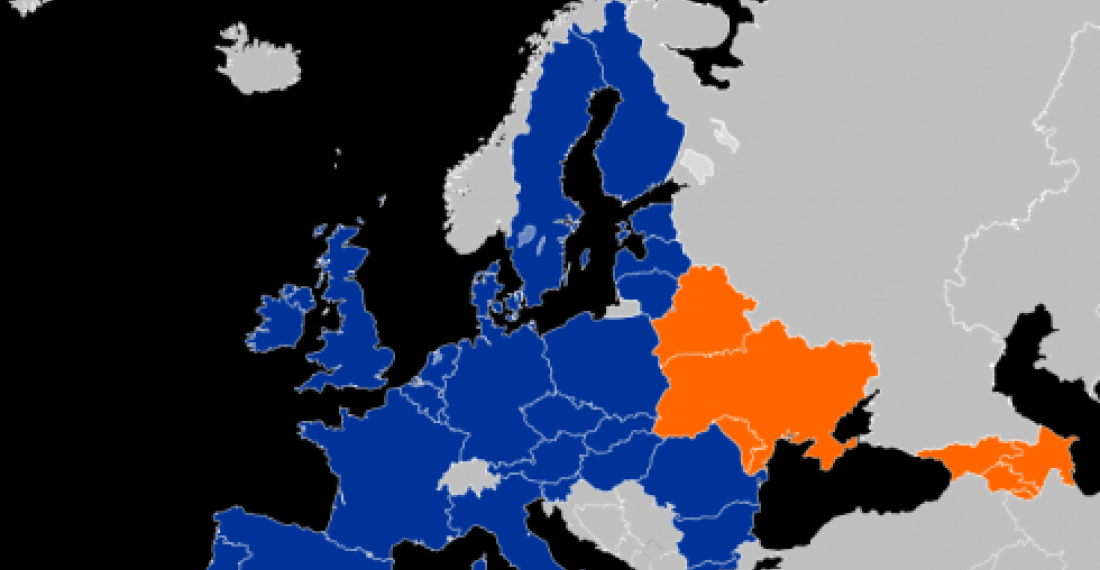

Третье заседание министров иностранных дел стран Восточного партнерства состоялось в Брюсселе 23 июля 2012 года. Министры заявили, что Дорожная карта, предложенная Европейской Комиссией и Верховным представителем по иностранным делам и политике безопасности, представляет собой основу по руководству и контролю дальнейшей реализации целей Восточного партнерства, определенных в декларациях в Праге и Варшаве, до следующего саммита в Вильнюсе, осенью 2013 года.

Министры согласились, что следующее совещание министров иностранных дел стран Восточного партнерства в 2013 году будет поводом для обзора хода осуществления Дорожной карты и обсуждения перспектив развития Восточного партнерства в подготовке следующего саммита в Вильнюсе.

Армения была представлена ​​на встрече министром иностранных дел, Эдвардом Налбандяном. Азербайджан был представлен заместителем министра иностранных дел, Махмудом Мамед-Гулиевым.

Источник: commonspace.eu

Related articles

Popular

Editor's choice
Interview
Thursday Interview: Murad Muradov

Thursday Interview: Murad Muradov

Today, commonspace.eu starts a new regular weekly series. THURSDAY INTERVIEW, conducted by Lauri Nikulainen, will host  persons who are thinkers, opinion shapers, and implementors in their countries and spheres. We start the series with an interview with Murad Muradov, a leading person in Azerbaijan's think tank community. He is also the first co-chair of the Action Committee for a new Armenian-Azerbaijani Dialogue. Last September he made history by being the first Azerbaijani civil society activist to visit Armenia after the 44 day war, and the start of the peace process. Speaking about this visit Murad Muradov said: "My experience was largely positive. My negative expectations luckily didn’t play out. The discussions were respectful, the panel format bringing together experts from Armenia, Azerbaijan, and Turkey was particularly valuable during the NATO Rose-Roth Seminar in Yerevan, and media coverage, while varied in tone, remained largely constructive. Some media outlets though attempted to represent me as more of a government mouthpiece than an independent expert, which was totally misleading.  Overall, I see these initiatives as important steps in rebuilding trust and normalising professional engagement. The fact that soon a larger Azerbaijani civil society visits to Armenia followed, reinforces the sense that this process is moving in the right direction." (click the image to read the interview in full)


