


Полезные встречи, но достаточно ли их?

Этот комментарий подготовлен редакцией commonspace.eu

В третий раз за много месяцев, президенты Армении и Азербайджана встретились под эгидой международного сообщества, чтобы обсудить отношения между ними и урегулирование нагорно-карабахского конфликта. После обострения насилия минувшим летом президенты впервые встретились в Сочи, под эгидой президента России Владимира Путина, а через месяц в Уэльсе, на полях саммита НАТО, по приглашению государственного секретаря США Джона Керри. В этом месяце уже президент Франции Олланд провел третью встречу двух лидеров в Париже. Россия, США и Франция являются тремя странами сопредседателями Минского процесса ОБСЕ, которому поручено содействовать урегулированию конфликта между двумя странами, который длится уже на протяжении почти четверти века. Все три страны-сопредседателя уже провели встречи на высшем уровне в этом последнем раунде. Дипломатические тонкости были удовлетворены. Настало время добраться до существа.

Первые реакции из двух стран по прошедшим переговорам в Париже были в целом положительными, хоть и не восторг. Министр иностранных дел Армении Эдвард Налбандян охарактеризовал встречу как "полезную, искреннюю и конструктивную". "Я считаю, был сделан еще один шаг для дальнейшего сближения позиций сторон." - рассказал журналистам после встречи Налбандян. Министр иностранных дел Армении подвел итоги по позициям сторон: Армения хочет построить доверие, которое привело бы к мирному соглашению; Азербайджан хочет мирное соглашение, на котором можно будет построить доверие. Таким образом, мы теперь знаем, что карабахский конфликт будет решен, как только обе стороны определяться, что первично, курица или яйцо. Министр иностранных дел Эдвард Налбандян также заявил, что встречи в Париже подтвердили то, что Минский процесс является единственным и  основным форматом для урегулирования нагорно-карабахского конфликта. Между Арменией и Минским процессом сохраняются хорошие отношения.

Министр иностранных дел Азербайджана Эльмар Мамедъяров также назвал встречу в Париже "положительной и способствующей взаимопониманию по позициям". Он также высказался о споре "курица или яйцо", и не удивительно, что его точка зрения по этому вопросу совершенно противоположна позиции его армянского коллеги. Азербайджан сперва хочет мирное соглашение, и затем укрепление доверия. В сущности Мамедъяров сказал, что снайперы продолжат оставаться на линии соприкосновения, пока Армения не освободит азербайджанские территории вокруг Нагорного Карабаха, которые были оккупированны во время войны в 1990-х годах.

Так какой же можно сделать вывод из этого последнего раунда дипломатического театра?

Встреча в Париже была полезной, но ее не достаточно. Ни одной из сторон, и ни одного из международных посредников нет повода для  довольства. Проблема в том, что никто не знает, что делать дальше, кроме совместных встреч и надежд на лучшее. Наиболее интересное наблюдение из встреч в Сочи, Уэльсе и Париже, это отсутствие интереса к ним в армянском и азербайджанском обществах. Те, кто следил за этим процессом в течение многих лет помнят какое волнение вызывали встречи между двумя лидерами. Больше не вызывают. Дипломатический театр кажется потерял свою аудиторию. Тем не менее, из-за нарушениями режима прекращения огня на линии соприкосновения каждый месяц умирают люди. Сотни тысяч людей вокруг зоны конфликта живут в постоянном  напряжении и страданиях. Они не могут позволить себе роскошь игнорировать усилия по урегулированию конфликта. Именно поэтому надо продолжать давить на все заинтересованные стороны для продвижения мирного процесса, чтобы однажды закрыть раз и навсегда эту страшную страницу в истории Южного Кавказа.

Этот комментарий был подготовлен редакцией commonspace.eu

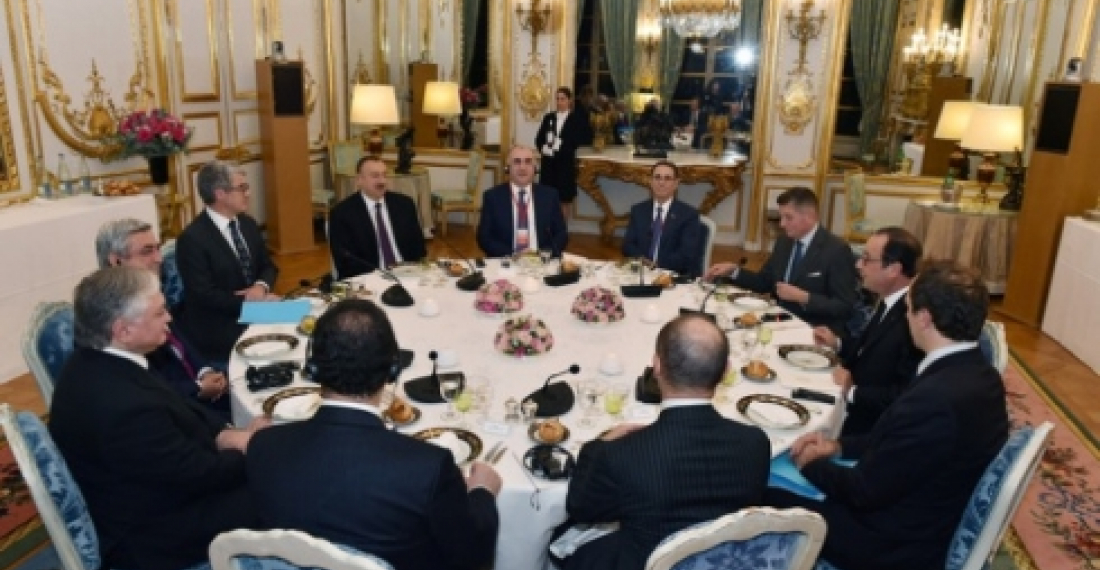
Фото: Президент Франции Олланд на ужине в честь президентов Армении и Азербайджана в Елисейском дворце, 27 октября 2014, после дня переговоров, направленных на сложившийся выход из тупика в переговорах по мирному урегулированию нагорно-карабахского конфликта.


Related articles

Editor's choice
News
Germany accuses Russia of cyberattacks and disinformation campaign

Germany accuses Russia of cyberattacks and disinformation campaign

The German government holds Russia responsible for a cyberattack on German air traffic control, and for targeted disinformation campaigns before the last federal election. According to the German Foreign Office in Berlin, the incidents could be clearly attributed to the Russian military intelligence service, the GRU. In response, the Russian ambassador to Berlin was summoned to the Foreign Ministry. "We have been observing a massive increase in threatening hybrid activities by Russia for some time now," a spokesperson for the Foreign Ministry stated. These range from disinformation campaigns and espionage to cyberattacks and sabotage attempts. The aim is to divide society, sow distrust, and undermine confidence in democratic institutions. The spokesperson added that with these actions, Russia is "very concretely threatening our security, not only through its war of aggression against Ukraine, but also here in Germany."  The Foreign Ministry spokesperson explained that the cyberattack on air traffic control in August 2024 was clearly attributed to the hacker collective "APT28," known as "Fancy Bear," and to the responsibility of the Russian military intelligence service, the GRU. Furthermore, it could now be "conclusively stated" that Russia had attempted "to influence and destabilize both the last Federal election and the ongoing internal affairs of the Federal Republic of Germany." There was "absolutely irrefutable evidence" for this". The so-called "Storm 1516" campaign, which has been running since 2024, is allegedly backed by "reliable information" that the Moscow-based think tank "Center for Geopolitical Expertise" is behind it. The Center is also said to be supported by Russian military intelligence. Its primary aim is to influence democratic elections in the West. (Click the image to read more).
Editor's choice
News
NATO Chief says war is on Europe's doorstep, and warns against complacency

NATO Chief says war is on Europe's doorstep, and warns against complacency

Russia could attack a NATO country within the next five years, the Secretary General of NATO, Mark Rutte, said in a stark new warning. "NATO's own defences can hold for now," Rutte warned in Berlin, but conflict was "next door" to Europe, and he feared "too many are quietly complacent, and too many don't feel the urgency, too many believe that time is on our side. "Russia is already escalating its covert campaign against our societies," Rutte said in a speech in Germany. "We must be prepared for the scale of war our grandparents or great-grandparents endured." Earlier this month, Russia's President Vladimir Putin said his country was not planning to go to war with Europe, but it was ready "right now" if Europe wanted to - or started a war. But similar reassurances were given by Moscow in 2022, just before 200,000 Russian troops crossed the border and invaded Ukraine. Putin has accused European countries of hindering US efforts to bring peace in Ukraine - a reference to the role Ukraine's European allies have recently played in trying to change a US peace plan to end the war, whose initial draft was seen as favouring Russia. But Putin was not sincere, Nato's secretary-general said in the German capital, Berlin. Supporting Ukraine, he added, was a guarantee for European security. "Just imagine if Putin got his way; Ukraine under the boot of Russian occupation, his forces pressing against a longer border with Nato, and the significantly increased risk of an armed attack against us." Russia's economy has been on a war footing for more than three years now - its factories churn out ever more supplies of drones, missiles and artillery shells. According to a recent report by the Kiel Institute for the World Economy, Russia has been producing each month around 150 tanks, 550 infantry fighting vehicles, 120 Lancet drones and more than 50 artillery pieces. The UK, and most of its Western allies, are simply not anywhere near this point. Analysts say it would take years for Western Europe's factories to come close to matching Russia's mass-production of weapons. "Allied defence spending and production must rise rapidly, our armed forces must have what they need to keep us safe," the Nato chief said.

Popular

Editor's choice
News
Germany accuses Russia of cyberattacks and disinformation campaign

Germany accuses Russia of cyberattacks and disinformation campaign

The German government holds Russia responsible for a cyberattack on German air traffic control, and for targeted disinformation campaigns before the last federal election. According to the German Foreign Office in Berlin, the incidents could be clearly attributed to the Russian military intelligence service, the GRU. In response, the Russian ambassador to Berlin was summoned to the Foreign Ministry. "We have been observing a massive increase in threatening hybrid activities by Russia for some time now," a spokesperson for the Foreign Ministry stated. These range from disinformation campaigns and espionage to cyberattacks and sabotage attempts. The aim is to divide society, sow distrust, and undermine confidence in democratic institutions. The spokesperson added that with these actions, Russia is "very concretely threatening our security, not only through its war of aggression against Ukraine, but also here in Germany."  The Foreign Ministry spokesperson explained that the cyberattack on air traffic control in August 2024 was clearly attributed to the hacker collective "APT28," known as "Fancy Bear," and to the responsibility of the Russian military intelligence service, the GRU. Furthermore, it could now be "conclusively stated" that Russia had attempted "to influence and destabilize both the last Federal election and the ongoing internal affairs of the Federal Republic of Germany." There was "absolutely irrefutable evidence" for this". The so-called "Storm 1516" campaign, which has been running since 2024, is allegedly backed by "reliable information" that the Moscow-based think tank "Center for Geopolitical Expertise" is behind it. The Center is also said to be supported by Russian military intelligence. Its primary aim is to influence democratic elections in the West. (Click the image to read more).

