Один из министров Турции примет участие в поминальной службе в армянской церкви в Стамбуле

Министр Волкан Бозкыр будет представлять правительство Турции на панихиде, которая пройдет сегодня в церкви Сурб Аствацацин в стамбульском районе Кумкап в день, когда армяне всего мира отмечают 100-летие массовых убийств и принудительной депортации из Анатолии во время Первой Мировой Войны.

Турецкая газета Дэйли Сабах пишет: «Хотя это и может показаться простой панихидой для тех, кто не знаком с историей, но для турков и для армян это намного больше чем просто панихида". Газета добавляет:

"Столетию убийств во время насильственной депортации предшествовал ежегодной призыв армянской диаспоры в Турции признать эти события как геноцид, термин, который турецкое правительство официально отрицает. Тем не менее, в отличие от предыдущих администраций, правительственная Партия справедливости и развития (ПСР) приняло мягкую риторику в ответ на эти призывы. Правительство по-прежнему возражает против определения этих событий как геноцид, как и то, как армяне погибли, сколько их погибло. Турция заявляет, что вопрос политизирован и неоднократно призывала принять научный подход, призывая историков пересмотреть вопрос, предлагая для исследований османские архивы.

Тем не менее, за последние два года турецкое правительство пыталось дотянуться до армян, предлагая свои сочувствия к их потерь 100 лет назад. В прошлом году премьер-министр на тот момент, а ныне президент Турции Реджеп Тайип Эрдоган выразил соболезнования внукам османских армян, погибших в событиях 1915 года. В этом году его преемник премьер-министр Турции Ахмет Давутоглу вновь выразил соболезнования, и неожиданно, объявил, что Турция почтит память умерших армян на церемонии в армянской патриархии в Константинополе.

"Как потомки народов с различными этническими и религиозными происхождениями, которые пережили эти страдания в условиях Первой мировой войны, мы понимаем, что чувствуют армяне. Мы помним погибших невинных османских армян и выражаем наши глубокие соболезнования их потомкам. Это является одновременно историческим и гуманным долгом Турции помнить османских армян и армянское культурное наследие", сказал Давутоглу в своем послании.

Он также подчеркнул, насколько значимым было бы "если Турция и Армения смогли бы почтить память османских армян вместе, что принесло бы пользу обеим странам."

В интервью газете Hürriyet, архиепископ Арам Атесян, патриарх Армянской Православной Церкви, выразил свою радость по поводу заявлений Давутоглу и участия государственного министра в поминальной службе, что означает, что "нашу боль разделяют."

Источник: commonspace.eu по материалам Daily Sabah
 

Related articles

Editor's choice
News
Uzbekistan calls for bigger voice for Central Asia in the UN

Uzbekistan calls for bigger voice for Central Asia in the UN

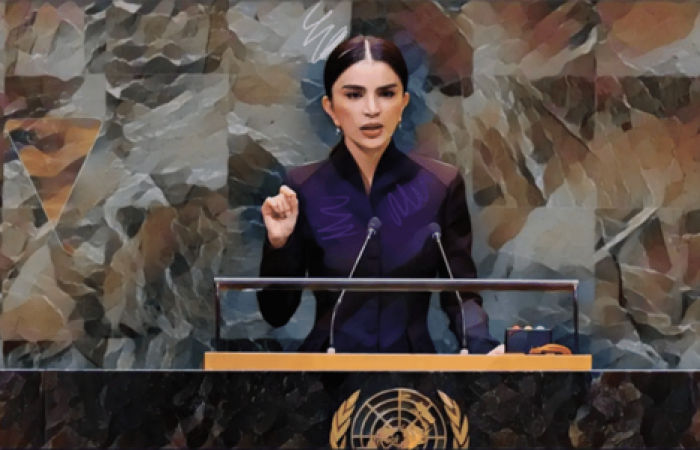
Uzbekistan called for a more effective and representative United Nations on September 23, as presidential administration chief Saida Mirziyoyeva used her address to the UN General Assembly to seek support for the country’s candidacy for a nonpermanent Security Council seat in 2035–2036. Speaking at the Assembly’s 81st session in New York, Mirziyoyeva argued that international cooperation remains necessary despite growing geopolitical divisions. She endorsed UN Secretary-General António Guterres’ UN80 reform initiative and called for an expanded Security Council, arguing that international rules should be applied consistently rather than according to the interests of powerful states. Uzbekistan’s planned chairmanship of the Non-Aligned Movement in 2027 was presented as another platform for promoting dialogue. Her emphasis on multilateralism also fits a broader Central Asian effort to increase the region’s role in international institutions. Kyrgyzstan, for example, will hold its first Security Council seat in 2027–2028. Mirziyoyeva also highlighted regional cooperation, pointing to improved relations among Central Asian states over longstanding border and water disputes. On Afghanistan, she urged countries not to view it solely as a security threat, stressing the importance of creating conditions for peaceful development. She linked Uzbekistan’s international agenda to domestic reforms, citing economic growth, falling poverty and expanded education. Climate and water security also featured prominently, with the Aral Sea serving as an example of the consequences of poor environmental management. (click image to read more)

Popular

Editor's choice
Interview
Thursday Interview: Murad Muradov

Thursday Interview: Murad Muradov

Today, commonspace.eu starts a new regular weekly series. THURSDAY INTERVIEW, conducted by Lauri Nikulainen, will host  persons who are thinkers, opinion shapers, and implementors in their countries and spheres. We start the series with an interview with Murad Muradov, a leading person in Azerbaijan's think tank community. He is also the first co-chair of the Action Committee for a new Armenian-Azerbaijani Dialogue. Last September he made history by being the first Azerbaijani civil society activist to visit Armenia after the 44 day war, and the start of the peace process. Speaking about this visit Murad Muradov said: "My experience was largely positive. My negative expectations luckily didn’t play out. The discussions were respectful, the panel format bringing together experts from Armenia, Azerbaijan, and Turkey was particularly valuable during the NATO Rose-Roth Seminar in Yerevan, and media coverage, while varied in tone, remained largely constructive. Some media outlets though attempted to represent me as more of a government mouthpiece than an independent expert, which was totally misleading.  Overall, I see these initiatives as important steps in rebuilding trust and normalising professional engagement. The fact that soon a larger Azerbaijani civil society visits to Armenia followed, reinforces the sense that this process is moving in the right direction." (click the image to read the interview in full)