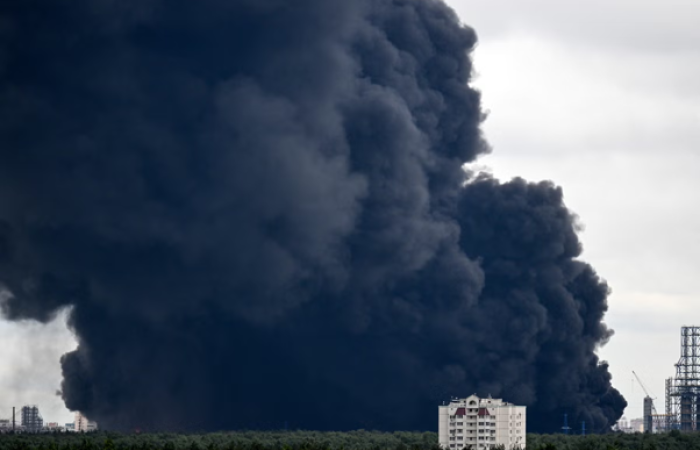
Ukraine launched overnight drone strikes against Russian energy infrastructure on August 24-25, killing two people near the Afipsky oil refinery in the Krasnodar region and causing a fire at the facility, according to Russian and Ukrainian authorities.
Krasnodar Governor Veniamin Kondratyev said two people were killed and two others injured when debris from intercepted drones fell near the Afipsky railway station. He also reported damage to residential buildings and disruption to rail traffic. Ukraine confirmed on Tuesday (August 25) on the Telegram channel of the General Staff of the Armed Forces of Ukraine that it had struck the refinery, stating that a fire had broken out at the site and that the extent of the damage was still being assessed.
The Afipsky refinery is one of the larger refining facilities in southern Russia, with a design capacity of 6.25 million tonnes of oil annually. According to Ukraine’s military, it produces diesel fuel and gasoline components and contributes to supplying Russian forces.
Ukraine also confirmed a separate strike on two gas separation units at the Astrakhan Gas Processing Plant during the same wave of attacks. The facility, part of the Gazprom system, has a capacity of up to 12 billion cubic metres of gas and approximately 7.3 million tonnes of gas condensate per year. The General Staff again claimed that its products are used to support Russia’s armed forces, while technical sulphur produced at the plant can be used in explosives manufacturing.
Russia’s Defence Ministry said its air defences had intercepted 148 Ukrainian drones overnight. The attacks also extended beyond energy infrastructure. Ukrainian authorities reported strikes on Russia’s Millerovo airbase, where a MiG-29 fighter jet was reportedly damaged, as well as Russian electronic warfare equipment and a military warehouse in occupied Ukrainian territory.
Meanwhile, local authorities said that Ukrainian drones injured two workers near the Russian-controlled Zaporizhzhia nuclear power plant. Moscow also reported strikes on Ukrainian port infrastructure and vessels it said were carrying military supplies.
The latest attacks come amid an intensified Ukrainian campaign against Russian energy and industrial infrastructure. On Monday (August 24), President Vladimir Putin signed a decree allowing the Russian state to temporarily assume control of critical infrastructure considered insufficiently protected against aerial attacks, highlighting Moscow’s growing concern over the continued drone campaign.
Source: commonspace.eu with Al Jazeera (Doha) and Interfax Ukraine (Kyiv).