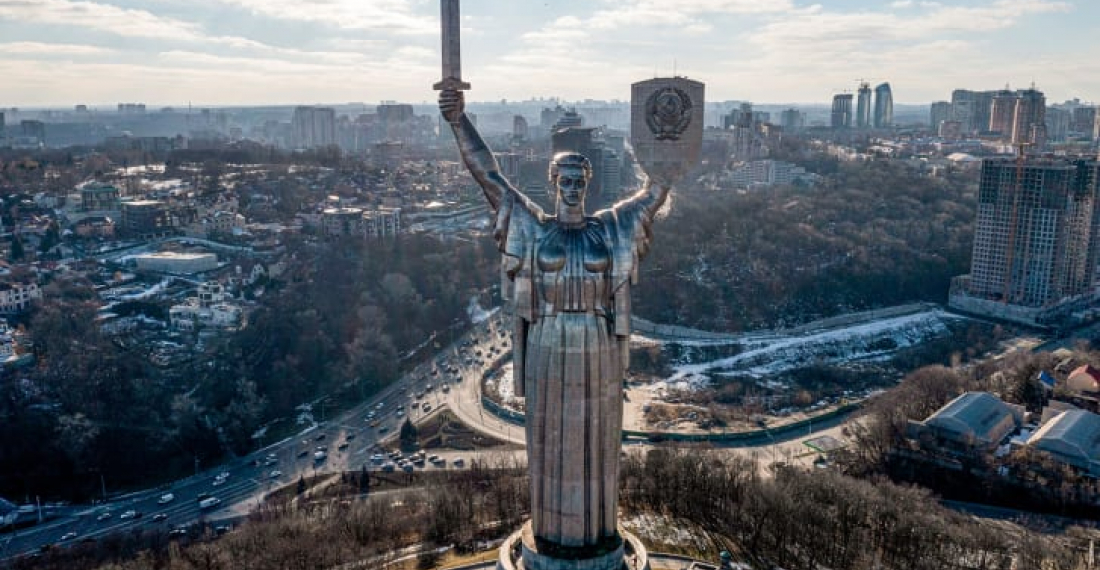
Russia continued with its air attacks on Kyiv, and other parts of Ukraine on Saturday morning (1 August).
Kyiv's Mayor Vitali Klitschko said the capital had come under a ballistic missile attack on Saturday, with AFP reporting more than 10 explosions.
Fires broke out across the city and power cuts were reported in some areas.
Klitschko said a residential building in Shevchenkivskyi was partially destroyed, trapping people inside.
The emergency services said at least seven people were killed in a strike in the Darnytskyi district. Another 14 were injured, including two children, it reported.
A large-scale Russian missile and drone attack across Ukraine the night before, killed at least 10 civilians, including children, and injured more than 50 others, while a Russian cruise missile crossed into Polish territory, prompting NATO and Poland to scramble military aircraft. The incident marked one of the most serious cross-border security incidents since Russia's full-scale invasion of Ukraine began in February 2022.
According to Ukrainian officials, Russia launched more than 70 missiles, including numerous ballistic missiles, and over 280 attack drones against at least ten regions. President Volodymyr Zelenskyy said Ukrainian air defenses intercepted more than 260 drones but stressed that the country's forces are operating with a "critical shortage" of interceptor missiles. He renewed calls for additional Patriot air defense systems following meetings earlier this Tuesday (July 29) with U.S. President Donald Trump and American defense companies.
The deadliest strike hit the Dnipropetrovsk region, where six people, including children aged 6, 11 and 17, were killed after a ballistic missile destroyed a residential home near Kryvyi Rih. In a statement on X, Zelenskyy described it as "an ordinary home, blown to smithereens by a ballistic missile." In Kyiv, a ballistic missile killed one person, while another civilian died in Lviv after a cruise missile struck a residential area. Additional fatalities were reported in the Poltava and Kherson regions. Tens of thousands of Kyiv residents sought shelter overnight in the capital's metro stations.
Russia's Defense Ministry argued that the strikes targeted military infrastructure, including air bases, weapons factories, logistics facilities, drone production sites and missile-related industries. Ukrainian authorities, however, reported widespread damage to homes, businesses and civilian infrastructure.
The barrage also triggered heightened concern across NATO after what Polish authorities identified as a Russian Kh-101 cruise missile crossed approximately 90 kilometers into Poland before crashing in a rural field in Lublin province. No casualties or property damage were reported. Polish Prime Minister Donald Tusk called it "a very serious incident" but said there was "absolutely no reason to believe that Poland was the target." NATO deployed fighter jets, surveillance aircraft and a helicopter in response, with alliance officials stating they were prepared to intercept the missile if necessary. NATO Secretary-General Mark Rutte condemned the incident as "yet another reckless act by Russia," while Supreme Allied Commander Europe Gen. Alexus Grynkewich reaffirmed that the alliance would continue taking "all necessary measures to defend NATO territory."
Meanwhile, Ukraine continued its long-range campaign against Russian logistics, with Moscow reporting drone strikes on multiple Wildberries warehouse facilities and Russian authorities claiming to have intercepted 258 Ukrainian drones overnight.
Source: commonspace.eu with AP News (New York), CNN (Atlanta), BBC (London) and agencies