Mine action as a confidence-building mechanism in the South Caucasus

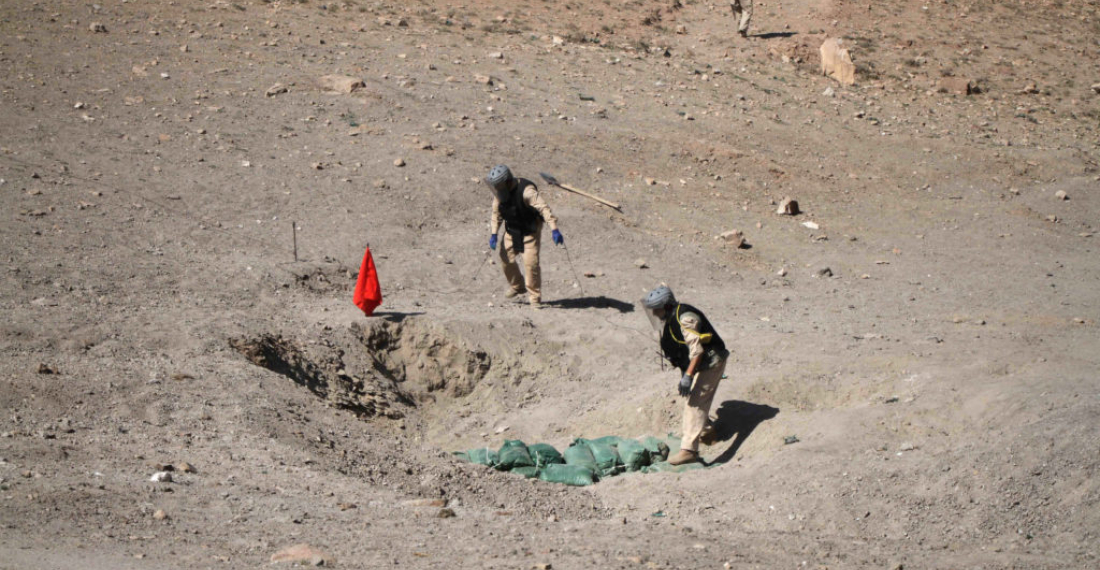
Landmine contamination in the South Caucasus remains one of the biggest humanitarian challenges in the region. Since the 1990s, mines have taken the lives of thousands of civilians, and they have left a mark on the natural environment. In addition, development and infrastructure remain limited in contaminated areas, impeding economic recovery and the return of displaced people. While demining in the region has not previously been a priority due to the conflict between Armenia and Azerbaijan, the meeting at the White House in August 2025, where the two countries initialed a draft peace agreement, offers new opportunities for advancing demining efforts.

While the peace agreement is not yet signed, mine clearance could and should function as a confidence-building measure between Armenia, Azerbaijan, and Georgia. This is not something new; in 2004-2005, the US Department of State implemented the “Beecroft Initiative” involving the three countries, and it conducted joint humanitarian demining training. In 2005, the OSCE held another workshop in Tbilisi entitled “Confidence-building and Regional Cooperation through Mine Action”. The meeting advocated for the creation of a system of open information exchange and establishing regional cooperation. Moreover, LINKS Europe Foundation has, since 2018, been promoting a holistic region-wide approach to clear the South Caucasus of landmines. The campaign Landmine Free South Caucasus 2025/2026, initiated by LINKS Europe, is continuing these efforts.

While advocating for mine-action as a confidence-building mechanism may not be new, its coordinated regional implementation could yield substantial positive outcomes for the countries in the South Caucasus.

Take, for example, the regional approach to Mine Action in southeastern Europe. In November 2000, three national mine-action centres (Albania, Croatia, and Bosnia and Herzegovina) and the ITF established the South-Eastern Europe Mine Action Coordination Council (SEEMACC), a technical regional body whose goal is to make southeastern Europe free of mines. SEEMACC managed to depoliticise mine action in a region that has seen bitter conflicts and divisions. SEEMACC has become essential in helping those countries clear mines efficiently while also contributing to confidence-building among the participating states. While there are many differences between southeastern Europe and the South Caucasus, lessons can be learnt. Cooperation on mine action among countries can serve as an important first step toward building confidence, as demonstrated by experiences in Southeastern Europe.

The regional coordination of mine action in the South Caucasus cannot wait. The humanitarian, environmental, and economic risks are too big. The campaign Landmine Free South Caucasus 2025/2026 proposes recognising landmine contamination as a regional challenge and establishing a working group appointed by the governments of Armenia, Azerbaijan, and Georgia to develop a coordinated regional response. Secondly, the three governments need to establish mutually agreed landmine- and UXO-free zones in border areas, with all parties committing to their clearance and long-term maintenance. Thirdly, the governments have a responsibility to help and protect communities living near contaminated areas. 

Source: This briefing was first published in the South Caucasus Landmine Observer on 26 March 2026. It was prepared by Alexandra Dumitrescu, editor of South Caucasus Landmine Observer and International Coordinator at LINKS Europe.   
Related articles

Editor's choice
News
Israeli parliament votes to bring back the death penalty, but only for Palestinians

Israeli parliament votes to bring back the death penalty, but only for Palestinians

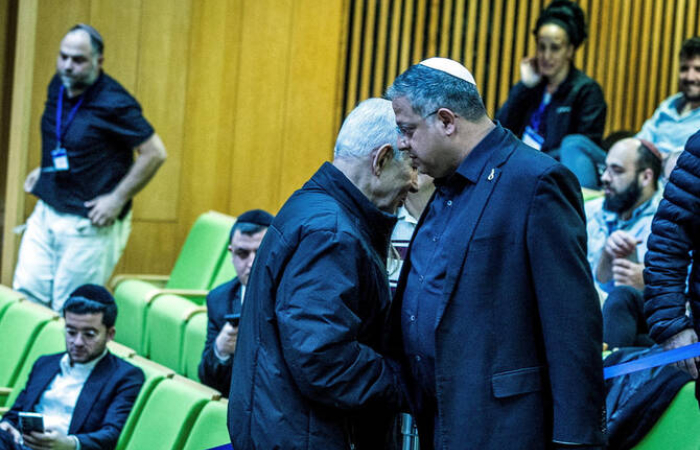
srael’s parliament approved a bill on Monday that would allow the execution of Palestinians convicted on terror charges for deadly attacks, a move that has been criticized as discriminatory and immediately drew a court challenge. Sixty-two lawmakers, including Prime Minister Benjamin Netanyahu, voted in favor and 48 against the bill, championed by far-right National Security Minister Itamar Ben Gvir. There was one abstention and the rest of the lawmakers were not present. Ben Gvir in the run-up to the vote had worn a lapel pin in the shape of a noose, symbolising his support for the legislation. “We made history!!! We promised. We delivered,” he posted on X after the vote. The bill would make the death penalty the default punishment for Palestinians in the Israeli-occupied West Bank found guilty of intentionally carrying out deadly attacks deemed “acts of terrorism” by an Israeli military court. The bill says that the sentence may be reduced to life imprisonment under “special circumstances.” Palestinians in the West Bank are automatically tried in Israeli military courts. Meanwhile, under the bill, in Israeli criminal courts anyone “who intentionally causes the death of a person with the aim of harming an Israeli citizen or resident out of an intention to put an end to the existence of the State of Israel shall be sentenced to death or life imprisonment.” Criminal courts try Israeli nationals, including Palestinian citizens and residents of east Jerusalem. The bill sets the execution method as hanging, adding that it should be carried out within 90 days of the sentencing, with a possible postponement of up to 180 days. - ‘Parallel tracks’ - The bill appears to conflict with Israel’s Basic Laws, which prohibit arbitrary discrimination, and shortly after it was passed, a leading human rights group announced that it had filed a petition with the Supreme Court demanding the legislation’s annulment. “The law creates two parallel tracks, both designed to apply to Palestinians,” the Association for Civil Rights in Israel said in a statement. “In military courts — which have jurisdiction over West Bank Palestinians — it establishes a near-mandatory death sentence,” the rights group said. In civilian courts, the law’s stipulation that defendants must have acted “with the aim of negating the existence” of Israel “structurally excludes Jewish perpetrators,” the group added. The association argued the law should be annulled on both jurisdictional and constitutional grounds. During the debate in parliament, opposition lawmaker and former deputy Mossad director, Ram Ben Barak, expressed outrage at the legislation. “Do you understand what it means that there is one law for Arabs in Judea and Samaria, and a different law for the general public for which the State of Israel is responsible?” he asked fellow parliamentarians, using the Israeli name for the West Bank. “It says that Hamas has defeated us. It has defeated us because we have lost all our values.” - ‘Discriminatory application’ - Lawmaker Limor Son Har-Melech from Ben Gvir’s party, who years ago survived an attack by Palestinian militants in which her husband was killed, urged fellow parliamentarians to approve the bill. “For years, we endured a cruel cycle of terror, imprisonment, release in reckless deals, and the return of these human monsters to murder Jews again ... And today, my friends, this cycle has come full circle.” The Palestinian Authority condemned the law’s adoption, saying that “Israel has no sovereignty over Palestinian land.” “This law once again reveals the nature of the Israeli colonial system, which seeks to legitimize extrajudicial killing under legislative cover,” it added. In February, Amnesty International had urged Israeli lawmakers to reject the legislation, citing its “discriminatory application against Palestinians.” On Sunday, Britain, France, Germany and Italy expressed “deep concern” over the bill, which they said risked “undermining Israel’s commitments with regards to democratic principles.” While the death penalty exists for a small number of crimes in Israel, it has become a de facto abolitionist country — the Nazi Holocaust perpetrator Adolf Eichmann was the last person to be executed in 1962. Israel has occupied the West Bank since 1967 and violence there has soared since Hamas’s October 7, 2023 attack on Israel triggered the Gaza war. (read more by clicking the image above).

Popular

Editor's choice
Interview
Thursday Interview: Murad Muradov

Thursday Interview: Murad Muradov

Today, commonspace.eu starts a new regular weekly series. THURSDAY INTERVIEW, conducted by Lauri Nikulainen, will host  persons who are thinkers, opinion shapers, and implementors in their countries and spheres. We start the series with an interview with Murad Muradov, a leading person in Azerbaijan's think tank community. He is also the first co-chair of the Action Committee for a new Armenian-Azerbaijani Dialogue. Last September he made history by being the first Azerbaijani civil society activist to visit Armenia after the 44 day war, and the start of the peace process. Speaking about this visit Murad Muradov said: "My experience was largely positive. My negative expectations luckily didn’t play out. The discussions were respectful, the panel format bringing together experts from Armenia, Azerbaijan, and Turkey was particularly valuable during the NATO Rose-Roth Seminar in Yerevan, and media coverage, while varied in tone, remained largely constructive. Some media outlets though attempted to represent me as more of a government mouthpiece than an independent expert, which was totally misleading.  Overall, I see these initiatives as important steps in rebuilding trust and normalising professional engagement. The fact that soon a larger Azerbaijani civil society visits to Armenia followed, reinforces the sense that this process is moving in the right direction." (click the image to read the interview in full)