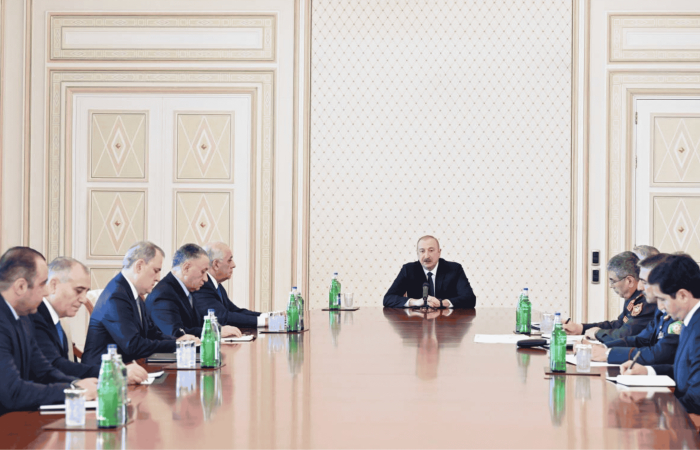
The Foreign Ministers of the 5 Central Asian countries, as well as Azerbaijan, held an emergency call to discuss and coordinate responses to the conflict in Iran. The meeting not only served for the C6 governments to conduct a dialogue on the situation, but also to coordinate necessary and short-term responses to the evolving situation.
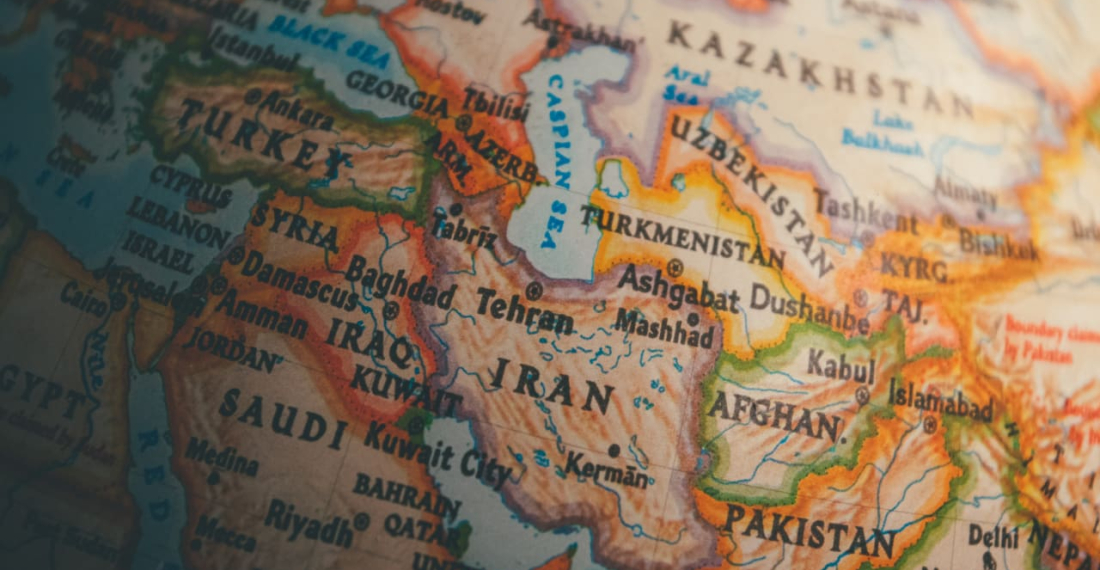
Iran is in close proximity to Central Asian countries, and many Central Asian citizens are present in Gulf countries as well as Iran itself. Uzbekistan has already deployed its diplomats and embassy staff in Ashgabat to the Turkmen border in order to assist Uzbek citizens leaving Iran. Iran and Turkmenistan share a border stretching over 1000km, but Uzbekistan has chosen the Iranian city of Sarakhs for their embassy staff to stand by for Uzbek citizens fleeing the conflict.
Turkmenistan has reportedly opened another four paths alongside the Sarakhs crossing to facilitate foreign nationals leaving Iran. The Russian embassy in Ashgabat has also directed its citizens to leave Iran through these crossings as air travel is heavily restricted. According to Kyrgyz state news, up to 800 citizens are stuck in Qatar, as well as 1,000 in the United Arab Emirates. Furthermore, a significant number of Kyrgyz citizens are currently making their way back to Kyrgyzstan from Saudi Arabia, where they were performing Umrah, the pilgrimage to Mecca.
In contrast to Central Asian governments’ silence on the Iranian protests in 2025, all 5 countries have put out official statements regarding the situation. In brief, the statements called for resolution through peaceful means, restraint, and expressed regret at the human toll the conflict reaps on the region. However, none of them addressed the obvious nature of the war, as a US-Israeli surprise attack on Iran. This should not come as a surprise, as the region, particularly Kazakhstan and Uzbekistan, have moved closer to the US and engaged in key Trump administration initiatives such as the ‘Board of Peace’ and ‘Critical Minerals Ministerial’. Nonetheless, Central Asia has a long history of cooperation with Iran, as is typical of regional neighbours, with Tajikistan also sharing a deeply rooted shared Persian heritage, culture, and language.
As for how the war affects the economic situation of Central Asian countries, the impact remains to be seen. Turkmenistan, whose capital city is only 25km away from the Iranian border, is most exposed, as the country depends on Iranian imports, most critically for food and household items. Uzbekistan is less, but still somewhat exposed, as Iran is a top supplier of dairy and oil. Conversely, for the remaining Central Asian economies, losing the Iranian market is not a massive blow to imports or exports, but further direct and indirect ripple effects may be on the horizon. Iran is a significant trade route to and from Central Asia, as goods were able to travel through the country by truck or rail after arriving in Iranian ports. In contrast to other corridors, this ‘Southern Corridor’ was considered shorter and safer than alternatives. Of course, the war also disrupts major transit hubs outside of Iran, such as the Jebel Ali port in Dubai, a major gateway for goods to Central Asia.
Finally, overall rising energy prices may also have follow-on economic effects, potentially leading to increasing budget expenditures and overall inflation. Questions on how Central Asia will continue to interface with Iran in the long term, both economically and diplomatically, can only begin to be answered after it becomes clear if the Ayatollahs will endure and outlast the US-Israeli assault, or if a new force will emerge to define the future of the Iranian government.
source: This briefing was first published on Central Asia Concise on 5 March 2026