


Armenia-Azerbaijan Strategic Expert Platform: Members emphasise the importance of the present moment for the South Caucasus

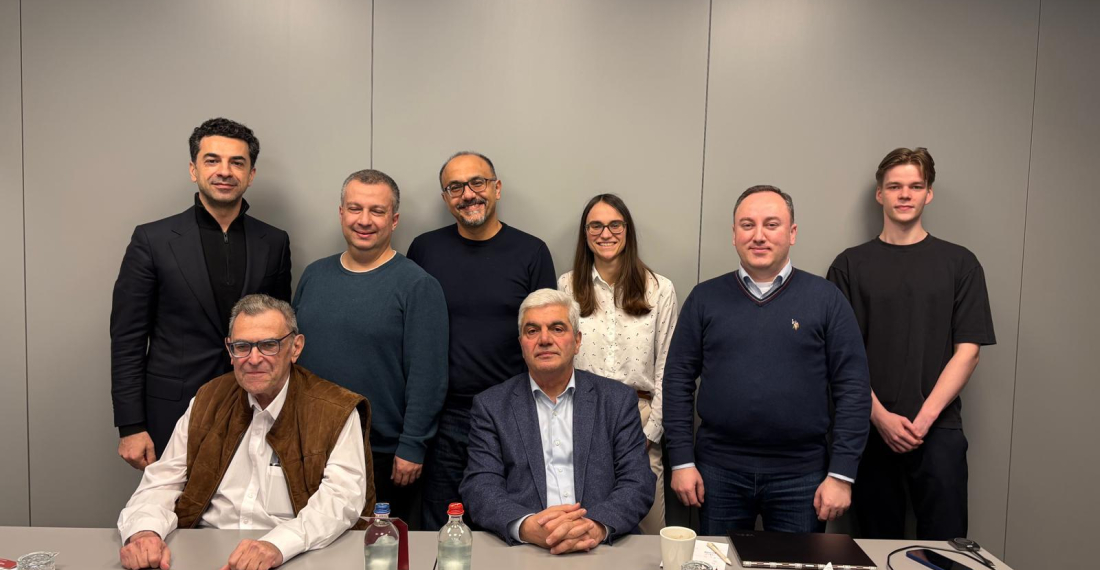
The members of the Armenia-Azerbaijan Strategic Expert Platform met in Antwerp, Belgium, on 27 February 2026. They discussed developments in the South Caucasus following the initialling of a peace agreement between Armenia and Azerbaijan on 8 August 2025 at the White House. The members of the Platform declared that this is a moment of great importance for the South Caucasus and its neighbours. They emphasised that both the leaders and the people of the region must make good use of the present momentum for the long-term peace and prosperity of not only Armenia and Azerbaijan, but the entire region and its neighbours.

The Armenia-Azerbaijan Strategic Expert Platform was established in 2024, with the support of LINKS Europe, to provide a continuous space where Armenian and Azerbaijani experts can hold direct discussions and conduct joint analysis, in complement to wider processes involving governments, experts, and civil society.

The current members of the Platform are, from Armenia: Dr. Stepan Grigorian, Dr. Benyamin Poghosyan, and Mr. Johnny Melikyan; and from Azerbaijan: Dr. Anar Veliyev, Mr. Mehman Aliyev, and Mr. Ramazan Samadov.

On Thursday, 26 February 2026, members of the Platform participated in and spoke at a meeting titled: The Armenia-Azerbaijan peace process: next steps?, jointly organised by LINKS Europe and the European Policy Centre (EPC) in Brussels. Diplomats, regional experts, and civil society representatives attended the meeting, which was also addressed by Peter Svedberg from the Office of the EU Special Representative for the South Caucasus.

During the meeting in Antwerp, the members of the Armenia-Azerbaijan Strategic Expert Platform also discussed the work that the LINKS network has carried out over the past three decades in support of peace in the region and Armenia-Azerbaijan reconciliation. The members highly valued the work done by the LINKS network over the years, including within the framework of the EPNK and EU4Peace programmes of the European Union since 2010. They emphasised that this work must continue, even if in a refined and adapted manner, and called on all stakeholders to support LINKS Europe’s work and plans for 2026–2027.

This statement was agreed upon by the members of the Strategic Platform: Dr. Stepan Grigorian, Dr. Benyamin Poghosyan, Mr. Johnny Melikyan, Dr. Anar Veliyev, Mr. Mehman Aliyev, and Mr. Ramazan Samadov.
Related articles

Editor's choice
News
Armenian leader meets Putin in the Kremlin

Armenian leader meets Putin in the Kremlin

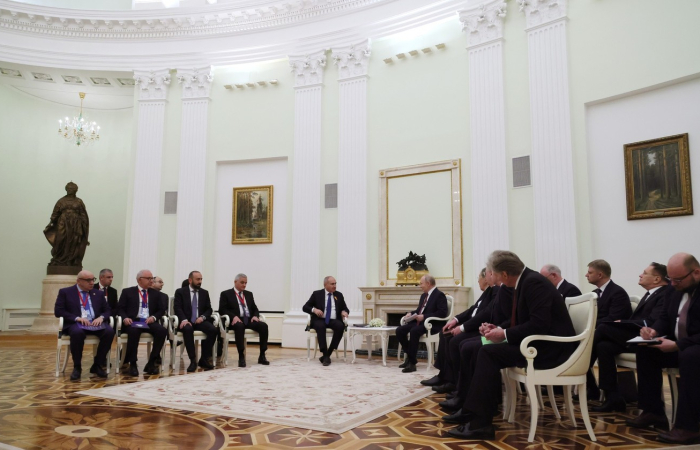
Armenian prime minister, Nikol Pashinyan, met at the Kremlin in Moscow, on Wednesday 1, April, with Russian president Vladimir Putin. The current state and prospects of Russian-Armenian strategic partnership and alliance, integration cooperation in the Eurasian region, and current issues on the regional agenda, in particular the development of economic and transport-logistics ties in the South Caucasus, were discussed, according to the Kremlin website. In his remarks before the meeting, Prime Minister Pashinyan said our relations with the Russian Federation are very deep, they are very important to us, and, in my opinion, they are developing dynamically in the context of the new realities in our region, when peace has finally been established between Armenia and Azerbaijan. And I think this has a positive impact on our relations with the Russian Federation, because for the first time since our independence, we have a railway connection with the Russian Federation. We import goods from Russia via Azerbaijan by rail. I hope we will also export in the near future. This, of course, strengthens our traditional economic ties, and it strengthens our ties within the Eurasian Economic Union. Regarding the European Union, of course, we know that, in principle, membership in the two associations is incompatible. But what we're doing and the agenda we have, at least for now, are compatible. That's a fact. And as long as there's an opportunity to combine these agendas, we will. And when processes develop to the point where a decision must be made, I'm confident that we, the citizens of the Republic of Armenia, will make that decision. Of course, in this context, our relations with the Russian Federation have never been and never will be in question, because, as I have already said, these ties and relations are very deep and not subject to discussion. (read the report in full by clicking the image at the top).

Popular

Editor's choice
Interview
Thursday Interview: Murad Muradov

Thursday Interview: Murad Muradov

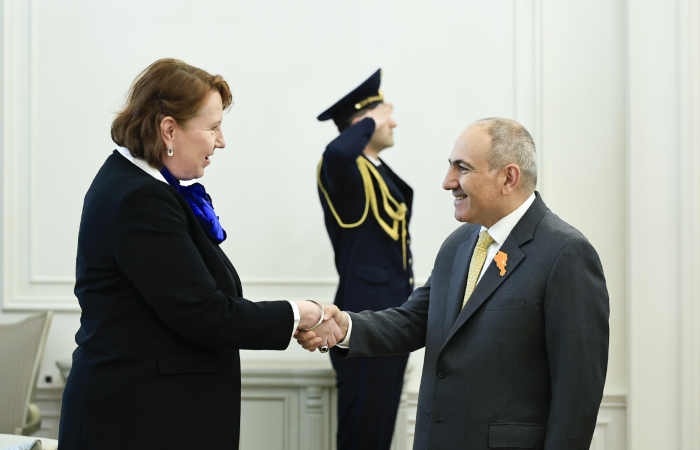
Today, commonspace.eu starts a new regular weekly series. THURSDAY INTERVIEW, conducted by Lauri Nikulainen, will host  persons who are thinkers, opinion shapers, and implementors in their countries and spheres. We start the series with an interview with Murad Muradov, a leading person in Azerbaijan's think tank community. He is also the first co-chair of the Action Committee for a new Armenian-Azerbaijani Dialogue. Last September he made history by being the first Azerbaijani civil society activist to visit Armenia after the 44 day war, and the start of the peace process. Speaking about this visit Murad Muradov said: "My experience was largely positive. My negative expectations luckily didn’t play out. The discussions were respectful, the panel format bringing together experts from Armenia, Azerbaijan, and Turkey was particularly valuable during the NATO Rose-Roth Seminar in Yerevan, and media coverage, while varied in tone, remained largely constructive. Some media outlets though attempted to represent me as more of a government mouthpiece than an independent expert, which was totally misleading.  Overall, I see these initiatives as important steps in rebuilding trust and normalising professional engagement. The fact that soon a larger Azerbaijani civil society visits to Armenia followed, reinforces the sense that this process is moving in the right direction." (click the image to read the interview in full)

