


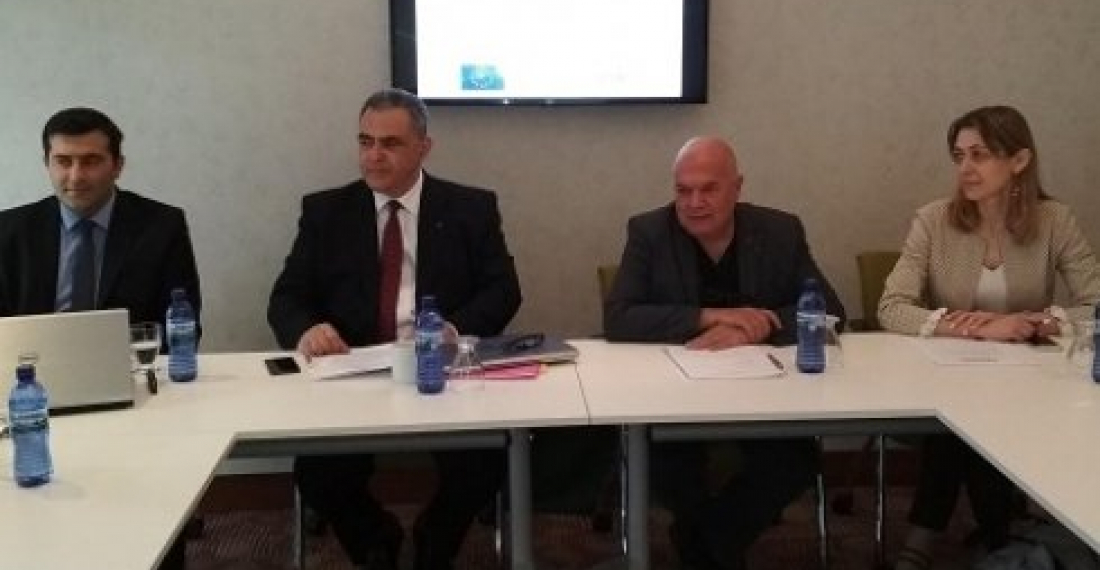
Вопросы наземных мин стали главной темой обсуждения на региональной встрече в Тбилиси

Проблема наземных мин и неразорвавшихся боеприпасов на Южном Кавказе стала главной темой обсуждения круглого стола, который состоялся в Тбилиси во вторник, 16 октября 2018 года.

Представитель Армянского центра гуманитарного разминирования и экспертизы, г-н Рубен Аракелян (ACHDE); представитель Национального агентства по разминированию Азербайджана (ANAMA) Эльнур Касимов и представитель Государственного министерства примирения и гражданского равенства Грузии г-жа Тамуна Кохорадзе выступили с докладами на встрече, в которой также приняли участие представители международных организаций, включая ЕС и ООН, военные атташе и дипломаты, базирующиеся в Тбилиси, а также представители НПО и эксперты, занимающиеся этим вопросом.

Мероприятие было организовано LINKS («Диалог, анализ и исследования»), которое работает на Южном Кавказе с вопросами, связанными с конфликтами и мерами укрепления доверия, и регионального сотрудничества с 1997 года. Текущая работа LINKS по проблеме наземных мин и неразорвавшихся боеприпасов проводится в рамках EPNK, инициативы по миростроительству Европейского союза, которая осуществляется с 2010 года.

Выступая на встрече, директор LINKS (DAR) Деннис Саммут сказал, что в результате наземных мин и неразорвавшихся боеприпасов на Южном Кавказе за последние тридцать лет были убиты или ранены тысячи людей. Большую работу проделали национальные агентства по разминированию, такие как ACHDE и ANAMA, а также международные НПО, такие как HALO Trust. Он приветствовал сотни сотрудников этих организаций, которые ежедневно рискуют жизнью, пытаясь очистить регион от этой опасности. Проблема остро стоит в регионах, затронутых неразрешенными конфликтами, где политический контекст также является сложной проблемой. Он добавил, что Армения, Азербайджан и Грузия не подписали Оттавскую конвенцию о разминировании, несмотря на то, что все другие европейские страны, за исключением России, сделали это, и он призвал международное сообщество работать с тремя странами для изучения возможности того, чтобы они смогли сделать это одновременно в ближайшем будущем.

Деннис Саммут сказал, что необходимо усилить осознание этой серьезной гуманитарной проблемы как в регионе, так и за его пределами, и на встрече положительно оценивалась идея проведения в регионе "Международного дня осознания проблемы наземных мин и неразорвавшихся боеприпасов на Южном Кавказе", который пройдет в этом регионе в апреле 2019 года. Участники встречи высоко оценили усилия, направленные на искоренение проблемы наземных мин и неразорвавшихся боеприпасов на Южном Кавказе. Был также обсужден ряд практических предложений о том, как улучшить поток информации по этой теме. LINKS соберет еще одну встречу в этом формате в начале 2019 года.

источник: commonspace.eu

фото: Слева направо: Эльнур Касимов (ANAMA, Азербайджан), Деннис Саммут (LINKS), Рубен Аракелян (ACHDE, Армения) и Тамуна Кокорадзе (Государственное министерство гражданской интеграции Грузии, в ходе круглого стола по вопросам наземных мин и неразорвавшихся боеприпасов в Тбилиси, 16 октября 2018 года.


Related articles

Editor's choice
News
Borrell tells the European Parliament that the situation in Afghanistan was critical, but the EU will remain engaged

Borrell tells the European Parliament that the situation in Afghanistan was critical, but the EU will remain engaged

Borrell underlined that the European Union will make every effort to support the peace process and to remain a committed partner to the Afghan people. "Of course, we will have to take into account the evolving situation, but disengagement is not an option.  We are clear on that: there is no alternative to a negotiated political settlement, through inclusive peace talks.
Editor's choice
News
Germany accuses Russia of cyberattacks and disinformation campaign

Germany accuses Russia of cyberattacks and disinformation campaign

The German government holds Russia responsible for a cyberattack on German air traffic control, and for targeted disinformation campaigns before the last federal election. According to the German Foreign Office in Berlin, the incidents could be clearly attributed to the Russian military intelligence service, the GRU. In response, the Russian ambassador to Berlin was summoned to the Foreign Ministry. "We have been observing a massive increase in threatening hybrid activities by Russia for some time now," a spokesperson for the Foreign Ministry stated. These range from disinformation campaigns and espionage to cyberattacks and sabotage attempts. The aim is to divide society, sow distrust, and undermine confidence in democratic institutions. The spokesperson added that with these actions, Russia is "very concretely threatening our security, not only through its war of aggression against Ukraine, but also here in Germany."  The Foreign Ministry spokesperson explained that the cyberattack on air traffic control in August 2024 was clearly attributed to the hacker collective "APT28," known as "Fancy Bear," and to the responsibility of the Russian military intelligence service, the GRU. Furthermore, it could now be "conclusively stated" that Russia had attempted "to influence and destabilize both the last Federal election and the ongoing internal affairs of the Federal Republic of Germany." There was "absolutely irrefutable evidence" for this". The so-called "Storm 1516" campaign, which has been running since 2024, is allegedly backed by "reliable information" that the Moscow-based think tank "Center for Geopolitical Expertise" is behind it. The Center is also said to be supported by Russian military intelligence. Its primary aim is to influence democratic elections in the West. (Click the image to read more).

Popular

Editor's choice
News
Germany accuses Russia of cyberattacks and disinformation campaign

Germany accuses Russia of cyberattacks and disinformation campaign

The German government holds Russia responsible for a cyberattack on German air traffic control, and for targeted disinformation campaigns before the last federal election. According to the German Foreign Office in Berlin, the incidents could be clearly attributed to the Russian military intelligence service, the GRU. In response, the Russian ambassador to Berlin was summoned to the Foreign Ministry. "We have been observing a massive increase in threatening hybrid activities by Russia for some time now," a spokesperson for the Foreign Ministry stated. These range from disinformation campaigns and espionage to cyberattacks and sabotage attempts. The aim is to divide society, sow distrust, and undermine confidence in democratic institutions. The spokesperson added that with these actions, Russia is "very concretely threatening our security, not only through its war of aggression against Ukraine, but also here in Germany."  The Foreign Ministry spokesperson explained that the cyberattack on air traffic control in August 2024 was clearly attributed to the hacker collective "APT28," known as "Fancy Bear," and to the responsibility of the Russian military intelligence service, the GRU. Furthermore, it could now be "conclusively stated" that Russia had attempted "to influence and destabilize both the last Federal election and the ongoing internal affairs of the Federal Republic of Germany." There was "absolutely irrefutable evidence" for this". The so-called "Storm 1516" campaign, which has been running since 2024, is allegedly backed by "reliable information" that the Moscow-based think tank "Center for Geopolitical Expertise" is behind it. The Center is also said to be supported by Russian military intelligence. Its primary aim is to influence democratic elections in the West. (Click the image to read more).

