


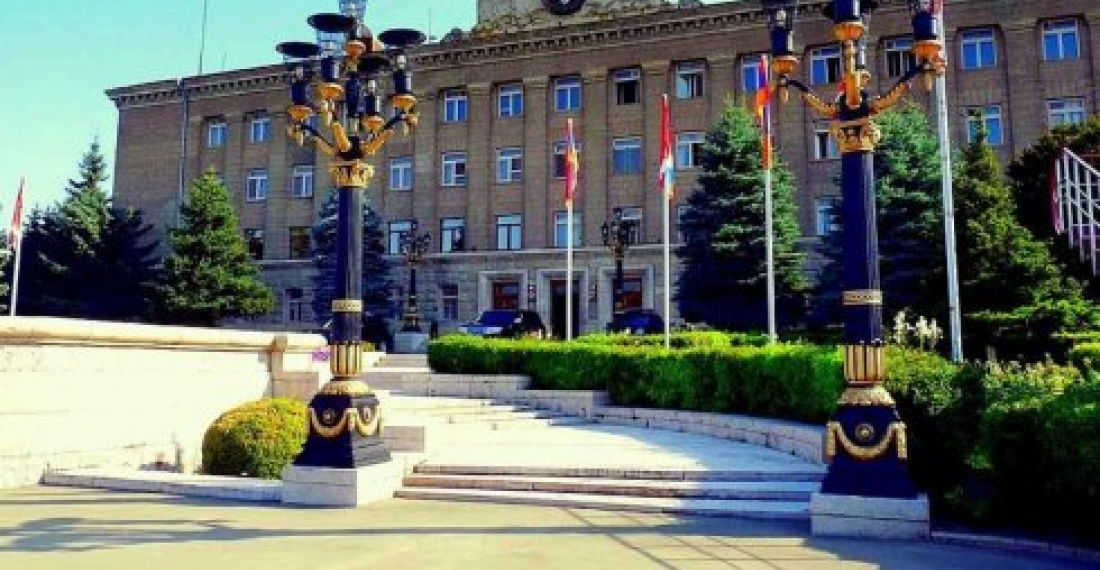
Степанакерт осудил комментарии Туска по Карабаху

Руководство самопровозглашенной Нагорно-Карабахской Республики (НКР) в среду раскритиковало комментарии, сделанные ранее президентом Европейского Совета Дональдом Туском, который в настоящее время находится с визитом в регионе.

Во вторник в Баку Туск подтвердил поддержку ЕС суверенитета, независимости и территориальной целостности Азербайджана.

Материалы по теме: Президент Европейского Совета Дональд Туск встретился с президентом Азербайджана в Баку

Давид Бабаян, пресс-секретарь президента НКР Бако Саакяна, заявил агенству NEWS.am, что заявления Туска "показывают, что у него искаженное представление об армяно-азербайджанском конфликте".

"Необходимо жестко и честно говорить об этом, потому что нам важны отношения с Европой, мы воспринимаем Европу как братское пространство по духу и общей цивилизации. Честность и прямота неотъемлемая часть доверительных отношений, а недоговоренность разрушает отношения», - отметил Бабаян. По его оценке, прозвучавшие в Баку заявления о территориальной целостности вносят дисбаланс.

"Для поддержания баланса Туску следовало упомянуть и право народов на самоопределение. Ведь это принципы, ни один из них не имеет преимущества перед другими, это не указание кто прав, а кто виноват. Однако попытки выделять один принцип и «забывать» об остальных наводят на мысль о предвзятости. Арцах заслужил моральное право жестко реагировать на такие вещи. Уже более 100 лет жители Арцаха сражаются и проливают кровь за свои права. Нагорный Карабах пионер в борьбе за права человека и внес не меньше вклад в защиту европейских ценностей, чем страны-члены ЕС", - подчеркнул Давид Бабаян.

И в Баку, и в Ереване Туск подтвердил, что любое решение нагорно-карабахского конфликта должно быть мирным, подчеркнув поддержку ЕС работы стран-сопредседателей Минской группы и подчеркнув, что ЕС также уже поддерживает деятельность по миростроительству и готов содействовать конкретным мерам по подготовке населения к миру.

источник: commonspace.eu по материалам агентств

Related articles

Editor's choice
News
Russian attacks against Ukrainian civilians continue

Russian attacks against Ukrainian civilians continue

Rescuers in Ukraine are continuing their search for survivors in the wreckage of a big shopping centre hit by Russia on Friday. Sixteen people were killed and 130 injured when two drones hit the busy centre in Kryvyi Rih in quick succession in what is known as a double-tap strike. Four people are still missing. The search and rescue operation could last for another two days. President Volodymyr Zelensky condemned the "cynical and despicable" attack in which the second drone targeted emergency workers. The sides exchanged more fire overnight, with Ukrainian attacks said to have killed at least four people in Russia, including two children, and three people reported dead by Kyiv as a result of Russian strikes. The death toll from Friday's attack reached 16 after another body was retrieved from the rubble overnight, said Dnipropetrovsk regional head Oleksandr Hanzha. "We're doing everything possible to speed up... the search and rescue operation," he told Ukrainian TV on Saturday morning. (click image tio read more)

Popular

Editor's choice
Interview
Thursday Interview: Murad Muradov

Thursday Interview: Murad Muradov

Today, commonspace.eu starts a new regular weekly series. THURSDAY INTERVIEW, conducted by Lauri Nikulainen, will host  persons who are thinkers, opinion shapers, and implementors in their countries and spheres. We start the series with an interview with Murad Muradov, a leading person in Azerbaijan's think tank community. He is also the first co-chair of the Action Committee for a new Armenian-Azerbaijani Dialogue. Last September he made history by being the first Azerbaijani civil society activist to visit Armenia after the 44 day war, and the start of the peace process. Speaking about this visit Murad Muradov said: "My experience was largely positive. My negative expectations luckily didn’t play out. The discussions were respectful, the panel format bringing together experts from Armenia, Azerbaijan, and Turkey was particularly valuable during the NATO Rose-Roth Seminar in Yerevan, and media coverage, while varied in tone, remained largely constructive. Some media outlets though attempted to represent me as more of a government mouthpiece than an independent expert, which was totally misleading.  Overall, I see these initiatives as important steps in rebuilding trust and normalising professional engagement. The fact that soon a larger Azerbaijani civil society visits to Armenia followed, reinforces the sense that this process is moving in the right direction." (click the image to read the interview in full)


