


Сожительство с заболевшим коронавирусом человеком

Что делать, если вы живете с человеком, у которого диагностирован коронавирус? В этой небольшой статье для commonspace.eu Уильям Мюррей резюмирует последние рекомендации.

К настоящему времени мы все должны быть хорошо знакомы с простыми, но эффективными способами поведения, чтобы замедлить распространение коронавируса.

Однако, если кто-то действительно живет с кем-то, у кого есть подозрения на наличие COVID-19, что еще он может сделать, чтобы помочь пострадавшему человеку и избежать распространения вируса среди других членов семьи? За последние 24 часа Всемирная организация здравоохранения опубликовала в Твиттере некоторые четкие руководящие принципы для урегулирования такой ситуации. Домашний уход за больным COVID-19 должен:

- Выявлять поверхности, до которых человек, зараженный вирусом, часто дотрагивается, и ежедневно очищать и дезинфицировать их;

- Немедленно позвоните в местное медицинское учреждение, если у человека с подозрением или подтверждением наличия коронавируса ухудшается или возникает затруднение дыхания;

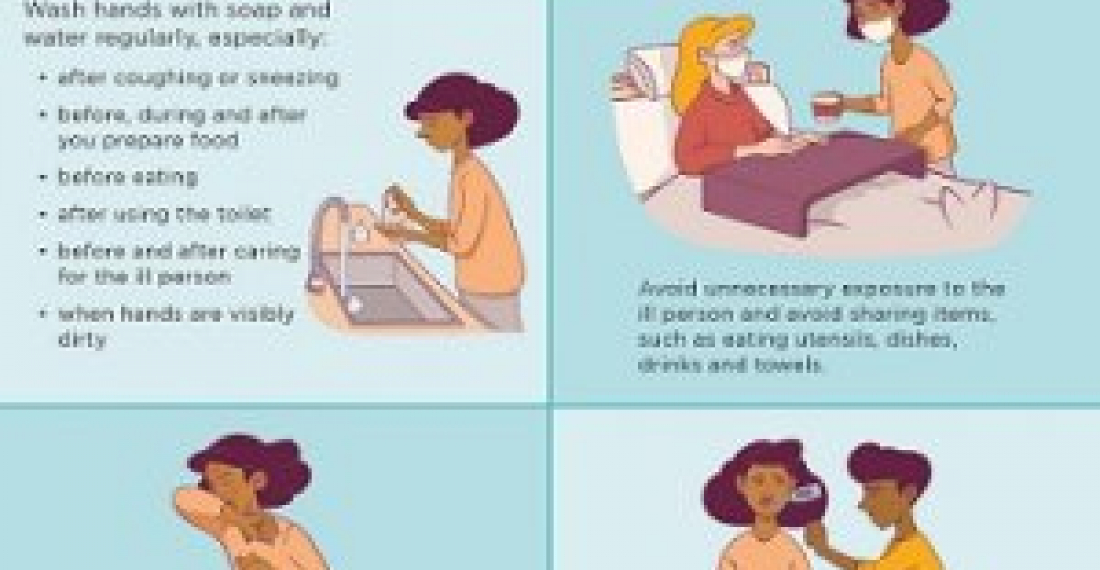
- Избегайте ненужного контакта с больным человеком и не используйте одни и те же предметы быта такие, как столовые приборы, посуда, стаканы для питья и полотенца;

- Контролируйте всех членов семьи на наличие таких симптомов, как жар (температура) и кашель.

Хотя такой совет кажется простым и для многих очевидным; важно, чтобы мы продолжали принимать все меры предосторожности, чтобы снизить шансы распространения вируса и негативные последствия.

Источник: Эта короткая статья была подготовлена ​​Уильямом Мюрреем для commonspace.eu. Это часть нашей серии публичных объявлений, направленных на то, чтобы помочь нашим читателям разобраться с проблемами, связанными с пандемией коронавируса и ее последствиями.


Related articles

Editor's choice
News
The British prime minister says Europe must "stand on its own two feet" when it comes to defence

The British prime minister says Europe must "stand on its own two feet" when it comes to defence

The UK will deploy a carrier strike group, led by the aircraft carrier HMS Prince of Wales to the Arctic and the High North as part of efforts to bolster security against Russian threats. British prime minister, Sir Keir Starmer announced the deployment in a speech on Saturday (14 February) at the Munich Security Conference. Europe must be ready to fight to protect its people, values, and way of life,  Sir Keir told the Conference. Starmer also called for deeper links and cooperation, including economic ties, between the UK and EU. The PM stressed the continent must "stand on its own two feet" when it comes to defence commitments. "We must build our hard power, because that is the currency of the age," he told the conference. (Click image to read the full story).

Popular

Editor's choice
Interview
Thursday Interview: Murad Muradov

Thursday Interview: Murad Muradov

Today, commonspace.eu starts a new regular weekly series. THURSDAY INTERVIEW, conducted by Lauri Nikulainen, will host  persons who are thinkers, opinion shapers, and implementors in their countries and spheres. We start the series with an interview with Murad Muradov, a leading person in Azerbaijan's think tank community. He is also the first co-chair of the Action Committee for a new Armenian-Azerbaijani Dialogue. Last September he made history by being the first Azerbaijani civil society activist to visit Armenia after the 44 day war, and the start of the peace process. Speaking about this visit Murad Muradov said: "My experience was largely positive. My negative expectations luckily didn’t play out. The discussions were respectful, the panel format bringing together experts from Armenia, Azerbaijan, and Turkey was particularly valuable during the NATO Rose-Roth Seminar in Yerevan, and media coverage, while varied in tone, remained largely constructive. Some media outlets though attempted to represent me as more of a government mouthpiece than an independent expert, which was totally misleading.  Overall, I see these initiatives as important steps in rebuilding trust and normalising professional engagement. The fact that soon a larger Azerbaijani civil society visits to Armenia followed, reinforces the sense that this process is moving in the right direction." (click the image to read the interview in full)

