


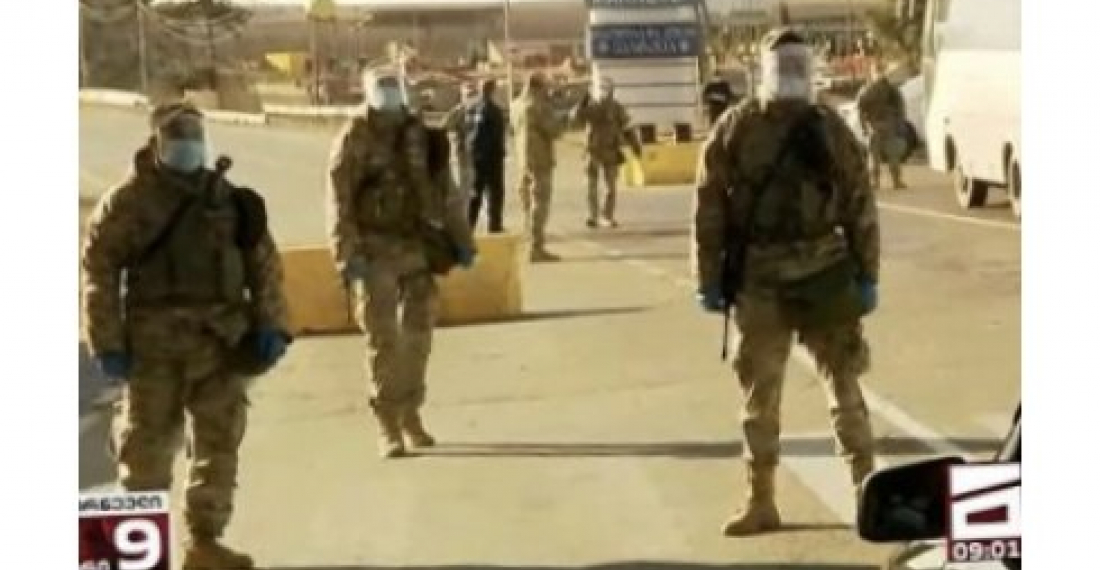
Грузия изолирует два района после вспышки там коронавируса

Грузинские воинские части и силы МВД изолировали в основном азербайджаноязычные районы Марнеули и Болниси после вспышки коронавируса в этом районе, что привело к широкомасштабным последствиям.

Премьер-министр Грузии Георгий Гахария сделал это заявление в ходе ночной пресс-конференции в столице Тбилиси. Решение было принято после того, как женщина, прибывшая из Италии, была диагностирована с вирусом. «[Мы] не смогли определить источник заражения в Марнеули, [вирус] был заражен во время обрядов [годовщины смерти], в которых приняли участие десятки людей». Гахария отметил, что свобода передвижения будет ограничена в двух муниципалитетах, за исключением приобретения продуктов и походов в аптеки, а также выполнения некоторых сельскохозяйственных работ.

Вскоре после выступления премьер-министра части грузинской армии и министерства внутренних дел заняли позиции вокруг двух районов. Согласно последней переписи населения Грузии, проведенной в 2014 году, в муниципалитете Марнеули проживает 104 300 жителей, а в муниципалитете Болниси проживают 53 590 человек. В этих двух муниципалитетах проживают азербайджаноязычные и в основном мусульмане-грузины, которые составляют около 80% населения Марнеульского района.

Политический редактор Commonspace.eu заявил в комментарии, что эти события представляют собой очень сложную задачу для правительства Грузии, поскольку меры в районах проживания меньшинств неизбежно должны проводиться с особой чувствительностью. Само развертывание военных подразделений в этом районе само по себе можно считать провокацией, и обеспечение строгого карантинного режима не будет простым или легким. Правительство Грузии назначило Созара Субари на должность правительственного координатора операции в Марнеули и Болниси. Бывший министр и бывший омбудсмен Грузии, Субари обладает необходимыми навыками для управления отношениями с общественностью, которые потребуются для выполнения этой сложной задачи в этот сложный период. Азербайджанскоязычное население имеет тесные семейные и деловые связи с соседним Азербайджаном, и коронавирус и закрытие границы уже вызывали неудобства и страдания в затронутых общинах. Отношения между Грузией и Азербайджаном традиционно очень хорошие, и эти две страны сотрудничают в различных рамках и в некоторой степени экономически взаимозависимы. Однако в последние годы отношения стали напряженными из-за некоторых пограничных споров. Грузия также должна балансировать свои отношения с Азербайджаном с отношениями с другим соседом Арменией. Без надлежащего управления коронавирусный кризис может вызвать политические последствия. Ни Тбилиси, ни Баку не хотят или не нуждаются в этом на данный момент, но чем дольше длится чрезвычайная ситуация с коронавирусом, тем больше будет напряженности в отношениях.

источник: commonspace.eu

фото: Грузинские солдаты на контрольно-пропускном пункте за пределами Марнеульского района для обеспечения карантина после вспышки коронавируса в этом районе


 

Related articles

Editor's choice
News
''Coalition of the Willing'' meets in Kyiv to restate its support for Ukraine

''Coalition of the Willing'' meets in Kyiv to restate its support for Ukraine

The ''Coalition of the  Willing''  of thirty five countries, has renewed its support of Ukriane, at a meeting in Kyiv, held on Ukraine's national day on 24 August, under the chairmanship of British Prime Minister,A ndy Burnham. Burnham has promised to keep up the pressure on Russia despite Moscow's "outrageous threats", on his first official visit to Ukraine as UK prime minister. Burnham met Ukrainian President Volodymyr Zelensky and chaired his first meeting of the "coalition of the willing", set up by the UK and France under his predecessor Sir Keir Starmer. He said the coalition was "doing everything we can" while urging the US Congress to "ratchet up" economic pressure on Russia. The government has agreed to hand over blueprints for British-made components for the Scalp missile, a French version of the UK's Storm Shadow cruise missile - allowing Ukraine to produce the long-range weapon domestically. During the meeting with France and Ukraine, Burnham said allies were doing "everything we can" to "dig into our own stocks and help others dig into their stocks" of air defences to protect Ukraine. "This is the moment to keep up the pressure on Russia, the moment to squeeze their ability to fund this illegal war," Burnham said, praising the "strength" of the Ukrainian people. "Ukraine has been Europe's protector, not a drain on our security but the front line in keeping Europe safe." It comes after Kremlin spokesman Dmitry Peskov criticised the UK's decision to share the missile blueprints. Peskov said it prevented "even the slightest progress" towards achieving peace. He told reporters on Monday that the Russian military was already gathering data to locate any missile production sites to destroy them. "Britain is involved in this war on the side of the Kyiv regime. Britain methodically and regularly adds fuel to the fire," he added. In response, Burnham said: "Who started the fire? That's the question, isn't it?" He added the issue of missile interceptors would be the main topic at the coalition of the willing meeting. Burnham chaired his first meeting of the "coalition of the willing" in Kyiv Burnham has been reaffirming the UK's backing for Kyiv in the wake of escalating Russian strikes on Ukraine in recent weeks - including one on a shopping centre on Friday that killed at least 16 people. In a joint statement after the meeting, Burnham and co-chairs French President Emmanuel Macron and German Chancellor Friedrich Merz said the group would aim to strength Kyiv's air defences "as a matter or urgent priority". They also condemned Moscow's "systemic and escalating strikes against Ukraine's cities, critical infrastructure and civilians" and pledged to "constrain Russia's war chest through sanctions and actions against the "shadow fleet". (click image to read more).

Popular

Editor's choice
Interview
Thursday Interview: Murad Muradov

Thursday Interview: Murad Muradov

Today, commonspace.eu starts a new regular weekly series. THURSDAY INTERVIEW, conducted by Lauri Nikulainen, will host  persons who are thinkers, opinion shapers, and implementors in their countries and spheres. We start the series with an interview with Murad Muradov, a leading person in Azerbaijan's think tank community. He is also the first co-chair of the Action Committee for a new Armenian-Azerbaijani Dialogue. Last September he made history by being the first Azerbaijani civil society activist to visit Armenia after the 44 day war, and the start of the peace process. Speaking about this visit Murad Muradov said: "My experience was largely positive. My negative expectations luckily didn’t play out. The discussions were respectful, the panel format bringing together experts from Armenia, Azerbaijan, and Turkey was particularly valuable during the NATO Rose-Roth Seminar in Yerevan, and media coverage, while varied in tone, remained largely constructive. Some media outlets though attempted to represent me as more of a government mouthpiece than an independent expert, which was totally misleading.  Overall, I see these initiatives as important steps in rebuilding trust and normalising professional engagement. The fact that soon a larger Azerbaijani civil society visits to Armenia followed, reinforces the sense that this process is moving in the right direction." (click the image to read the interview in full)

