


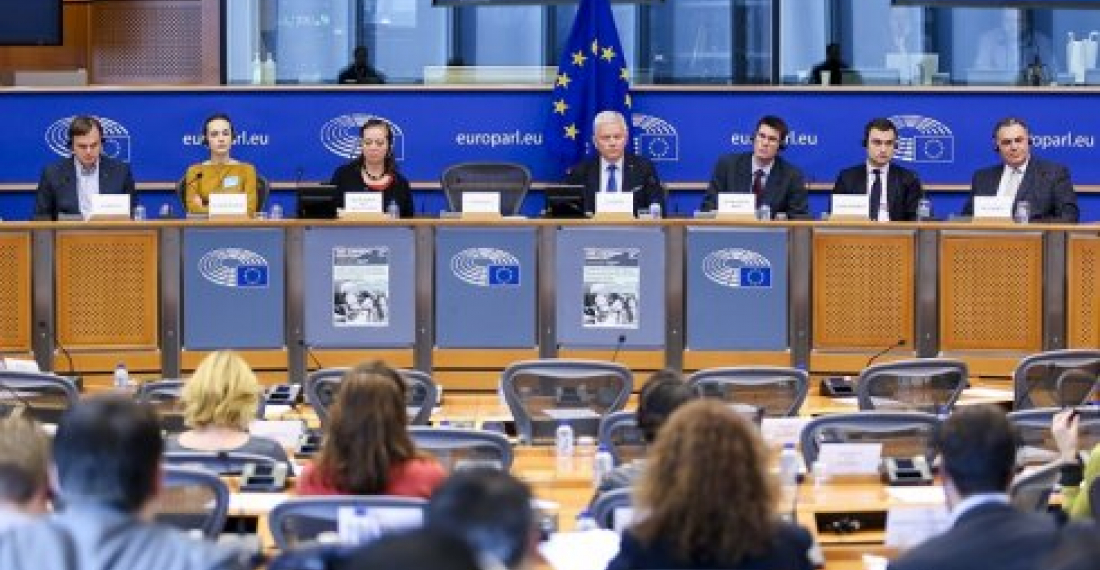
Европейский Парламент обсудил положение дел с правами человека в зонах неразрешенных конфликтов

В ходе обсуждений, прошедших в Брюсселе 8 декабря, Европейский Парламент обсудил правозащитный аспект в зонах нерешенных конфликтов в странах Восточного партнерства. Мероприятие было организовано совместно с Комитетом по правам человека парламента и делегацией Европейского парламента в Евронест.

В своем вступительном слове сопредседатель Euronest, депутат Европарламента, Хейди Хаутала, указала на то, что в пяти из шести стран Восточного партнерства есть нерешенные конфликты, которые негативно сказываются на странах и их населении. За тем, что именно происходит в конфликтных регионах не легко следить и поэтому миллионы европейцев не могут получить должной защиты в области прав человека.

Данные обсуждения с участием официальных лиц из Европейской службы внешних действий, Европейской Комиссии и Совета Европы обсуждали эти вопросы в главном здании Парламента в Брюсселе.

В ходе второй части встречи обсуждения были сосредоточены на неразрешенных конфликтах в Украине и Грузии и нагорно-карабахском конфликте.

В своем кратком докладе по нагорно-карабахскому конфликту, директор LINKS (Диалог, анализ и исследования) Деннис Саммут сказал, что необходимо сбалансировать обсуждения принципов территориальной целостности и самоопределения со страданиями многих сотен тысяч людей, которые были либо перемещены в результате конфликта, либо же застряли в зоне конфликта по обе стороны линии соприкосновения. Деннис Саммут призвал к беспрепятственному передвижению лиц, которым необходимо передвигаться в регионе по гуманитарным соображениям, как правозащитникам, так и тем, кто занят программами миростроительства. Он призвал Европейский Парламент провести миссию по изучению фактов в регионе конфликта.

Член парламента Фуад Мурадов (Азербайджан) Теван Погосян (Армения) Расим Мусабеков (Азербайджан) и Ровшан Рзаев (Азербайджан) выступили с краткими ремарками в ходе обсуждений.

источник: commonspace.eu

фото: Вторая часть обсуждений аспектов прав человека в зонах нерешенных конфликтов в странах Восточного партнерства в Европейском Парламенте, 8 декабря 2016 года (фото любезно предоставлено Европарламент)


Related articles

Editor's choice
News
Borrell tells the European Parliament that the situation in Afghanistan was critical, but the EU will remain engaged

Borrell tells the European Parliament that the situation in Afghanistan was critical, but the EU will remain engaged

Borrell underlined that the European Union will make every effort to support the peace process and to remain a committed partner to the Afghan people. "Of course, we will have to take into account the evolving situation, but disengagement is not an option.  We are clear on that: there is no alternative to a negotiated political settlement, through inclusive peace talks.
Editor's choice
News
Germany accuses Russia of cyberattacks and disinformation campaign

Germany accuses Russia of cyberattacks and disinformation campaign

The German government holds Russia responsible for a cyberattack on German air traffic control, and for targeted disinformation campaigns before the last federal election. According to the German Foreign Office in Berlin, the incidents could be clearly attributed to the Russian military intelligence service, the GRU. In response, the Russian ambassador to Berlin was summoned to the Foreign Ministry. "We have been observing a massive increase in threatening hybrid activities by Russia for some time now," a spokesperson for the Foreign Ministry stated. These range from disinformation campaigns and espionage to cyberattacks and sabotage attempts. The aim is to divide society, sow distrust, and undermine confidence in democratic institutions. The spokesperson added that with these actions, Russia is "very concretely threatening our security, not only through its war of aggression against Ukraine, but also here in Germany."  The Foreign Ministry spokesperson explained that the cyberattack on air traffic control in August 2024 was clearly attributed to the hacker collective "APT28," known as "Fancy Bear," and to the responsibility of the Russian military intelligence service, the GRU. Furthermore, it could now be "conclusively stated" that Russia had attempted "to influence and destabilize both the last Federal election and the ongoing internal affairs of the Federal Republic of Germany." There was "absolutely irrefutable evidence" for this". The so-called "Storm 1516" campaign, which has been running since 2024, is allegedly backed by "reliable information" that the Moscow-based think tank "Center for Geopolitical Expertise" is behind it. The Center is also said to be supported by Russian military intelligence. Its primary aim is to influence democratic elections in the West. (Click the image to read more).

Popular

Editor's choice
News
Germany accuses Russia of cyberattacks and disinformation campaign

Germany accuses Russia of cyberattacks and disinformation campaign

The German government holds Russia responsible for a cyberattack on German air traffic control, and for targeted disinformation campaigns before the last federal election. According to the German Foreign Office in Berlin, the incidents could be clearly attributed to the Russian military intelligence service, the GRU. In response, the Russian ambassador to Berlin was summoned to the Foreign Ministry. "We have been observing a massive increase in threatening hybrid activities by Russia for some time now," a spokesperson for the Foreign Ministry stated. These range from disinformation campaigns and espionage to cyberattacks and sabotage attempts. The aim is to divide society, sow distrust, and undermine confidence in democratic institutions. The spokesperson added that with these actions, Russia is "very concretely threatening our security, not only through its war of aggression against Ukraine, but also here in Germany."  The Foreign Ministry spokesperson explained that the cyberattack on air traffic control in August 2024 was clearly attributed to the hacker collective "APT28," known as "Fancy Bear," and to the responsibility of the Russian military intelligence service, the GRU. Furthermore, it could now be "conclusively stated" that Russia had attempted "to influence and destabilize both the last Federal election and the ongoing internal affairs of the Federal Republic of Germany." There was "absolutely irrefutable evidence" for this". The so-called "Storm 1516" campaign, which has been running since 2024, is allegedly backed by "reliable information" that the Moscow-based think tank "Center for Geopolitical Expertise" is behind it. The Center is also said to be supported by Russian military intelligence. Its primary aim is to influence democratic elections in the West. (Click the image to read more).

