


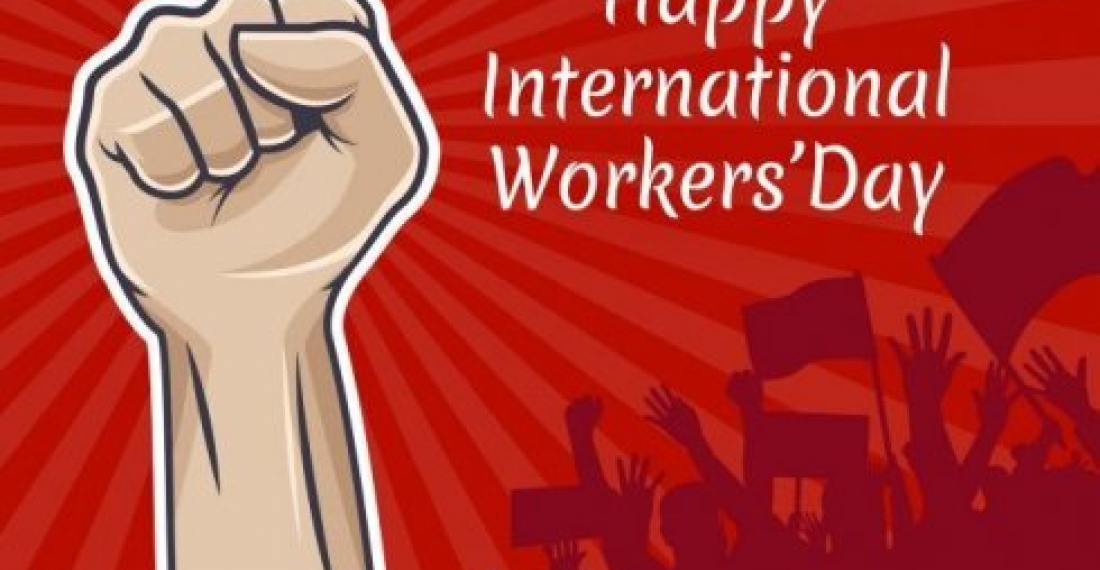
1 мая - Международный день трудящихся

1 мая отмечается во всем мире как Международный день трудящихся или День труда.

День труда или день 1 мая празднуют люди из рабочего класса и их вклад в развитие общества, и во многих странах это ежегодный государственный праздник. Праздник берет свое начало в профсоюзном движении в США XIX века, когда промышленники эксплуатировали рабочий класс и заставляли их работать до 15 часов в день. Рабочие восстали против этой эксплуатации и потребовали оплачиваемые отпуски, надлежащую заработную плату и перерыви для рабочих. Восьмичасовое рабочее движение требовало восьми часов на работу, восьми часов на развлечение и восьми часов на отдых.

Тема Дня труда 2019 года - «Объединение трудящихся для социально-экономического развития». День труда или Первомай отдает дань тяжелому труду трудящихся всего мира и в этот день празднуют их достижения.

Во многих странах будут проходить митинги и демонстрации, чтобы отметить борьбу рабочего класса и солидарность с рабочим классом во всем мире. В некоторых странах события будут происходить на фоне запугивания и преследования со стороны правительства.

Первомай на Южном Кавказе

Первоначально народные гуляния проводились в Советском Союзе в больших масштабах, но после его распада праздник был в значительной степени затуманен, отмечаемый лишь несколькими пожилыми коммунистами, и это, безусловно, имело место в республиках Южного Кавказа - Армении, Азербайджане и Грузия.

Однако есть признаки возрождения интереса, совпадающие с возросшими представлениями о правах работников, и не в последнюю очередь о вопросах охраны труда и здоровья на рабочем месте. Профсоюзы и рабочие движения на посткоммунистическом Южном Кавказе остаются в основном слабыми и неэффективными. Но вполне вероятно, что это изменится, так как социальные вопросы, включая права трудящихся, становятся все более важными.

источник: commonspace.eu

Related articles

Editor's choice
News
The British prime minister says Europe must "stand on its own two feet" when it comes to defence

The British prime minister says Europe must "stand on its own two feet" when it comes to defence

The UK will deploy a carrier strike group, led by the aircraft carrier HMS Prince of Wales to the Arctic and the High North as part of efforts to bolster security against Russian threats. British prime minister, Sir Keir Starmer announced the deployment in a speech on Saturday (14 February) at the Munich Security Conference. Europe must be ready to fight to protect its people, values, and way of life,  Sir Keir told the Conference. Starmer also called for deeper links and cooperation, including economic ties, between the UK and EU. The PM stressed the continent must "stand on its own two feet" when it comes to defence commitments. "We must build our hard power, because that is the currency of the age," he told the conference. (Click image to read the full story).

Popular

Editor's choice
Interview
Thursday Interview: Murad Muradov

Thursday Interview: Murad Muradov

Today, commonspace.eu starts a new regular weekly series. THURSDAY INTERVIEW, conducted by Lauri Nikulainen, will host  persons who are thinkers, opinion shapers, and implementors in their countries and spheres. We start the series with an interview with Murad Muradov, a leading person in Azerbaijan's think tank community. He is also the first co-chair of the Action Committee for a new Armenian-Azerbaijani Dialogue. Last September he made history by being the first Azerbaijani civil society activist to visit Armenia after the 44 day war, and the start of the peace process. Speaking about this visit Murad Muradov said: "My experience was largely positive. My negative expectations luckily didn’t play out. The discussions were respectful, the panel format bringing together experts from Armenia, Azerbaijan, and Turkey was particularly valuable during the NATO Rose-Roth Seminar in Yerevan, and media coverage, while varied in tone, remained largely constructive. Some media outlets though attempted to represent me as more of a government mouthpiece than an independent expert, which was totally misleading.  Overall, I see these initiatives as important steps in rebuilding trust and normalising professional engagement. The fact that soon a larger Azerbaijani civil society visits to Armenia followed, reinforces the sense that this process is moving in the right direction." (click the image to read the interview in full)


