


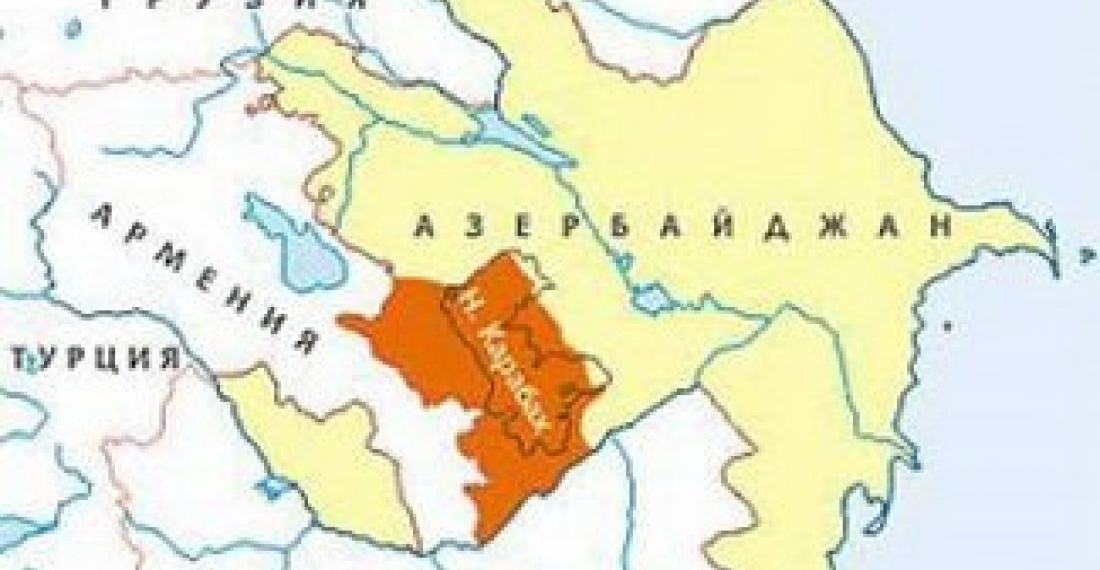
На сайте Европарламента размещено заявление относительно Нагорного Карабаха

БАКУ, 15 июн – 1NEWS.AZ

В преддверии слушаний, которые пройдут в Европейском Парламенте, Евросоюз в очередной раз подтвердил, что Нагорный Карабах относится к Азербайджану.

Как сообщает 1news.az , в заявлении касательного этого момента, размещенном на сайте Европарламента, говорится: «Нагорный Карабах является признанной на международном уровне территорией Азербайджана с преимущественно армянским населением».

В заявлении также приводятся слова председателя Европарламента Ежи Бузека, озвученные им во время визита в Баку: «Во время встреч я подчекнул суверенитет и территориальную целостность Азербайджана, признанные на международном уровне. ЕС поддерживает усилия по мирному урегулированию конфликта в Нагорном Карабахе в рамках Минской группы и на основе Мадридских принципов».

Внизу мы доводим до вашего сведения текст данного заявления:

Нагорный Карабах – неразрешенный конфликт Южного Кавказа

Нагорный Карабах является признанной на международном уровне территорией Азербайджана с преимущественно армянским населением.

Данный регион в результате войны 1992-94 годов подвергся разрушению, и международные посредники до сих пор не смогли создать устойчивый мир.

Председатель Европарламента Иржи Бузек недавно побывал в регионе и 15 июня в Комитете по Внешним Связям состоится слушания по ситуации в регионе.

Регион является анклавом, где проживают 140 тысяч населения – преимущественно армяне. Несмотря на заявления о независимости региона, его не признала даже Армения. Также несмотря на соглашение о перемирии, напряженность остается высокой, имеют место акты насилия и многие опасаются, что Азербайджан для изменения статуса-кво прибегнет к военным действиям.

Попытки по решению конфликта

ОБСЕ при сопредседательстве России, Франции и США с помощью Минской Группы ОБСЕ пытается найти долговременное решение конфликта. Существуют нижеследующие принципы по решению конфликта, признанные как Мадридские принципы:

• Территории вокруг Нагорного Карабаха возвращаются под контроль Азербайджана
• Определяется окончательный правовой статус Нагорного Карабаха
• Нагорный Карабах с Арменией объединяет коридор
• Всем беженцам и вынужденным переселенцам предоставляется право возвратиться на прежние места проживания

В ходе своего визита в Азербайджан господин Бузек заявил: «Во время встреч я подчекнул суверенитет и территориальную целостность Азербайджана, признанные на международном уровне. ЕС поддерживает усилия по мирному урегулированию конфликта в Нагорном Карабахе в рамках Минской группы и на основе Мадридских принципов».

Последствия для региона

Данный конфликт держит Армению в дипломатической изоляции и зависимости от России. После закрытия границ с Турцией, наземный транспортный путь Армении проходит через Грузию и Иран.

Нефте и газопроводы от Каспийского моря проходят на территорию Турции не через Армению, а через Грузию. Строящаяся железнодорожная магистраль, которая свяжет Азербайджан с Турцией пройдет мимо Армении.

Н.Е.

Related articles

Editor's choice
News
Nikol Pashinyan re-appointed as Armenian prime minister after decisive June election victory

Nikol Pashinyan re-appointed as Armenian prime minister after decisive June election victory

Armenia president, Vahagn Khachaturyan has re-appointed Nikol Pashinyan as Armenian prime minister, after the decisive victory of his Civil Contract party in parliamentary elections in June. During a ceremony at the Presidential Palace in Yerevan, President Khachaturyan signed a decree on the appointment of Nikol Pashinyan as Prime Minister of the Republic. President Vahagn Khachaturyan said in short remarks: It is a great honor for me to sign a decree on appointing you to the post of Prime Minister of the Republic of Armenia, for which I received a proposal from the political majority in the National Assembly, under Article 149 of the Constitution of the Republic of Armenia. I sincerely congratulate you, I wish you great patience, endurance, and determination to lead us in these difficult times, to lead the country to the future, a prosperous future. Nikol Pashinyan thanked the president and added,  I must say honestly that in 2018, when I assumed the post of Prime Minister of the Republic of Armenia as a result of the People's, non-violent, velvet revolution, it would have been difficult to predict that we would go down such a path and I think it would have been difficult to predict that we would be able to overcome this path. But we are where we are, and I think that the key role and significance in all this is unequivocally and undoubtedly the people of the Republic of Armenia, who, after all, have demonstrated special expressions of state consciousness and state-centeredness throughout this period. And of course, this is a great obligation and commitment. Of course, the Government will be formed in the near future and all members of the Government, including me, will already enshrine our obligations to our people in the text of the oath.  In the meantime Ruben Rubinyan has been elected Speaker of the National Assembly of Armenia, following a secret vote of MPs. He is a 36-year-old MP from the ruling Civil Contract party, who was one of the deputy speakers in the previous parliament and, until recently, was the special representative in the negotiations on the normalization of relations with Turkey.

Popular

Editor's choice
Interview
Thursday Interview: Murad Muradov

Thursday Interview: Murad Muradov

Today, commonspace.eu starts a new regular weekly series. THURSDAY INTERVIEW, conducted by Lauri Nikulainen, will host  persons who are thinkers, opinion shapers, and implementors in their countries and spheres. We start the series with an interview with Murad Muradov, a leading person in Azerbaijan's think tank community. He is also the first co-chair of the Action Committee for a new Armenian-Azerbaijani Dialogue. Last September he made history by being the first Azerbaijani civil society activist to visit Armenia after the 44 day war, and the start of the peace process. Speaking about this visit Murad Muradov said: "My experience was largely positive. My negative expectations luckily didn’t play out. The discussions were respectful, the panel format bringing together experts from Armenia, Azerbaijan, and Turkey was particularly valuable during the NATO Rose-Roth Seminar in Yerevan, and media coverage, while varied in tone, remained largely constructive. Some media outlets though attempted to represent me as more of a government mouthpiece than an independent expert, which was totally misleading.  Overall, I see these initiatives as important steps in rebuilding trust and normalising professional engagement. The fact that soon a larger Azerbaijani civil society visits to Armenia followed, reinforces the sense that this process is moving in the right direction." (click the image to read the interview in full)


