


МНЕНИЕ: ЕС хочет экспортировать свои взгляды на безопасность для решения карабахской проблемы – Ролан Кобиа

БАКУ, 12 мар – 1NEWS.AZ

Энергетика является ключевым фактором и главной движущей силой в развитии сотрудничества между Азербайджаном и Европейским Союзом.

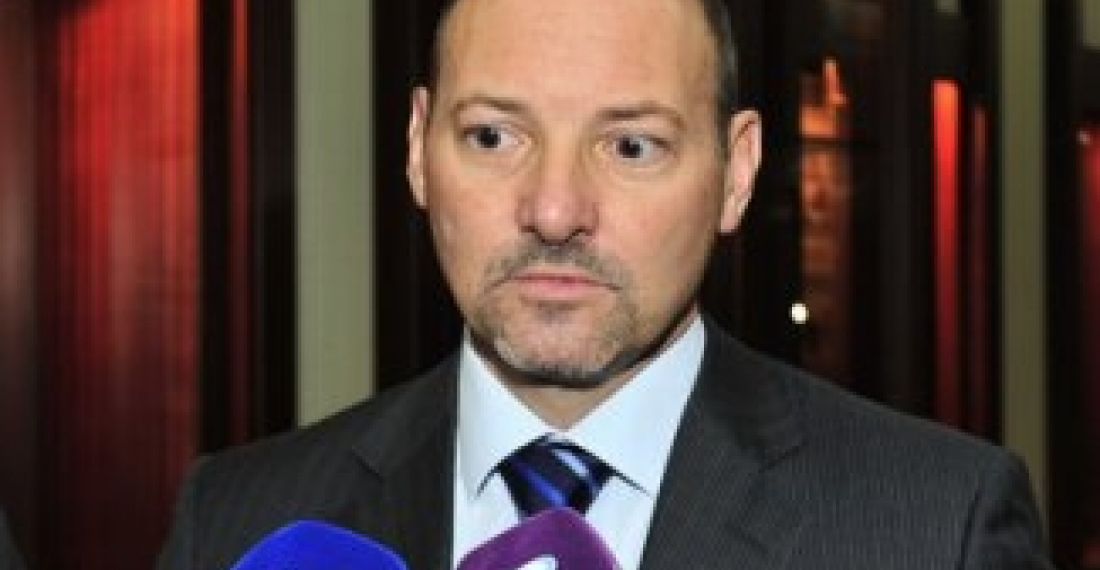
Об этом глава делегации Евросоюза в Азербайджане Ролан Кобиа заявил во вторник на презентации книги «Инициатива Восточного партнерства Европейского Союза: общие рамки или широкие возможности», выпущенной на английском языке Центром стратегических исследований при Президенте Азербайджана при сотрудничестве с одним из ведущих мозговых центров Италии - Международным институтом политических исследований (ISPI).

«Что такое Восточное партнерство? Это политическая рука доброй воли, протянутая Азербайджану», - подчеркнул он, выразив уверенность в том, что отношения между Азербайджаном и ЕС будут в будущем успешно развиваться в различных направлениях.

По его словам, в книге нашло отражение очень много интересных фактов, в том числе нагорно-карабахский конфликт и его воздействие на регион.

«Касаясь карабахской проблемы, хочу сказать, что главное намерение Евросоюза заключается в том, чтобы экспортировать свои взгляды на безопасность в региональные государства. Нагорно-карабахский конфликт – очень сложная проблема, продолжающаяся долгие годы, и, несмотря на это, мы надеемся на скорое решение этой проблемы и надеемся внести свой вклад в ее урегулирование», - подчеркнул Р.Кобиа.

Говоря о двустороннем сотрудничестве, глава делегации ЕС в Азербайджане назвал главной его движущей силой энергетику.

«Считаю, что энергетические вопросы являются ключевым аспектом наших отношений. С одной стороны, сотрудничество с Азербайджаном важно для повышения нашей энергетической безопасности.

С другой - это выгодно и Азербайджану, который как страна-производитель нефти и газа заинтересован в поставках своих энергоресурсов на надежные и предсказуемые рынки», - отметил Р.Кобиа.

Расим Бабаев, И.А.

Related articles

Editor's choice
News
European leaders arrive in Armenia for Monday's summit of the European Political Community

European leaders arrive in Armenia for Monday's summit of the European Political Community

European leaders are arriving in Armenia on Sunday, for the 8th summit of the European Political Community (EPC), which is expected to take place in Yerevan on Monday 4 April. Among those arriving will be French President, Emanuel Macron, European Commission president, Ursula von der Leyen and European Council president, Antonio Costa. Ukrainian president Volodmyr Zelenski is also expected to attend and he is already in the Armenian capital. Turkish Vice president, Turkish Vice President Cevdet Yilmaz will represent his country in the summit. Also present will be Canadian prime minister, Mark Carney. The European Political Community (EPC) is an intergovernmental forum for political and strategic discussions about the future of Europe established in 2022 after the Russian invasion of Ukraine The group first met in October 2022 in Prague, with participants The 47 EPC participating states are home to 689.5 million people, constitute 8.7 percent of the world's population and represent about 23.5 percent of the global GDP.

Popular

Editor's choice
Interview
Thursday Interview: Murad Muradov

Thursday Interview: Murad Muradov

Today, commonspace.eu starts a new regular weekly series. THURSDAY INTERVIEW, conducted by Lauri Nikulainen, will host  persons who are thinkers, opinion shapers, and implementors in their countries and spheres. We start the series with an interview with Murad Muradov, a leading person in Azerbaijan's think tank community. He is also the first co-chair of the Action Committee for a new Armenian-Azerbaijani Dialogue. Last September he made history by being the first Azerbaijani civil society activist to visit Armenia after the 44 day war, and the start of the peace process. Speaking about this visit Murad Muradov said: "My experience was largely positive. My negative expectations luckily didn’t play out. The discussions were respectful, the panel format bringing together experts from Armenia, Azerbaijan, and Turkey was particularly valuable during the NATO Rose-Roth Seminar in Yerevan, and media coverage, while varied in tone, remained largely constructive. Some media outlets though attempted to represent me as more of a government mouthpiece than an independent expert, which was totally misleading.  Overall, I see these initiatives as important steps in rebuilding trust and normalising professional engagement. The fact that soon a larger Azerbaijani civil society visits to Armenia followed, reinforces the sense that this process is moving in the right direction." (click the image to read the interview in full)


