


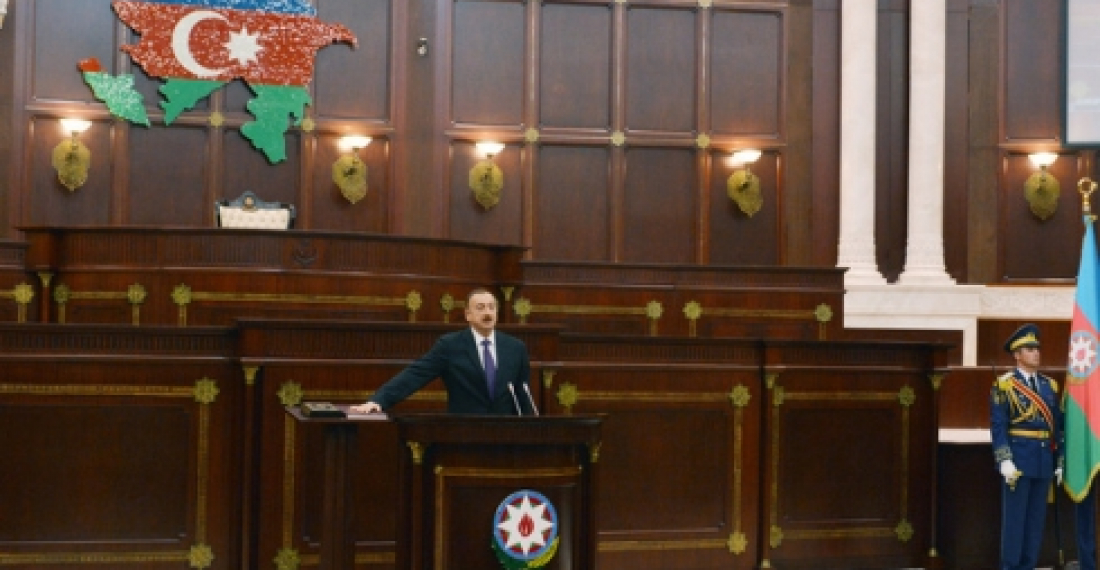
Ильхам Алиев заявляет, что решение карабахского вопроса остается приоритетом. В субботу, в ходе скромной церемонии глава государства был приведен к присяге на третий срок, где он подчеркнул преемственность в подходе к урегулированию карабахского конфликта

В субботу, в ходе скромной церемонии, состоявшейся в парламенте страны, Ильхам Алиев был приведен к присяге в качестве президента Азербайджана на третий срок. Конституционный суд ранее одобрил окончательный результат  президентских выборов, состоявшихся 9 октября, и провозгласил Алиева в качестве победившего в них.

В своей речи перед собравшимися депутатами и чиновниками Алиев вновь заявил, что решение карабахского вопроса остается первым приоритетом внешней политики Азербайджана. Президент отметил, что Азербайджан никогда не допустит создания "второго надуманного армянского государства" на своей территории. Он обвинил Армению в "лицемерной, неконструктивной позиции" по отношению к конфликту, а международное сообщество в «равнодушии».

"Весь мир признает Нагорный Карабах как неотъемлемую часть Азербайджана. Позиция Азербайджана однозначна, построена на справедливости и исторической правде. Наша исконная земля – Нагорный Карабах сегодня является неотъемлемой частью Азербайджана и с политической и правовой точек зрения. В вопросе территориальной целостности о какой-либо уступке не может быть и речи. Азербайджан никогда не позволит, не даст разрешения на создание на своей территории второго надуманного армянского государства. Наша однозначная позиция, еще раз хочу сказать, опирается на историческую справедливость и нормы международного права."

Президент Алиев заявил, что Азербайджан продолжит наращивать свои политические и дипломатические усилия, и впредь будет удерживать Армению в изолированном состоянии. "Своими политическими и региональными инициативами, экономическими инициативами мы должны оказывать еще большее давление." Ильхам Алиев отметил, что азербайджанская дипломатия по этому вопросу и дальше будет наступательной, "Так как правда, справедливость, международное право на нашей стороне."

Президент Алиев также сказал, что "азербайджанская армия входит в число сильных армий мира. Приобретенные за последние десять лет оружие, боеприпасы, военная техника уже нарушили военный баланс между Арменией и Азербайджаном."

В своем комментарий политический редактор Commonspace.eu сообщает:

"Инаугурационная речь президента Алиева указывает на строгую преемственность в политике по урегулированию нагорно-карабахского вопроса. В ней не было никаких намеков на новые инициативы или новую гибкость по данному вопросу, а, наоборот, убеждение в том, что текущая политика сосредоточена на недвусмысленные цели и тактика изоляции и ослабления Армении, по-прежнему является основой, которую Азербайджан должен продолжать в своей  карабахской политике. Хотя в выступлении и было достаточно ссылок на военную мощь Азербайджана, в нем глава государства воздержался от угроз военного решения. В течение следующих дней трое сопредседателей Минского процесса ОБСЕ прибудут в Баку для того, чтобы попытаться возобновить переговорный процесс. С Арменией, и Азербайджаном глубоко врывшимися в свои укрепленные позиции работа международных посредников не будет легкой. Перспектива встречи двух президентов до Рождества дает определенную надежду на появление некоторых новых творческих идей для продвижения процесса вперед, но квадратура круга никогда не была легкой задачей, и это ровно то, на что этот процесс стал походить. Однако, длительный цикл выборов в Армении и Азербайджане, который начался весной прошлого года завершился вчера с инаугурацией Алиева, и теперь у сторон  нет никаких оправданий. Теперь все в руках двух лидеров в преодолении тупиковой ситуации".


Источник: Commonspace.eu по материалам агентств.

Фото: Президент Алиев принимает присягу на Коране, во время церемонии инаугурации на третий срок 19 октября 2013 г. (фото любезно предоставлено пресс-службой президента Азербайджана).
Related articles

Editor's choice
News
''Coalition of the Willing'' meets in Kyiv to restate its support for Ukraine

''Coalition of the Willing'' meets in Kyiv to restate its support for Ukraine

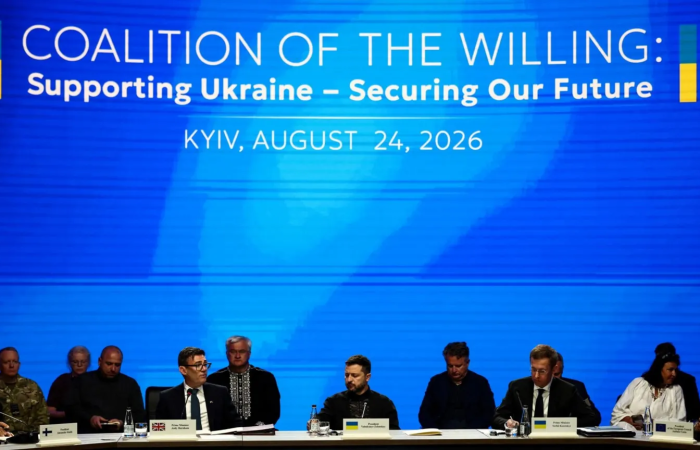
The ''Coalition of the  Willing''  of thirty five countries, has renewed its support of Ukriane, at a meeting in Kyiv, held on Ukraine's national day on 24 August, under the chairmanship of British Prime Minister,A ndy Burnham. Burnham has promised to keep up the pressure on Russia despite Moscow's "outrageous threats", on his first official visit to Ukraine as UK prime minister. Burnham met Ukrainian President Volodymyr Zelensky and chaired his first meeting of the "coalition of the willing", set up by the UK and France under his predecessor Sir Keir Starmer. He said the coalition was "doing everything we can" while urging the US Congress to "ratchet up" economic pressure on Russia. The government has agreed to hand over blueprints for British-made components for the Scalp missile, a French version of the UK's Storm Shadow cruise missile - allowing Ukraine to produce the long-range weapon domestically. During the meeting with France and Ukraine, Burnham said allies were doing "everything we can" to "dig into our own stocks and help others dig into their stocks" of air defences to protect Ukraine. "This is the moment to keep up the pressure on Russia, the moment to squeeze their ability to fund this illegal war," Burnham said, praising the "strength" of the Ukrainian people. "Ukraine has been Europe's protector, not a drain on our security but the front line in keeping Europe safe." It comes after Kremlin spokesman Dmitry Peskov criticised the UK's decision to share the missile blueprints. Peskov said it prevented "even the slightest progress" towards achieving peace. He told reporters on Monday that the Russian military was already gathering data to locate any missile production sites to destroy them. "Britain is involved in this war on the side of the Kyiv regime. Britain methodically and regularly adds fuel to the fire," he added. In response, Burnham said: "Who started the fire? That's the question, isn't it?" He added the issue of missile interceptors would be the main topic at the coalition of the willing meeting. Burnham chaired his first meeting of the "coalition of the willing" in Kyiv Burnham has been reaffirming the UK's backing for Kyiv in the wake of escalating Russian strikes on Ukraine in recent weeks - including one on a shopping centre on Friday that killed at least 16 people. In a joint statement after the meeting, Burnham and co-chairs French President Emmanuel Macron and German Chancellor Friedrich Merz said the group would aim to strength Kyiv's air defences "as a matter or urgent priority". They also condemned Moscow's "systemic and escalating strikes against Ukraine's cities, critical infrastructure and civilians" and pledged to "constrain Russia's war chest through sanctions and actions against the "shadow fleet". (click image to read more).

Popular

Editor's choice
Interview
Thursday Interview: Murad Muradov

Thursday Interview: Murad Muradov

Today, commonspace.eu starts a new regular weekly series. THURSDAY INTERVIEW, conducted by Lauri Nikulainen, will host  persons who are thinkers, opinion shapers, and implementors in their countries and spheres. We start the series with an interview with Murad Muradov, a leading person in Azerbaijan's think tank community. He is also the first co-chair of the Action Committee for a new Armenian-Azerbaijani Dialogue. Last September he made history by being the first Azerbaijani civil society activist to visit Armenia after the 44 day war, and the start of the peace process. Speaking about this visit Murad Muradov said: "My experience was largely positive. My negative expectations luckily didn’t play out. The discussions were respectful, the panel format bringing together experts from Armenia, Azerbaijan, and Turkey was particularly valuable during the NATO Rose-Roth Seminar in Yerevan, and media coverage, while varied in tone, remained largely constructive. Some media outlets though attempted to represent me as more of a government mouthpiece than an independent expert, which was totally misleading.  Overall, I see these initiatives as important steps in rebuilding trust and normalising professional engagement. The fact that soon a larger Azerbaijani civil society visits to Armenia followed, reinforces the sense that this process is moving in the right direction." (click the image to read the interview in full)

