Эльшад Искендеров: «Нагорно-карабахский конфликт – один из приоритетных вопросов для Исламского совета Евразии»

БАКУ, 23 ноя - 1NEWS.AZ

В итоговой резолюции Исламского совета Евразии нагорно-карабахский конфликт вошел в число приоритетных вопросов.

Как сообщает 1news.az, 22 ноября в Стамбуле завершил работу VIII саммит Исламского совета Евразии под названием «От традиции к будущему: Исламский восход в Евразии».

На саммите с участием свыше 100 глав религиозных структур более чем из 30 стран была принята итоговая резолюция.

Во время обсуждения резолюции по предложению главы Госкомитета по работе с религиозными образованиями Эльшада Искендерова, в 1-м пункте нашло отражение осуждение оккупационной политики Армении против Азербайджана.

«Считаем своим долгом заявить о необходимости скорейшего прекращения кровопролития среди мусульман на Среднем Востоке, в Сирии и Палестине, исполнения международным сообществом обязательств по обеспечению прекращения оккупации Арменией Нагорно-Карабахского региона Азербайджана, обеспечению мира и безопасности в этом вопросе всеми религиозными структурами, считающими себя носителями вечных духовных ценностей вне зависимости от религии и вероисповедания.

Ответственность в этом вопросе лежит не только на политиках, но и на каждом, кто обладает совестью. Мы призываем мировую общественность предпринять все необходимые шаги.

Кроме того, желаем, чтобы достигнутое 21 ноября 2012 года в Газе соглашение о прекращении огня стало гарантией продолжительного мира», - говорится в 1-м пункте резолюции.

«То, что Совет наряду с самыми горячими точками – Сирией и Палестиной отметил факт оккупации Арменией Нагорного Карабаха и прилегающих к нему районов, доказывает, что армяно-азербайджанский, нагорно-карабахский конфликт является для Исламского совета Евразии приоритетом.

Кроме того, в резолюции нашел отражение тот факт, что ответственность в этом вопросе лежит не только на политиках, но и на мировой общественности», - сообщил 1news.az председатель Госкомитета по работе с религиозными образованиями Эльшад Искендеров.

В то же время Совет, обратившись к международной общественности, подчеркнул важность усилий в справедливом разрешении этого конфликта не только религиозных лидеров мусульманских стран Евразии, но и лидеров других стран и религий.

Отметим, что на VIII пленарном заседании было принято решение о создании постоянного Международного секретариата Совета, а это означает, что для исполнения нашедшего отражение в 1-м пункте итоговой резолюции решения о справедливом разрешении нагорно-карабахского конфликта будет проводиться конкретная работа.

Н.А., В.Т.
Related articles

Editor's choice
News
Indian Foreign Minister meets Aliyev in Baku

Indian Foreign Minister meets Aliyev in Baku

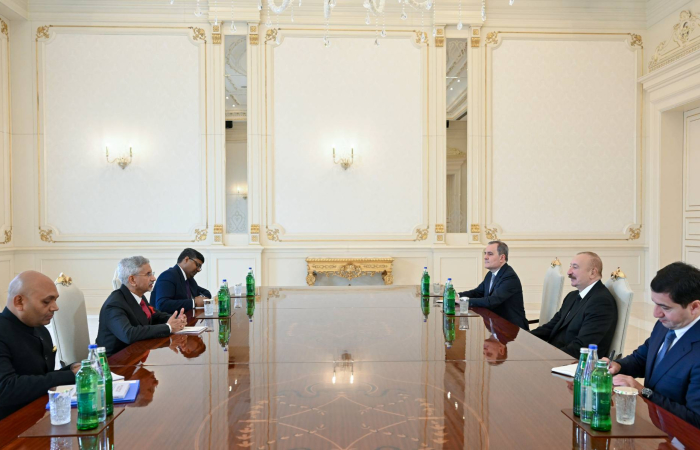
On October 23, the president of Azerbaijan Ilham Aliyev met in Baku with Subrahmanyam Jaishankar, Minister of External Affairs of India. This was the highest level visit by an Indian official to Azerbaijan in a long time. According to the website of the Azerbaijani president, Aliyev fondly recalled his meeting with Indian Prime Minister Narendra Modi in Bishkek and the exchange of views during that meeting. President Ilham Aliyev highly appreciated the visit of India’s Minister of External Affairs to Azerbaijan on the instructions of Prime Minister Narendra Modi, stressing its importance for discussing the current state and prospects of bilateral relations. During the meeting, the sides held an extensive exchange of views on the current state of relations between Azerbaijan and India, highlighting ample opportunities to develop cooperation in areas of mutual interest. The sides noted that Azerbaijan and India, as members of the Global South, share similar positions on a number of issues on the international agenda, including matters of concern to countries of the Global South. In this regard, they discussed prospects for bilateral cooperation in political, trade and economic, high-tech, cultural, humanitarian and other fields. The conversation also touched upon the importance of cooperation within international organizations. The sides emphasized the need to intensify political contacts and organize reciprocal visits at various levels, including exchanges involving economic and business delegations, to further advance bilateral relations.

Popular

Editor's choice
Interview
Thursday Interview: Murad Muradov

Thursday Interview: Murad Muradov

Today, commonspace.eu starts a new regular weekly series. THURSDAY INTERVIEW, conducted by Lauri Nikulainen, will host  persons who are thinkers, opinion shapers, and implementors in their countries and spheres. We start the series with an interview with Murad Muradov, a leading person in Azerbaijan's think tank community. He is also the first co-chair of the Action Committee for a new Armenian-Azerbaijani Dialogue. Last September he made history by being the first Azerbaijani civil society activist to visit Armenia after the 44 day war, and the start of the peace process. Speaking about this visit Murad Muradov said: "My experience was largely positive. My negative expectations luckily didn’t play out. The discussions were respectful, the panel format bringing together experts from Armenia, Azerbaijan, and Turkey was particularly valuable during the NATO Rose-Roth Seminar in Yerevan, and media coverage, while varied in tone, remained largely constructive. Some media outlets though attempted to represent me as more of a government mouthpiece than an independent expert, which was totally misleading.  Overall, I see these initiatives as important steps in rebuilding trust and normalising professional engagement. The fact that soon a larger Azerbaijani civil society visits to Armenia followed, reinforces the sense that this process is moving in the right direction." (click the image to read the interview in full)