


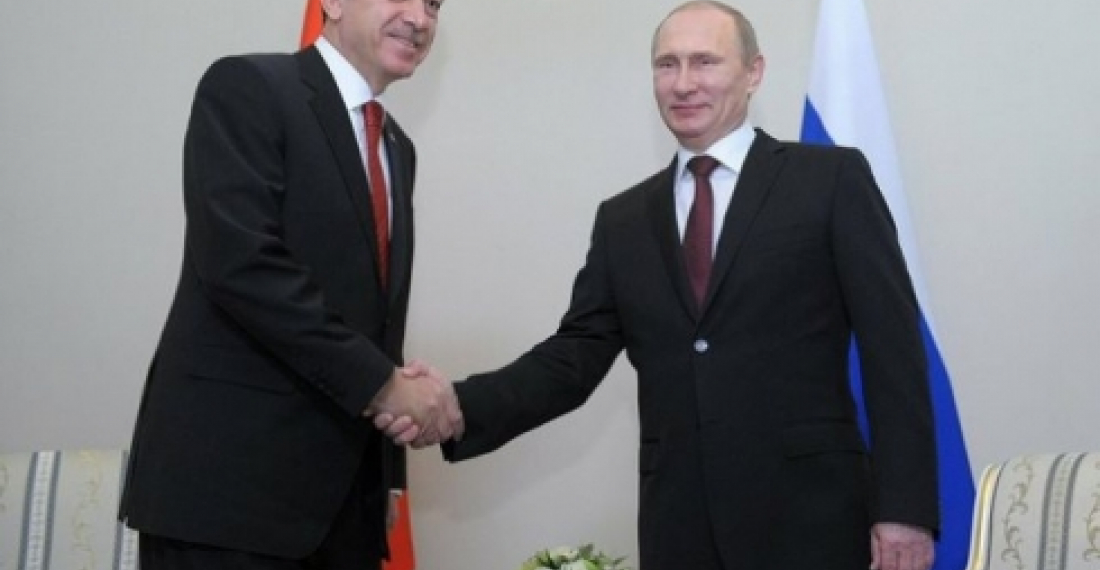
Российско-турецкие отношения стынут; Эрдоган пренебрежительно обошелся с Путиным.

Президент Турции Реджеп Тайип Эрдоган отклонил приглашение президента России Владимира Путина принять участие в параде победы на Красной площади, в Москве. Источники в Турции сообщают, что вместо этого Турция будет представлена ​​своим послом в Москве, Умитом Ядрин.

Турецко-российские отношения, как сообщалось, достигли новых высот в январе этого года, когда президент Путин посетил Анкару, визит, который назвали началом новых стратегических отношений между двумя странами. Однако, отношения неожиданно ухудшились после того, как президент Путин принял участие в памятных мероприятиях геноцида армян в Ереване, в прошлом месяце. Турецкое правительство также было расстроено выбором слов, которые подобрали в Кремле по этому поводу.

"24 апреля 1915 года - скорбная дата, связанная с одним из самых страшных и драматических событий в истории человечества - геноцидом армянского народа", - говорится в телеграмме, направленной участникам вечера памяти "Мир без геноцида", текст которого также был опубликован на сайте Кремля. 24 апреля Государственная Дума России проголосовала за принятие резолюции, которая описывает события 1915 года "геноцидом".

По сообщениям СМИ, только 12 лидеров из 68 приглашенных будут присутствовать на Параде Победы России, среди них лидеры из Китая, Индии, Южной Африке, Греции, Сербии и Кипра, а также Армении и Азербайджана. Понятно, что некоторые лидеры, в том числе лидеры из некоторых стран ЕС, решили присутствовать в Москве на торжествах по случаю победы над фашизмом, но не участвовать в военном параде на Красной площади.

Когда министра иностранных дел России Сергея Лаврова спросили, почему так много мировых лидеров не приняли приглашение, он ответил: "Это приглашение, а не военный призыв".

По словам политического редактора Commonspace.eu, "турецко-российские отношения, безусловно, охладели после слов Путина о геноциде, но обе стороны заинтересованы в сведений разногласий к минимуму. Однако, турецкому руководству искренняя поддержка Россией вопроса "геноцида армян" создает проблемы для турецкой версии о том, что признание геноцида это заговор запада. В результате, в будущем Турция может быть более активной в критике действий России, особенно в Крыму, где Эрдоган часто обвиняет Россию в несоблюдении интересов татарского коренного населения полуострова. Хотя, некоторые из более стратегических областей в их отношениях, такие как энергетика, вероятно, меньше пострадают от этой полемики. Тут в игру вступают другие факторы. Турция может в будущем использовать "тему геноцида", как предлог, чтобы пересмотреть некоторые из соглашений, которые она достигла с Россией, и которые, как она может обнаружить, являются не столь приемлемыми после всего".

Источник: commonspace.eu

Фото: Президент Турции Эрдоган и президент России Путин. (Фото из архива)

 

Related articles

Editor's choice
News
''Coalition of the Willing'' meets in Kyiv to restate its support for Ukraine

''Coalition of the Willing'' meets in Kyiv to restate its support for Ukraine

The ''Coalition of the  Willing''  of thirty five countries, has renewed its support of Ukriane, at a meeting in Kyiv, held on Ukraine's national day on 24 August, under the chairmanship of British Prime Minister,A ndy Burnham. Burnham has promised to keep up the pressure on Russia despite Moscow's "outrageous threats", on his first official visit to Ukraine as UK prime minister. Burnham met Ukrainian President Volodymyr Zelensky and chaired his first meeting of the "coalition of the willing", set up by the UK and France under his predecessor Sir Keir Starmer. He said the coalition was "doing everything we can" while urging the US Congress to "ratchet up" economic pressure on Russia. The government has agreed to hand over blueprints for British-made components for the Scalp missile, a French version of the UK's Storm Shadow cruise missile - allowing Ukraine to produce the long-range weapon domestically. During the meeting with France and Ukraine, Burnham said allies were doing "everything we can" to "dig into our own stocks and help others dig into their stocks" of air defences to protect Ukraine. "This is the moment to keep up the pressure on Russia, the moment to squeeze their ability to fund this illegal war," Burnham said, praising the "strength" of the Ukrainian people. "Ukraine has been Europe's protector, not a drain on our security but the front line in keeping Europe safe." It comes after Kremlin spokesman Dmitry Peskov criticised the UK's decision to share the missile blueprints. Peskov said it prevented "even the slightest progress" towards achieving peace. He told reporters on Monday that the Russian military was already gathering data to locate any missile production sites to destroy them. "Britain is involved in this war on the side of the Kyiv regime. Britain methodically and regularly adds fuel to the fire," he added. In response, Burnham said: "Who started the fire? That's the question, isn't it?" He added the issue of missile interceptors would be the main topic at the coalition of the willing meeting. Burnham chaired his first meeting of the "coalition of the willing" in Kyiv Burnham has been reaffirming the UK's backing for Kyiv in the wake of escalating Russian strikes on Ukraine in recent weeks - including one on a shopping centre on Friday that killed at least 16 people. In a joint statement after the meeting, Burnham and co-chairs French President Emmanuel Macron and German Chancellor Friedrich Merz said the group would aim to strength Kyiv's air defences "as a matter or urgent priority". They also condemned Moscow's "systemic and escalating strikes against Ukraine's cities, critical infrastructure and civilians" and pledged to "constrain Russia's war chest through sanctions and actions against the "shadow fleet". (click image to read more).

Popular

Editor's choice
Interview
Thursday Interview: Murad Muradov

Thursday Interview: Murad Muradov

Today, commonspace.eu starts a new regular weekly series. THURSDAY INTERVIEW, conducted by Lauri Nikulainen, will host  persons who are thinkers, opinion shapers, and implementors in their countries and spheres. We start the series with an interview with Murad Muradov, a leading person in Azerbaijan's think tank community. He is also the first co-chair of the Action Committee for a new Armenian-Azerbaijani Dialogue. Last September he made history by being the first Azerbaijani civil society activist to visit Armenia after the 44 day war, and the start of the peace process. Speaking about this visit Murad Muradov said: "My experience was largely positive. My negative expectations luckily didn’t play out. The discussions were respectful, the panel format bringing together experts from Armenia, Azerbaijan, and Turkey was particularly valuable during the NATO Rose-Roth Seminar in Yerevan, and media coverage, while varied in tone, remained largely constructive. Some media outlets though attempted to represent me as more of a government mouthpiece than an independent expert, which was totally misleading.  Overall, I see these initiatives as important steps in rebuilding trust and normalising professional engagement. The fact that soon a larger Azerbaijani civil society visits to Armenia followed, reinforces the sense that this process is moving in the right direction." (click the image to read the interview in full)


