Лучшие и худшие. Freedom House обрисовывает мрачную картину по Южному Кавказу.

О резких различиях между странами Восточной и Центральной Европы и Евразии в области прав человека и свободы выражения было отмечено в свежем докладе уважаемой американской организации Фридом Хаус. Из 33 стран и территорий, которые рассматриваются докладом всего 28% характеризуются, как свободные. Этот показатель ниже, чем в среднем в мире. В своем докладе 2012 Freedom House говорится:

Из 197 стран и территории, рассматриваемых в течение 2011 года, в общей сложности 66 (33,5%) были признаны, как свободные, 72 (36,5%) были признаны частично свободными и 59 (30%) были признаны несвободными. Этот результат знаменует собой переход к категории частично свободных по сравнению с докладом 2010 года, который признал 68 стран свободными, 65 частично свободными и 63, как несвободные страны и территорий.

"Результаты по странам этого региона варьируются от одних из лучших до худших в мире в области соблюдения прав человека. Показатели большинства небалтийских стран бывшего Советского Союза находятся в нижней части рейтингов Freedom House за политические права и гражданские свободы, в то время как демократические государства Центральной Европы создали институты, как правило, защищающие основные права, несмотря на некоторые недавние откаты".

В докладе по глобальной свободе по рейтингу свободы средств массовой информации страны Южного Кавказа занимают места внизу, во второй половине таблицы. Грузия занимает 110 место и рассматривается, как частично свободная, вместе с Бангладешом и Мавританией, Азербайджан 172 и рассматривается, как несвободная, вместе с Россией и Зимбабве.

Заслушав отчет, бывший министр иностранных дел Армении и кандидат на парламентских выборах в ближайшее воскресенье в Армении, Вардан Осканян, сказал:

"Очень жаль, что армянские СМИ оцениваются, как" несвободные "и занимают 149 место в списке из 197 стран - между Анголой и Пакистаном. Если средства массовой информации в Армении даже не оценивается, как "частично свободными", то ни о какой демократии и речи не может быть."

По данным Tert.am Осканян сказал, что "чем раньше телевизионные каналы Армении наслаждаться столько свободой, как новостные интернет сайты, тем скорее Армения станет нормальным государством".

Политический редактор Commonspace.eu в комментарии сказал: "Несмотря на то, что отчет Freedom House не является идеальным измерением свободы прессы во всем мире, он отражает суть ситуации и в целом отражает реальное положение на местах. За СМИ в пост советских странах в настоящее время тщательно следят целый ряд местных и международных источников, и все согласны с тем, что существуют серьезные проблемы, которые влияют и отражаются на политических процессах в этих странах.

По Южному Кавказу доклад Freedom House отражает проблемы, которые были выделены во многих предыдущих докладах по этому вопросу. Для Армении и Грузии возможность свободной деятельности СМИ во время избирательных кампании, запланированных на этот год и следующий год, будет определять их будущий рейтинг не только в отчетах Freedom House, но и в более широком глобальном мнении. В Азербайджане, который занимает самый низкий рейтинг из трех стран в докладе Freedom House, не намечены выборы в этом году. Хотя, обращение со СМИ в этой стране под растущей критикой, и она, вероятно, увеличится.

Однако, если любая из трех стран способна совершить прорыв и иметь реально свободные СМИ, то положение в двух других будет неустойчивым. Это то, чего нужно остерегаться в будущем."

Источник: commonspace.eu по материалам Freedom House
Related articles

Editor's choice
News
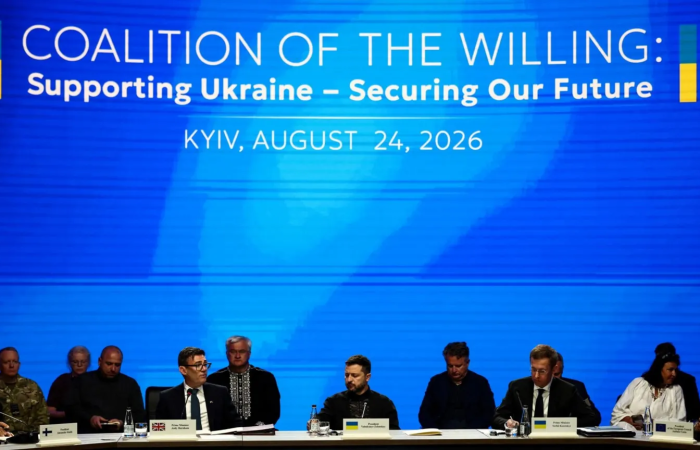
''Coalition of the Willing'' meets in Kyiv to restate its support for Ukraine

''Coalition of the Willing'' meets in Kyiv to restate its support for Ukraine

The ''Coalition of the  Willing''  of thirty five countries, has renewed its support of Ukriane, at a meeting in Kyiv, held on Ukraine's national day on 24 August, under the chairmanship of British Prime Minister,A ndy Burnham. Burnham has promised to keep up the pressure on Russia despite Moscow's "outrageous threats", on his first official visit to Ukraine as UK prime minister. Burnham met Ukrainian President Volodymyr Zelensky and chaired his first meeting of the "coalition of the willing", set up by the UK and France under his predecessor Sir Keir Starmer. He said the coalition was "doing everything we can" while urging the US Congress to "ratchet up" economic pressure on Russia. The government has agreed to hand over blueprints for British-made components for the Scalp missile, a French version of the UK's Storm Shadow cruise missile - allowing Ukraine to produce the long-range weapon domestically. During the meeting with France and Ukraine, Burnham said allies were doing "everything we can" to "dig into our own stocks and help others dig into their stocks" of air defences to protect Ukraine. "This is the moment to keep up the pressure on Russia, the moment to squeeze their ability to fund this illegal war," Burnham said, praising the "strength" of the Ukrainian people. "Ukraine has been Europe's protector, not a drain on our security but the front line in keeping Europe safe." It comes after Kremlin spokesman Dmitry Peskov criticised the UK's decision to share the missile blueprints. Peskov said it prevented "even the slightest progress" towards achieving peace. He told reporters on Monday that the Russian military was already gathering data to locate any missile production sites to destroy them. "Britain is involved in this war on the side of the Kyiv regime. Britain methodically and regularly adds fuel to the fire," he added. In response, Burnham said: "Who started the fire? That's the question, isn't it?" He added the issue of missile interceptors would be the main topic at the coalition of the willing meeting. Burnham chaired his first meeting of the "coalition of the willing" in Kyiv Burnham has been reaffirming the UK's backing for Kyiv in the wake of escalating Russian strikes on Ukraine in recent weeks - including one on a shopping centre on Friday that killed at least 16 people. In a joint statement after the meeting, Burnham and co-chairs French President Emmanuel Macron and German Chancellor Friedrich Merz said the group would aim to strength Kyiv's air defences "as a matter or urgent priority". They also condemned Moscow's "systemic and escalating strikes against Ukraine's cities, critical infrastructure and civilians" and pledged to "constrain Russia's war chest through sanctions and actions against the "shadow fleet". (click image to read more).

Popular

Editor's choice
Interview
Thursday Interview: Murad Muradov

Thursday Interview: Murad Muradov

Today, commonspace.eu starts a new regular weekly series. THURSDAY INTERVIEW, conducted by Lauri Nikulainen, will host  persons who are thinkers, opinion shapers, and implementors in their countries and spheres. We start the series with an interview with Murad Muradov, a leading person in Azerbaijan's think tank community. He is also the first co-chair of the Action Committee for a new Armenian-Azerbaijani Dialogue. Last September he made history by being the first Azerbaijani civil society activist to visit Armenia after the 44 day war, and the start of the peace process. Speaking about this visit Murad Muradov said: "My experience was largely positive. My negative expectations luckily didn’t play out. The discussions were respectful, the panel format bringing together experts from Armenia, Azerbaijan, and Turkey was particularly valuable during the NATO Rose-Roth Seminar in Yerevan, and media coverage, while varied in tone, remained largely constructive. Some media outlets though attempted to represent me as more of a government mouthpiece than an independent expert, which was totally misleading.  Overall, I see these initiatives as important steps in rebuilding trust and normalising professional engagement. The fact that soon a larger Azerbaijani civil society visits to Armenia followed, reinforces the sense that this process is moving in the right direction." (click the image to read the interview in full)